

EN
Padel
Padel club memberships: which plans to offer and how to price them
Unlimited off-peak, discount memberships, packs and wallets: the membership plans padel clubs offer in 2026, their prices and how to set yours.

A player who pays per game can play at another club next week. A member comes back. Memberships are the best way to stabilise a padel club’s revenue: they are paid upfront, they fill off-peak hours and they keep players loyal. Built badly, they can also lock up your best slots at a bargain price.
In this guide, we look at the plans that European padel clubs actually offered in 2026, with their public prices. Then we cover how to set the right price, which rules to put in place and how to build a simple offer.
Key takeaways
Five plans come up in most clubs: the discount membership, unlimited off-peak play, the capped premium membership, the multi-session pack and the prepaid wallet with a bonus.
In the clubs we analysed, unlimited off-peak play sells for €500 to €600 a year, and monthly memberships range from €30 to €89.
The right price comes from the player’s break-even point: the number of games after which the membership pays off for them.
A membership with no usage rules (time slots, active bookings, minimum term) ends up costing the club money.
Two or three plans are enough. Any more and your players won’t know which one to pick.
Why offer memberships at your padel club?
Pay-per-game has one big drawback: your revenue depends every week on the weather, the holidays and your players’ mood. Memberships fix this in four ways:
Recurring revenue: you know at the start of the month how much is coming in, which makes cash flow easier to manage.
Money upfront: annual plans, multi-session packs and wallet top-ups are paid before they are used.
Busier off-peak hours: a daytime plan attracts players who are free on weekdays, on courts that would otherwise stay empty.
Loyal players: a member has every reason to play often at your club, and rarely anywhere else.
Read also: how much should you charge for an hour of padel?, our guide to per-game pricing.
The 5 most common membership plans
We reviewed the public price lists of several clubs in France, Germany and Spain in October 2026. These are the plans that come up most often, with real examples.
1. The discount membership
The player pays a fixed fee, and every booking becomes cheaper for them. It is the simplest plan to launch.
P3 Padel Club (Hamburg, Germany): the GOLD membership costs €30 a month and gives 25% off the member’s share of every booking, at peak and off-peak times.
Le Court (Hyères, France): €75 for six months or €120 for a year, after which a game costs €11.25 instead of €12 off-peak.
For the club, it is fixed revenue with no risk of overbooking: the member still pays for every game. For the player, it all depends on the size of the discount.
2. Unlimited off-peak play
The player pays a flat fee and plays as much as they like, but only during weekday daytime slots.
Padel Horizon (Sucy-en-Brie, France): €600 a year for unlimited off-peak play (Monday to Friday, 9 am to 5 pm), with a one-year commitment and €100 of bar credit included.
WRC Padel (Trappes, France): €500 a year for unlimited off-peak sessions, Monday to Friday from 9 am to 6 pm.
P3 Padel Club (Hamburg): the Low-Time-Flat costs €40 a month and fully covers the member’s share of off-peak bookings.
This is the ideal plan to fill your days: retirees, students, freelancers and shift workers play on slots you would not have sold otherwise.
3. The capped premium membership
The player gets access at all times, but with a usage limit.
Padel Touch (La Teste-de-Buch, France): €89 a month with a 12-month commitment, one game a day at most and a limited number of places.
Club de Tenis Andrés Gimeno (Castelldefels, Spain): the adult padel membership costs €76 a month with a 12-month commitment, or €85 a month without one, and includes unlimited use of 11 courts.
This plan targets your most active players. The cap, the commitment and the limited number of places protect your peak hours.
4. The multi-session pack
The player buys a batch of games at a lower price and uses them at their own pace.
WRC Padel: 30 sessions of 1.5 hours for €360, or €12 a session instead of €18 at peak times, with no expiry date.
Padel Horizon: 20 off-peak sessions for €140, or €7 a session instead of €8.
Packs suit regular players who don’t want to commit to a membership. The club gets paid in one go and keeps control of its price per game.
5. The prepaid wallet with a bonus
The player tops up an electronic wallet and gets a bonus that grows with the amount.
Padel Touch: €132 credited for €120 paid (+10%), up to €625 for €500 (+25%), usable for games and at the bar.
The wallet is the most flexible plan: the player stays free, and the club already has the money. It is also the ideal entry point for occasional players.

How much should you charge?
You don’t price a membership by copying the club down the road. You work it out in two steps: from the player’s point of view, then from the club’s.
The player’s break-even point
A player only signs up if they come out ahead. Work out how many games it takes for the membership to beat paying per game:
Break-even point = membership price ÷ price of a single game
At Padel Horizon, unlimited off-peak play at €600 a year compares with an €8 session: it pays off from 75 sessions a year, or about one and a half sessions a week. At WRC Padel, €500 against €12 a session gives a break-even point of 42 sessions a year, less than one a week.

The rule: the break-even point should be within reach of a regular player (once or twice a week), but not of an occasional one. Too low, and you lose money on your best customers. Too high, and nobody signs up.
The cost to the club
For the club, the question is simple: would the hours your members use have been sold anyway?
On off-peak hours that stay empty, a member’s game costs you almost nothing: the court is already paid for, and the player often spends money at the bar or in the shop.
On peak hours that sell themselves, every member’s game replaces a full-price booking. That is where memberships get expensive.
So always check the effective price per hour of each plan and compare it with your floor price, the price below which every hour sold loses you money. The method is explained in our padel pricing guide.
The rules that protect your courts
Clubs that get memberships right always limit usage. The most common rules:
Time slots: unlimited play is restricted to off-peak hours, as at Padel Horizon, WRC Padel and P3 Padel Club.
A usage cap: one game a day at Padel Touch, four to five active future bookings at P3 Padel Club depending on the plan.
A limited number of places: Padel Touch caps the number of members so its courts don’t get saturated.
Personal use: the membership is for one person and cannot be shared.
A minimum term: 12 months at Padel Touch and at the Club de Tenis Andrés Gimeno. It secures your revenue and justifies an attractive price.
Cancellation rules: a member who books “just in case” and doesn’t show up blocks a court. A late cancellation or a no-show should count as a game played.
Read also: how to reduce cancellations and no-shows at your padel club.
Which plan for which player?
Each plan fits a type of player. Start from your current players to pick the two or three plans that really matter:
The occasional player (once or twice a month): the prepaid wallet, with no commitment.
The regular evening player (once a week at peak time): the multi-session pack or the discount membership.
The daytime player (retirees, students, shift workers): unlimited off-peak play.
The very active player (three games a week or more): the capped premium membership with a commitment.
Juniors and families: a junior or family rate.

Build your membership offer in 5 steps
Analyse your slots and your players. Find the hours that stay empty every week and how often your regulars play.
Choose two or three plans. For example, a wallet for everyone, a pack for regulars and unlimited off-peak play to fill your days.
Work out your prices. Check the player’s break-even point and make sure the effective price per hour of each plan stays above your floor price.
Write down the rules. Time slots, caps, minimum term, cancellation and how to end the membership should all be clearly set out in your terms and conditions.
Launch, measure, adjust. Every season, track the number of members, how often they play and the occupancy of your slots, then adjust prices and rules.
Read also: how to increase your padel club’s occupancy rate.
Mistakes to avoid
Selling unlimited play with no cap or time slot: your most active members take up peak hours for the price of a flat fee.
Offering too many plans: beyond three, players hesitate and your team gets lost.
Discounting peak hours: they sell themselves, and that is where your margin is.
Collecting payments by hand: chasing unpaid fees every month takes time and leads to missed payments.
Leaving rules vague: a member who discovers a restriction after signing up is an unhappy member.
Never measuring: without data on how often members play, you can’t tell whether a plan makes or loses you money.
Manage your memberships with Doinsport
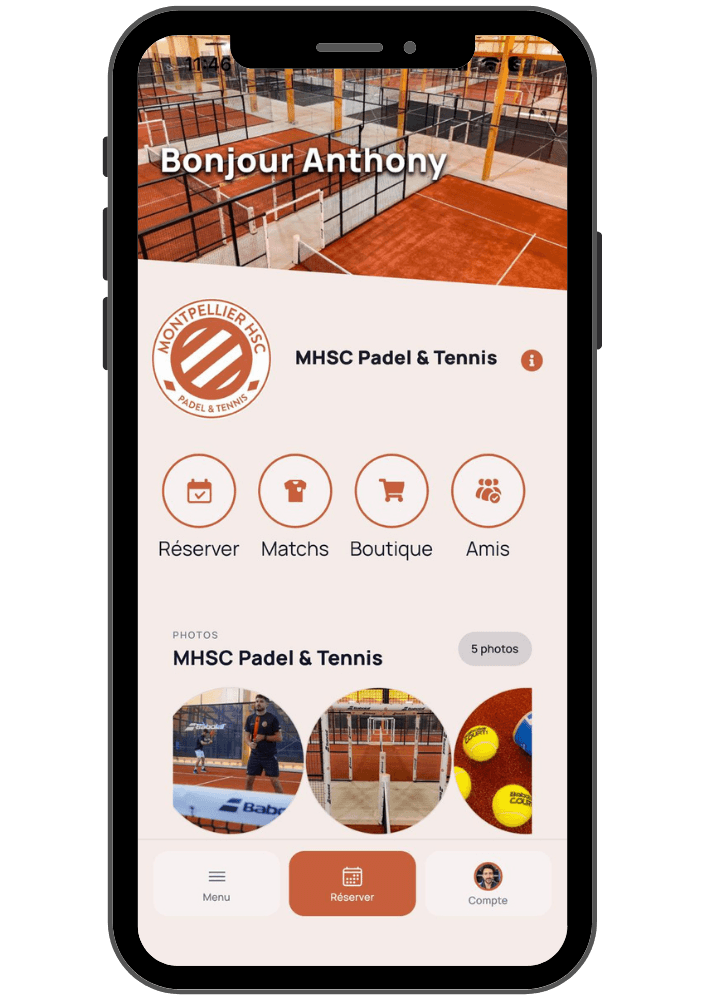
A good membership offer has to be easy to sell and easy to run day to day. With Doinsport’s loyalty tools, you set up membership fees, subscriptions, credits and a wallet, and offer them to your players in your club’s app and on its website.
Built-in online payment: your players pay online, and the club wallet is a rechargeable balance debited with every booking.
SEPA direct debit: on the Private clubs plan, monthly or annual memberships are collected automatically on each due date, with no chasing.
Communication: email, push notifications and SMS to launch a new plan or remind members before their membership expires.
Support in English: onboarding and support are available in English.
Read also: online payment for padel and tennis clubs and how to retain your padel club’s players.
FAQ
How much does a padel membership cost?
In the European clubs we analysed in 2026, unlimited off-peak play costs €500 to €600 a year, a discount membership €30 a month, and a capped premium membership €76 to €89 a month with a 12-month commitment.
Should you offer unlimited play?
Yes, as long as it is restricted to off-peak hours or capped, for example at one game a day. Unlimited play with no rules ends up filling your peak hours for the price of a flat fee.
Membership, pack or wallet: which is best?
The wallet suits occasional players, the pack suits regulars who don’t want to commit, and the membership suits very active players. Most clubs combine two or three of these plans.
How do you stop members from hogging the courts?
Set time slots, a booking cap, a limited number of places and clear cancellation rules. A no-show or a late cancellation should count as a game played.
With or without a minimum term?
A minimum term secures your revenue and justifies a lower price, as at the Club de Tenis Andrés Gimeno (€76 with a 12-month commitment, €85 without). A plan with no commitment is easier to sell but should cost a little more. Either way, set out how members can cancel in your terms and conditions.
A player who pays per game can play at another club next week. A member comes back. Memberships are the best way to stabilise a padel club’s revenue: they are paid upfront, they fill off-peak hours and they keep players loyal. Built badly, they can also lock up your best slots at a bargain price.
In this guide, we look at the plans that European padel clubs actually offered in 2026, with their public prices. Then we cover how to set the right price, which rules to put in place and how to build a simple offer.
Key takeaways
Five plans come up in most clubs: the discount membership, unlimited off-peak play, the capped premium membership, the multi-session pack and the prepaid wallet with a bonus.
In the clubs we analysed, unlimited off-peak play sells for €500 to €600 a year, and monthly memberships range from €30 to €89.
The right price comes from the player’s break-even point: the number of games after which the membership pays off for them.
A membership with no usage rules (time slots, active bookings, minimum term) ends up costing the club money.
Two or three plans are enough. Any more and your players won’t know which one to pick.
Why offer memberships at your padel club?
Pay-per-game has one big drawback: your revenue depends every week on the weather, the holidays and your players’ mood. Memberships fix this in four ways:
Recurring revenue: you know at the start of the month how much is coming in, which makes cash flow easier to manage.
Money upfront: annual plans, multi-session packs and wallet top-ups are paid before they are used.
Busier off-peak hours: a daytime plan attracts players who are free on weekdays, on courts that would otherwise stay empty.
Loyal players: a member has every reason to play often at your club, and rarely anywhere else.
Read also: how much should you charge for an hour of padel?, our guide to per-game pricing.
The 5 most common membership plans
We reviewed the public price lists of several clubs in France, Germany and Spain in October 2026. These are the plans that come up most often, with real examples.
1. The discount membership
The player pays a fixed fee, and every booking becomes cheaper for them. It is the simplest plan to launch.
P3 Padel Club (Hamburg, Germany): the GOLD membership costs €30 a month and gives 25% off the member’s share of every booking, at peak and off-peak times.
Le Court (Hyères, France): €75 for six months or €120 for a year, after which a game costs €11.25 instead of €12 off-peak.
For the club, it is fixed revenue with no risk of overbooking: the member still pays for every game. For the player, it all depends on the size of the discount.
2. Unlimited off-peak play
The player pays a flat fee and plays as much as they like, but only during weekday daytime slots.
Padel Horizon (Sucy-en-Brie, France): €600 a year for unlimited off-peak play (Monday to Friday, 9 am to 5 pm), with a one-year commitment and €100 of bar credit included.
WRC Padel (Trappes, France): €500 a year for unlimited off-peak sessions, Monday to Friday from 9 am to 6 pm.
P3 Padel Club (Hamburg): the Low-Time-Flat costs €40 a month and fully covers the member’s share of off-peak bookings.
This is the ideal plan to fill your days: retirees, students, freelancers and shift workers play on slots you would not have sold otherwise.
3. The capped premium membership
The player gets access at all times, but with a usage limit.
Padel Touch (La Teste-de-Buch, France): €89 a month with a 12-month commitment, one game a day at most and a limited number of places.
Club de Tenis Andrés Gimeno (Castelldefels, Spain): the adult padel membership costs €76 a month with a 12-month commitment, or €85 a month without one, and includes unlimited use of 11 courts.
This plan targets your most active players. The cap, the commitment and the limited number of places protect your peak hours.
4. The multi-session pack
The player buys a batch of games at a lower price and uses them at their own pace.
WRC Padel: 30 sessions of 1.5 hours for €360, or €12 a session instead of €18 at peak times, with no expiry date.
Padel Horizon: 20 off-peak sessions for €140, or €7 a session instead of €8.
Packs suit regular players who don’t want to commit to a membership. The club gets paid in one go and keeps control of its price per game.
5. The prepaid wallet with a bonus
The player tops up an electronic wallet and gets a bonus that grows with the amount.
Padel Touch: €132 credited for €120 paid (+10%), up to €625 for €500 (+25%), usable for games and at the bar.
The wallet is the most flexible plan: the player stays free, and the club already has the money. It is also the ideal entry point for occasional players.
How much should you charge?
You don’t price a membership by copying the club down the road. You work it out in two steps: from the player’s point of view, then from the club’s.
The player’s break-even point
A player only signs up if they come out ahead. Work out how many games it takes for the membership to beat paying per game:
Break-even point = membership price ÷ price of a single game
At Padel Horizon, unlimited off-peak play at €600 a year compares with an €8 session: it pays off from 75 sessions a year, or about one and a half sessions a week. At WRC Padel, €500 against €12 a session gives a break-even point of 42 sessions a year, less than one a week.
The rule: the break-even point should be within reach of a regular player (once or twice a week), but not of an occasional one. Too low, and you lose money on your best customers. Too high, and nobody signs up.
The cost to the club
For the club, the question is simple: would the hours your members use have been sold anyway?
On off-peak hours that stay empty, a member’s game costs you almost nothing: the court is already paid for, and the player often spends money at the bar or in the shop.
On peak hours that sell themselves, every member’s game replaces a full-price booking. That is where memberships get expensive.
So always check the effective price per hour of each plan and compare it with your floor price, the price below which every hour sold loses you money. The method is explained in our padel pricing guide.
The rules that protect your courts
Clubs that get memberships right always limit usage. The most common rules:
Time slots: unlimited play is restricted to off-peak hours, as at Padel Horizon, WRC Padel and P3 Padel Club.
A usage cap: one game a day at Padel Touch, four to five active future bookings at P3 Padel Club depending on the plan.
A limited number of places: Padel Touch caps the number of members so its courts don’t get saturated.
Personal use: the membership is for one person and cannot be shared.
A minimum term: 12 months at Padel Touch and at the Club de Tenis Andrés Gimeno. It secures your revenue and justifies an attractive price.
Cancellation rules: a member who books “just in case” and doesn’t show up blocks a court. A late cancellation or a no-show should count as a game played.
Read also: how to reduce cancellations and no-shows at your padel club.
Which plan for which player?
Each plan fits a type of player. Start from your current players to pick the two or three plans that really matter:
The occasional player (once or twice a month): the prepaid wallet, with no commitment.
The regular evening player (once a week at peak time): the multi-session pack or the discount membership.
The daytime player (retirees, students, shift workers): unlimited off-peak play.
The very active player (three games a week or more): the capped premium membership with a commitment.
Juniors and families: a junior or family rate.
Build your membership offer in 5 steps
Analyse your slots and your players. Find the hours that stay empty every week and how often your regulars play.
Choose two or three plans. For example, a wallet for everyone, a pack for regulars and unlimited off-peak play to fill your days.
Work out your prices. Check the player’s break-even point and make sure the effective price per hour of each plan stays above your floor price.
Write down the rules. Time slots, caps, minimum term, cancellation and how to end the membership should all be clearly set out in your terms and conditions.
Launch, measure, adjust. Every season, track the number of members, how often they play and the occupancy of your slots, then adjust prices and rules.
Read also: how to increase your padel club’s occupancy rate.
Mistakes to avoid
Selling unlimited play with no cap or time slot: your most active members take up peak hours for the price of a flat fee.
Offering too many plans: beyond three, players hesitate and your team gets lost.
Discounting peak hours: they sell themselves, and that is where your margin is.
Collecting payments by hand: chasing unpaid fees every month takes time and leads to missed payments.
Leaving rules vague: a member who discovers a restriction after signing up is an unhappy member.
Never measuring: without data on how often members play, you can’t tell whether a plan makes or loses you money.
Manage your memberships with Doinsport
A good membership offer has to be easy to sell and easy to run day to day. With Doinsport’s loyalty tools, you set up membership fees, subscriptions, credits and a wallet, and offer them to your players in your club’s app and on its website.
Built-in online payment: your players pay online, and the club wallet is a rechargeable balance debited with every booking.
SEPA direct debit: on the Private clubs plan, monthly or annual memberships are collected automatically on each due date, with no chasing.
Communication: email, push notifications and SMS to launch a new plan or remind members before their membership expires.
Support in English: onboarding and support are available in English.
Read also: online payment for padel and tennis clubs and how to retain your padel club’s players.
FAQ
How much does a padel membership cost?
In the European clubs we analysed in 2026, unlimited off-peak play costs €500 to €600 a year, a discount membership €30 a month, and a capped premium membership €76 to €89 a month with a 12-month commitment.
Should you offer unlimited play?
Yes, as long as it is restricted to off-peak hours or capped, for example at one game a day. Unlimited play with no rules ends up filling your peak hours for the price of a flat fee.
Membership, pack or wallet: which is best?
The wallet suits occasional players, the pack suits regulars who don’t want to commit, and the membership suits very active players. Most clubs combine two or three of these plans.
How do you stop members from hogging the courts?
Set time slots, a booking cap, a limited number of places and clear cancellation rules. A no-show or a late cancellation should count as a game played.
With or without a minimum term?
A minimum term secures your revenue and justifies a lower price, as at the Club de Tenis Andrés Gimeno (€76 with a 12-month commitment, €85 without). A plan with no commitment is easier to sell but should cost a little more. Either way, set out how members can cancel in your terms and conditions.
Similar articles
Oct 22, 2026
How much should you charge per hour for padel? 2026 market rates, peak vs. off-peak pricing, and memberships: the complete guide to setting your club's rates.

Oct 14, 2026
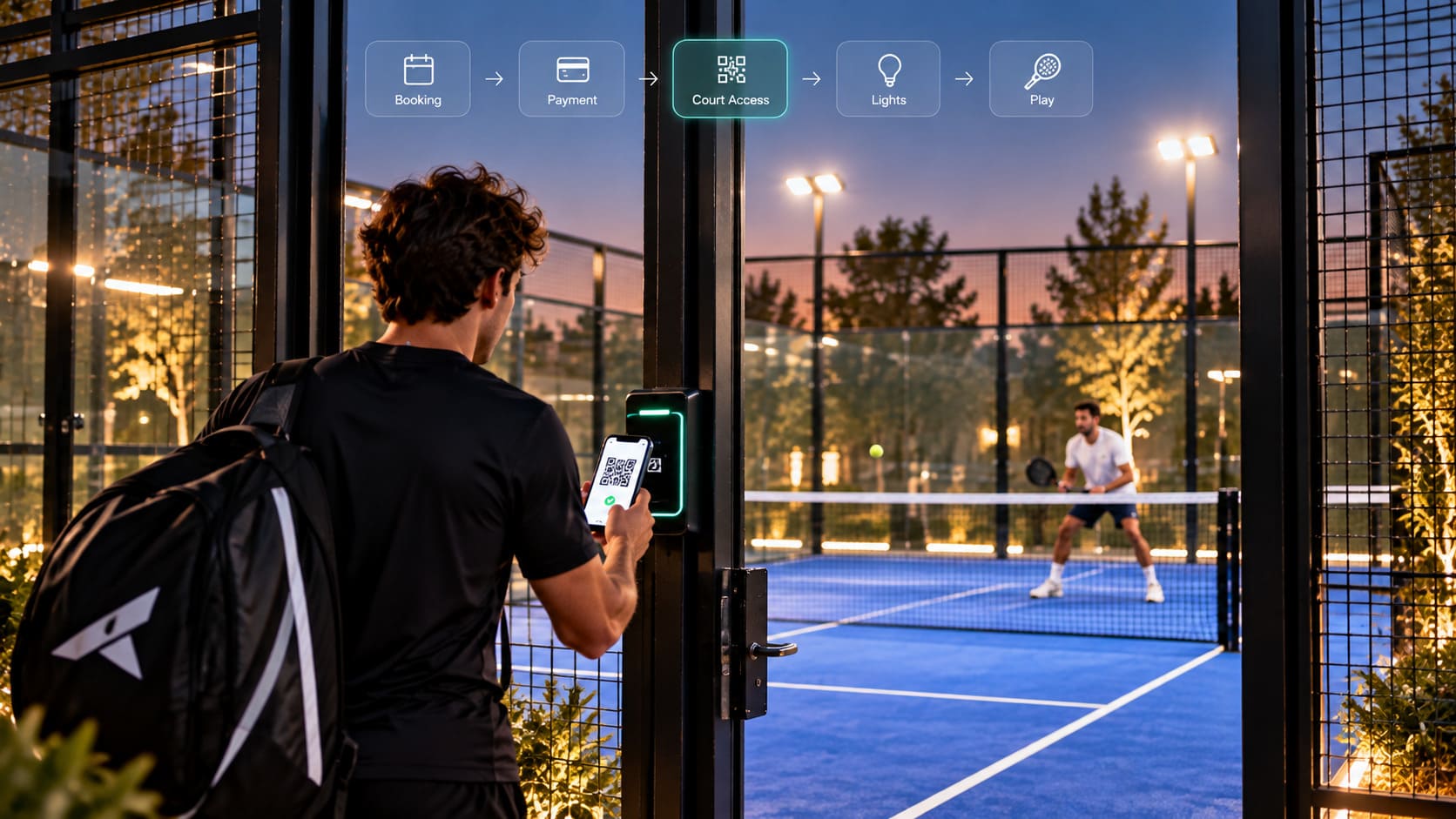
How Does Access Control Work for Padel Clubs? QR Codes, RFID, Smart Locks, Court Lighting, and Bookings Explained.

See Doinsport in action
Ready to grow your padel or tennis club?
Join over 1,000 clubs that run on Doinsport. Book a free demo and see what it can do for your club.
We're here to help.



See Doinsport in action
Ready to grow your padel or tennis club?
Join over 1,000 clubs that run on Doinsport. Book a free demo and see what it can do for your club.
See Doinsport in action
Ready to grow your padel or tennis club?
Join over 1,000 clubs that run on Doinsport. Book a free demo and see what it can do for your club.
We're here to help.