

EN
EN
Padel
How to reduce cancellations and no-shows at your padel club
Discover how to reduce cancellations and no-shows at your padel club with upfront payments, automated reminders, and streamlined court management.

A court cancelled two hours before match time, four players failing to show up, a court left completely empty during peak evening hours… For any padel club manager, these scenarios all lead to the exact same outcome: high-demand court time turns into lost revenue.
Yet not all cancellations are bad for business. When players give sufficient notice, that slot can easily be rebooked. The real challenge lies in minimizing unreported absences, anticipating late cancellations, and instantly relisting open courts for booking.
How can you achieve this without spending hours on the phone or damaging player relationships? Here are seven actionable strategies to protect your bookings and optimize court occupancy across your facility.
Late Cancellations vs. No-Shows: What’s the Difference for Your Club?
A cancellation occurs when a player cancels or asks to cancel their booking prior to the start of the time slot. Its business impact depends primarily on how much lead time you have to resell the court.
A no-show happens when players simply fail to turn up without notifying the club. Management often discovers the absence too late—when the court could have hosted another match.
Addressing both scenarios requires a dual approach: transparent booking policies to deter unwanted behavior, combined with automated, responsive workflows to recover released slots instantly.
How Much Do Unfulfilled Bookings Actually Cost?
Let’s look at a practical scenario: a club charges an average of €36 per booking and loses three slots per week to late cancellations or unrecoverable no-shows.
3 unrecovered slots × €36 = €108 in lost revenue potential per week.
Over 52 weeks, that amounts to €5,616 in unrealized annual revenue.
This illustration serves as a baseline model: it is neither an industry average nor a net profit loss calculation. It also excludes bookings successfully backfilled or non-refundable fees retained under your cancellation policy.
However, it clearly demonstrates why losing even a few slots each week directly impacts the bottom line—especially during peak operating hours.
1. Establish a Clear, Transparent Cancellation Policy
The foundation starts with operations, not software: defining clear guidelines that players easily understand before confirming their booking.
Your policy should explicitly state:
The free cancellation window;
Terms and fees applied to late cancellations;
The policy regarding no-shows;
Refund terms or credit voucher policies, if applicable;
The exact steps required to cancel a reservation.
A standard 24-hour cancellation window is a solid benchmark to start with. However, there is no one-size-fits-all rule: adjust the timeframe based on court demand, member habits, and operational capacity.
Best practice: Display these terms clearly throughout the checkout flow, within your terms of service, and inside booking confirmation messages. Always ensure your policy complies with local consumer regulations.
Dedicated padel club management software consolidates court scheduling, payment rules, and bookings into a single ecosystem, eliminating the need to process requests manually.
2. Secure Bookings with the Right Payment Workflow
Bookings made without financial commitment carry a significantly higher abandonment rate. To mitigate this risk, several payment models can be implemented depending on your club’s business model and clientele.
Full Payment Upfront
Players pay for the entire court fee at the time of booking. This secures immediate cash flow for the club, governed by your cancellation and refund terms.
This model is ideal for prime-time slots and facilities with tech-savvy members accustomed to online payments.
Deposit Payments
The player pays a partial deposit to secure the court, with the remaining balance settled on-site or prior to play based on club policy.
This offers a practical compromise if you want to enforce financial commitment without requiring the full amount upfront.
Credit Card Pre-Authorizations (Card Hold)
A pre-authorization hold secures the booking without charging the player's card immediately. The terms for holding, charging, or releasing the funds must be clearly communicated and configured through your integrated payment gateway.
Additionally, split payments allow group members to pay their share individually, reducing booking friction for the match organizer who may not want to front the entire cost.
All four workflows are natively supported by integrated online payment solutions for padel and tennis clubs. Selecting the optimal setup depends on your player demographics, court pricing, and cancellation terms.
Keep in mind: Upfront payment is not an absolute guarantee against empty courts. While it guarantees revenue under your policy, relisting and getting players onto open courts should always remain the operational priority.
3. Automate Pre-Match Reminders
Players often book several days in advance, making it easy to forget the date, mix up the schedule, or lose track of booking details.
Timely automated reminders reduce no-shows and prompt players to reconfirm their attendance. Consider sending an initial reminder 24 hours prior, followed by a final alert closer to match time where appropriate.
An effective reminder delivers key details at a glance:
Match date and start time;
Club location and allocated court number;
Relevant access instructions or check-in details;
Clear instructions and deadlines for cancelling if needed.
The goal is targeted communication, not notification overload. Monitor player responsiveness and avoid bombarding frequent club members with redundant messages.
Depending on your software setup, reminders can be delivered via email, SMS, or mobile push notifications. Ensure you distinguish between automated transactional booking updates and broader marketing campaigns sent to your member database.
4. Simplify Self-Service Cancellations to Recover Courts Faster
A cumbersome cancellation process doesn't prevent no-shows; it simply discourages players from giving you early notice.
If a player must call the front desk during office hours when they already know the night before that they can’t make it, you lose valuable hours to resell that court time.
Provide a frictionless digital workflow: players access their booking, review applicable cancellation conditions, and cancel seamlessly within the established guidelines.
The impact is substantial: an early cancellation allows you to resell the court; a last-minute no-show leaves zero operational runway.
Equally important is ensuring your digital schedule updates instantly. A freed-up court that still shows as occupied on your booking sheet remains invisible to other players looking to book.
5. Rapidly Resell Released Court Slots
Preventative measures will never eliminate cancellations entirely. The next strategic lever is turning every late cancellation into a rapid rebooking opportunity.
Suppose a player cancels a 7:30 PM court. The club still has several hours to fill the slot—provided the notification reaches the right audience immediately.
Instead of blasting your entire database, target segments most likely to book: regular prime-time players, active evening members, or players who recently searched for similar availability.
A direct message works best: “A court just opened up tonight at 7:30 PM. Book your slot now via the app.”
SMS, targeted email, and in-app push alerts allow you to mobilize your player community instantly. A modern padel club communication and loyalty platform automates this outreach; delivery speed and trigger settings can be tailored to your club’s preferences.
Avoid the trap of immediately discounting every released slot. Analyze your demand first: a prime Friday evening slot doesn't require the same pricing strategy as an off-peak Tuesday morning.
6. Streamline the Mobile Booking Experience
Court-filling campaigns fall flat if interested players encounter friction during the mobile booking checkout.
Review your entire user journey: opening the notification, viewing court availability, logging in, confirming the slot, and completing payment. Every extra tap creates drop-off and delays the rebooking.
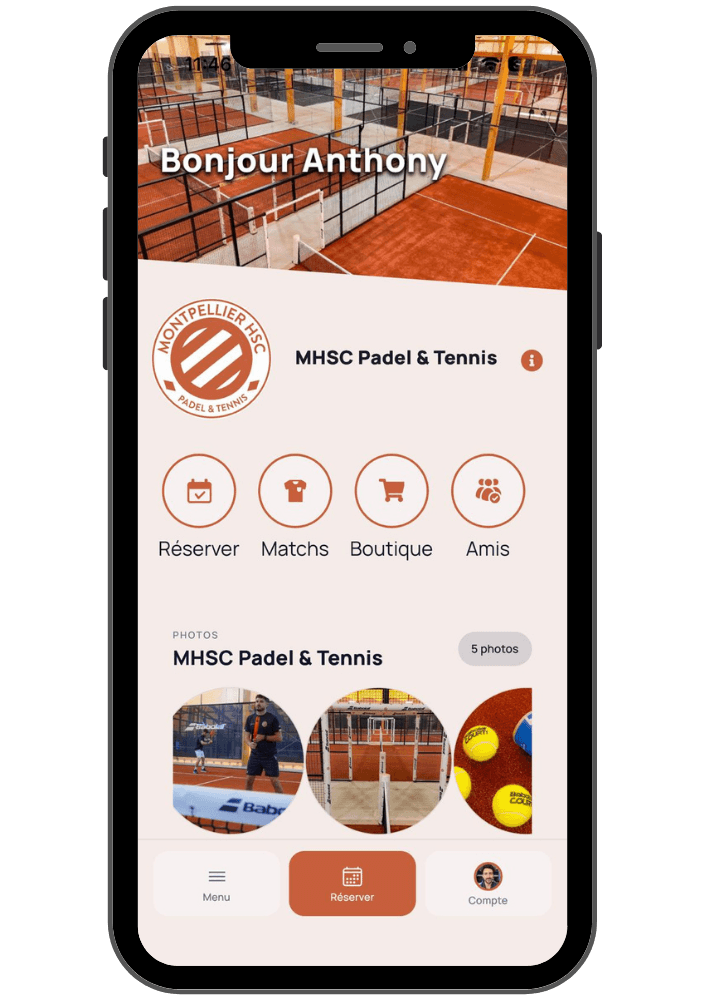
A custom-branded mobile app for your padel club consolidates bookings, secure payments, and notifications inside an interface your community uses every day.
For last-minute court openings, frictionless mobile booking is critical: players need to act instantly without searching for your website or calling the front desk.
7. Track Metrics to Identify and Fix Root Causes
Before tightening policies or adding more player alerts, analyze your operational data to see where court attrition actually occurs.
Track advance cancellations, late cancellations, and no-shows as distinct metrics. Each has a completely different impact on court utilization and club revenue.
KPI | Formula / Tracking Method | Strategic Value |
|---|---|---|
Cancellation Rate | Cancelled bookings ÷ Total confirmed bookings | Measures overall cancellation volume |
Late Cancellation Rate | Cancellations inside policy window ÷ Total confirmed bookings | Identifies slots that are difficult to recover |
No-Show Rate | Unfulfilled bookings without notice ÷ Total confirmed bookings | Tracks unreported absences |
Court Recovery Rate | Rebooked cancelled slots ÷ Total cancelled slots relisted | Evaluates ability to backfill open courts |
Unrealized Revenue | Total value of unbooked empty slots, net of retained fees | Calculates bottom-line financial impact |
Keep tracking definitions consistent month over month, analyzing performance by day of the week, time block, and booking category.
For instance, if late cancellations spike exclusively during high-demand peak hours, test targeted payment rules on those specific slots rather than penalizing all members across the board.
To optimize broader facility utilization beyond cancellation recovery, explore proven strategies to boost your padel club court occupancy rates.

30-Day Action Plan: Cut Lost Bookings and Boost Occupancy
Week 1: Audit. Track current cancellations, no-shows, and unrecovered court hours. Identify recurring days, times, and player segments driving the trend.
Week 2: Refine. Audit cancellation policies, front-end visibility during checkout, and the payment options offered to players.
Week 3: Automate. Roll out automated pre-match reminders and a frictionless mobile cancellation flow. Configure quick-send alerts to notify active players when courts open up.
Week 4: Optimize. Re-evaluate your late cancellation and no-show rates alongside your court recovery rate. Adjust one variable at a time: notice window, payment requirements, or messaging cadence.
This structured approach delivers measurable revenue recovery without adding operational friction for your loyal player base.
How Doinsport Empowers Clubs to Protect Court Revenue
Eliminating lost bookings requires uniting three core pillars: seamless scheduling, automated payment security, and targeted player communication.
Doinsport brings these elements together in an all-in-one management platform: online court booking, flexible payment configurations—full payment, split billing, deposits, or card pre-authorizations—and automated messaging via SMS, email, and push notifications. Every feature can be tailored to match your facility's operational workflow.
The objective isn't to guarantee zero cancellations; it's to eliminate preventable revenue leakage, maintain transparent booking rules, and maximize rebooking rates for every open court.
Ready to see how automated court management can optimize your facility? Book your Doinsport demo today.

FAQ: Handling Cancellations and No-Shows in Padel Clubs
What is the operational difference between a cancellation and a no-show?
A cancellation is reported in advance, leaving a window of time to resell the court. A no-show occurs when players fail to attend without notice. Segmenting both allows clubs to measure recovered inventory versus unrecoverable losses.
What is the standard cancellation window for a padel club?
There is no single standard. A 24-hour window is commonly adopted, but policies should be calibrated against court demand levels, member booking habits, and local legal requirements.
Does upfront payment eliminate no-shows?
Upfront payment incentivizes attendance and secures revenue according to your terms, but it does not guarantee court presence. It should always be paired with an automated workflow to relist and backfill open courts.
Should my club use deposits or credit card pre-authorizations?
Deposits charge a partial fee at booking, while pre-authorizations hold a security guarantee via your payment gateway. Evaluate both based on member checkout experience, financial setup, and your enforcement strategy.
What is the best way to backfill a last-minute cancelled court?
Instantly return the slot to the public schedule and trigger targeted notifications to high-intent player segments: frequent peak-hour players, local members, or users who recently searched for that time slot.
Which KPIs are essential for tracking lost court revenue?
Focus on your late cancellation rate, no-show rate, court recovery rate, and total unrealized revenue. Segment these metrics by day and time slot to deploy data-driven operational adjustments.
Key Takeaways
To protect court revenue in your padel club, start with clear operational rules, secure slots with flexible payment options, and enable automated reminders and self-service cancellations. Then, optimize your ability to relist open slots instantly and track performance data.
The goal isn't to stop players from changing their plans—it's to ensure a schedule change never results in an empty court.
A court cancelled two hours before match time, four players failing to show up, a court left completely empty during peak evening hours… For any padel club manager, these scenarios all lead to the exact same outcome: high-demand court time turns into lost revenue.
Yet not all cancellations are bad for business. When players give sufficient notice, that slot can easily be rebooked. The real challenge lies in minimizing unreported absences, anticipating late cancellations, and instantly relisting open courts for booking.
How can you achieve this without spending hours on the phone or damaging player relationships? Here are seven actionable strategies to protect your bookings and optimize court occupancy across your facility.
Late Cancellations vs. No-Shows: What’s the Difference for Your Club?
A cancellation occurs when a player cancels or asks to cancel their booking prior to the start of the time slot. Its business impact depends primarily on how much lead time you have to resell the court.
A no-show happens when players simply fail to turn up without notifying the club. Management often discovers the absence too late—when the court could have hosted another match.
Addressing both scenarios requires a dual approach: transparent booking policies to deter unwanted behavior, combined with automated, responsive workflows to recover released slots instantly.
How Much Do Unfulfilled Bookings Actually Cost?
Let’s look at a practical scenario: a club charges an average of €36 per booking and loses three slots per week to late cancellations or unrecoverable no-shows.
3 unrecovered slots × €36 = €108 in lost revenue potential per week.
Over 52 weeks, that amounts to €5,616 in unrealized annual revenue.
This illustration serves as a baseline model: it is neither an industry average nor a net profit loss calculation. It also excludes bookings successfully backfilled or non-refundable fees retained under your cancellation policy.
However, it clearly demonstrates why losing even a few slots each week directly impacts the bottom line—especially during peak operating hours.
1. Establish a Clear, Transparent Cancellation Policy
The foundation starts with operations, not software: defining clear guidelines that players easily understand before confirming their booking.
Your policy should explicitly state:
The free cancellation window;
Terms and fees applied to late cancellations;
The policy regarding no-shows;
Refund terms or credit voucher policies, if applicable;
The exact steps required to cancel a reservation.
A standard 24-hour cancellation window is a solid benchmark to start with. However, there is no one-size-fits-all rule: adjust the timeframe based on court demand, member habits, and operational capacity.
Best practice: Display these terms clearly throughout the checkout flow, within your terms of service, and inside booking confirmation messages. Always ensure your policy complies with local consumer regulations.
Dedicated padel club management software consolidates court scheduling, payment rules, and bookings into a single ecosystem, eliminating the need to process requests manually.
2. Secure Bookings with the Right Payment Workflow
Bookings made without financial commitment carry a significantly higher abandonment rate. To mitigate this risk, several payment models can be implemented depending on your club’s business model and clientele.
Full Payment Upfront
Players pay for the entire court fee at the time of booking. This secures immediate cash flow for the club, governed by your cancellation and refund terms.
This model is ideal for prime-time slots and facilities with tech-savvy members accustomed to online payments.
Deposit Payments
The player pays a partial deposit to secure the court, with the remaining balance settled on-site or prior to play based on club policy.
This offers a practical compromise if you want to enforce financial commitment without requiring the full amount upfront.
Credit Card Pre-Authorizations (Card Hold)
A pre-authorization hold secures the booking without charging the player's card immediately. The terms for holding, charging, or releasing the funds must be clearly communicated and configured through your integrated payment gateway.
Additionally, split payments allow group members to pay their share individually, reducing booking friction for the match organizer who may not want to front the entire cost.
All four workflows are natively supported by integrated online payment solutions for padel and tennis clubs. Selecting the optimal setup depends on your player demographics, court pricing, and cancellation terms.
Keep in mind: Upfront payment is not an absolute guarantee against empty courts. While it guarantees revenue under your policy, relisting and getting players onto open courts should always remain the operational priority.
3. Automate Pre-Match Reminders
Players often book several days in advance, making it easy to forget the date, mix up the schedule, or lose track of booking details.
Timely automated reminders reduce no-shows and prompt players to reconfirm their attendance. Consider sending an initial reminder 24 hours prior, followed by a final alert closer to match time where appropriate.
An effective reminder delivers key details at a glance:
Match date and start time;
Club location and allocated court number;
Relevant access instructions or check-in details;
Clear instructions and deadlines for cancelling if needed.
The goal is targeted communication, not notification overload. Monitor player responsiveness and avoid bombarding frequent club members with redundant messages.
Depending on your software setup, reminders can be delivered via email, SMS, or mobile push notifications. Ensure you distinguish between automated transactional booking updates and broader marketing campaigns sent to your member database.
4. Simplify Self-Service Cancellations to Recover Courts Faster
A cumbersome cancellation process doesn't prevent no-shows; it simply discourages players from giving you early notice.
If a player must call the front desk during office hours when they already know the night before that they can’t make it, you lose valuable hours to resell that court time.
Provide a frictionless digital workflow: players access their booking, review applicable cancellation conditions, and cancel seamlessly within the established guidelines.
The impact is substantial: an early cancellation allows you to resell the court; a last-minute no-show leaves zero operational runway.
Equally important is ensuring your digital schedule updates instantly. A freed-up court that still shows as occupied on your booking sheet remains invisible to other players looking to book.
5. Rapidly Resell Released Court Slots
Preventative measures will never eliminate cancellations entirely. The next strategic lever is turning every late cancellation into a rapid rebooking opportunity.
Suppose a player cancels a 7:30 PM court. The club still has several hours to fill the slot—provided the notification reaches the right audience immediately.
Instead of blasting your entire database, target segments most likely to book: regular prime-time players, active evening members, or players who recently searched for similar availability.
A direct message works best: “A court just opened up tonight at 7:30 PM. Book your slot now via the app.”
SMS, targeted email, and in-app push alerts allow you to mobilize your player community instantly. A modern padel club communication and loyalty platform automates this outreach; delivery speed and trigger settings can be tailored to your club’s preferences.
Avoid the trap of immediately discounting every released slot. Analyze your demand first: a prime Friday evening slot doesn't require the same pricing strategy as an off-peak Tuesday morning.
6. Streamline the Mobile Booking Experience
Court-filling campaigns fall flat if interested players encounter friction during the mobile booking checkout.
Review your entire user journey: opening the notification, viewing court availability, logging in, confirming the slot, and completing payment. Every extra tap creates drop-off and delays the rebooking.
A custom-branded mobile app for your padel club consolidates bookings, secure payments, and notifications inside an interface your community uses every day.
For last-minute court openings, frictionless mobile booking is critical: players need to act instantly without searching for your website or calling the front desk.
7. Track Metrics to Identify and Fix Root Causes
Before tightening policies or adding more player alerts, analyze your operational data to see where court attrition actually occurs.
Track advance cancellations, late cancellations, and no-shows as distinct metrics. Each has a completely different impact on court utilization and club revenue.
KPI | Formula / Tracking Method | Strategic Value |
|---|---|---|
Cancellation Rate | Cancelled bookings ÷ Total confirmed bookings | Measures overall cancellation volume |
Late Cancellation Rate | Cancellations inside policy window ÷ Total confirmed bookings | Identifies slots that are difficult to recover |
No-Show Rate | Unfulfilled bookings without notice ÷ Total confirmed bookings | Tracks unreported absences |
Court Recovery Rate | Rebooked cancelled slots ÷ Total cancelled slots relisted | Evaluates ability to backfill open courts |
Unrealized Revenue | Total value of unbooked empty slots, net of retained fees | Calculates bottom-line financial impact |
Keep tracking definitions consistent month over month, analyzing performance by day of the week, time block, and booking category.
For instance, if late cancellations spike exclusively during high-demand peak hours, test targeted payment rules on those specific slots rather than penalizing all members across the board.
To optimize broader facility utilization beyond cancellation recovery, explore proven strategies to boost your padel club court occupancy rates.
30-Day Action Plan: Cut Lost Bookings and Boost Occupancy
Week 1: Audit. Track current cancellations, no-shows, and unrecovered court hours. Identify recurring days, times, and player segments driving the trend.
Week 2: Refine. Audit cancellation policies, front-end visibility during checkout, and the payment options offered to players.
Week 3: Automate. Roll out automated pre-match reminders and a frictionless mobile cancellation flow. Configure quick-send alerts to notify active players when courts open up.
Week 4: Optimize. Re-evaluate your late cancellation and no-show rates alongside your court recovery rate. Adjust one variable at a time: notice window, payment requirements, or messaging cadence.
This structured approach delivers measurable revenue recovery without adding operational friction for your loyal player base.
How Doinsport Empowers Clubs to Protect Court Revenue
Eliminating lost bookings requires uniting three core pillars: seamless scheduling, automated payment security, and targeted player communication.
Doinsport brings these elements together in an all-in-one management platform: online court booking, flexible payment configurations—full payment, split billing, deposits, or card pre-authorizations—and automated messaging via SMS, email, and push notifications. Every feature can be tailored to match your facility's operational workflow.
The objective isn't to guarantee zero cancellations; it's to eliminate preventable revenue leakage, maintain transparent booking rules, and maximize rebooking rates for every open court.
Ready to see how automated court management can optimize your facility? Book your Doinsport demo today.
FAQ: Handling Cancellations and No-Shows in Padel Clubs
What is the operational difference between a cancellation and a no-show?
A cancellation is reported in advance, leaving a window of time to resell the court. A no-show occurs when players fail to attend without notice. Segmenting both allows clubs to measure recovered inventory versus unrecoverable losses.
What is the standard cancellation window for a padel club?
There is no single standard. A 24-hour window is commonly adopted, but policies should be calibrated against court demand levels, member booking habits, and local legal requirements.
Does upfront payment eliminate no-shows?
Upfront payment incentivizes attendance and secures revenue according to your terms, but it does not guarantee court presence. It should always be paired with an automated workflow to relist and backfill open courts.
Should my club use deposits or credit card pre-authorizations?
Deposits charge a partial fee at booking, while pre-authorizations hold a security guarantee via your payment gateway. Evaluate both based on member checkout experience, financial setup, and your enforcement strategy.
What is the best way to backfill a last-minute cancelled court?
Instantly return the slot to the public schedule and trigger targeted notifications to high-intent player segments: frequent peak-hour players, local members, or users who recently searched for that time slot.
Which KPIs are essential for tracking lost court revenue?
Focus on your late cancellation rate, no-show rate, court recovery rate, and total unrealized revenue. Segment these metrics by day and time slot to deploy data-driven operational adjustments.
Key Takeaways
To protect court revenue in your padel club, start with clear operational rules, secure slots with flexible payment options, and enable automated reminders and self-service cancellations. Then, optimize your ability to relist open slots instantly and track performance data.
The goal isn't to stop players from changing their plans—it's to ensure a schedule change never results in an empty court.
Similar articles
Oct 14, 2026
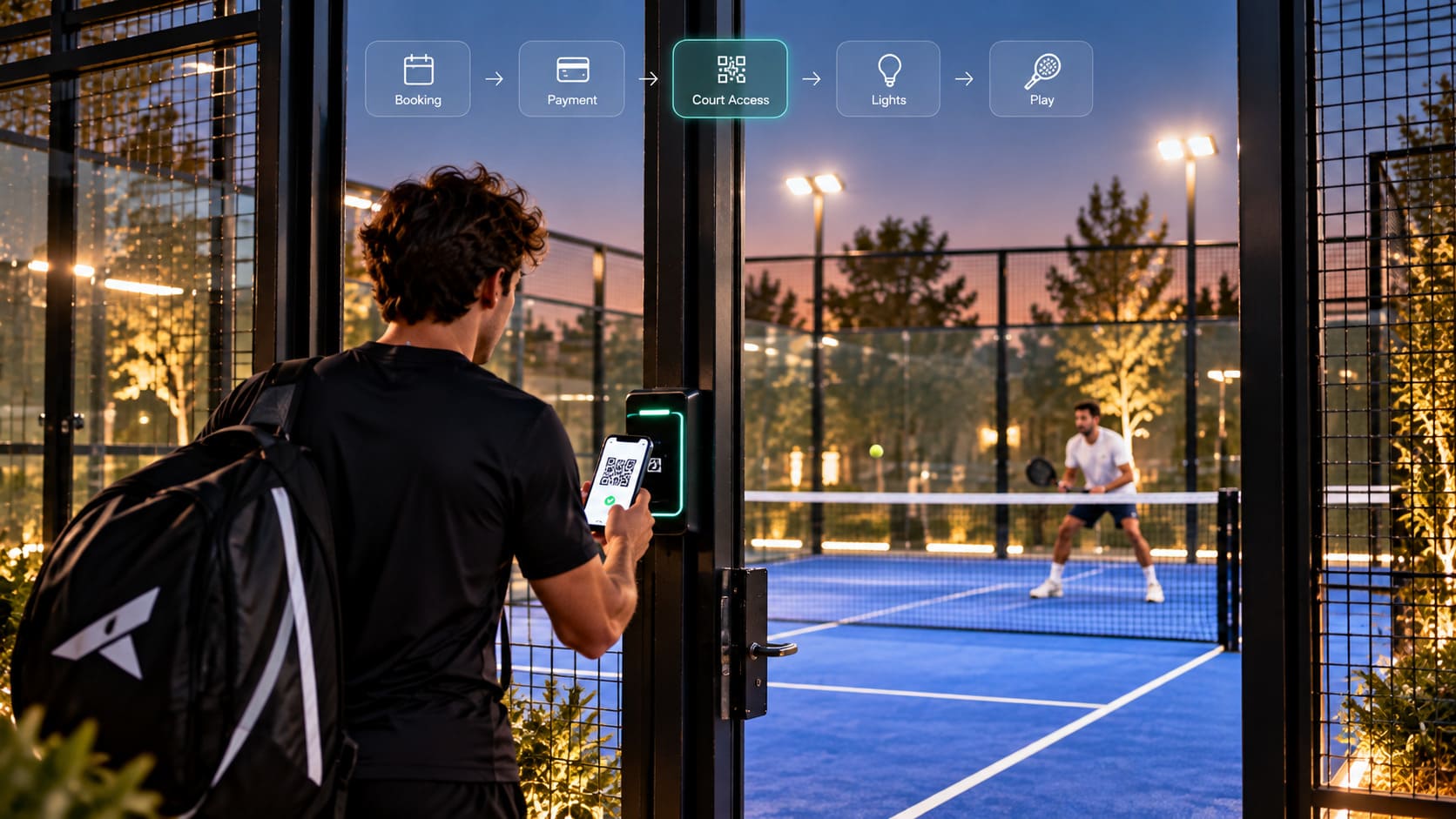
How Does Access Control Work for Padel Clubs? QR Codes, RFID, Smart Locks, Court Lighting, and Bookings Explained.

Oct 1, 2026
How to Drive Player Retention at Your Padel Club: Discover 10 Proven Strategies to Boost Court Bookings, Re-engage Members, and Grow Your Revenue.

Take your club to the next level
Ready to transform your padel, tennis, and country club?
Join the +1,000 clubs that trust Doinsport. Get started in less than 30 minutes and see the difference from the very first day.
We are here to support you.


Take your club to the next level
Ready to transform your padel, tennis, and country club?
Join the +1,000 clubs that trust Doinsport. Get started in less than 30 minutes and see the difference from the very first day.
Take your club to the next level
Ready to transform your padel, tennis, and country club?
Join the +1,000 clubs that trust Doinsport. Get started in less than 30 minutes and see the difference from the very first day.
We are here to support you.