

EN
EN
padel
Opening a Padel Club in 2026: The Complete Guide
In this comprehensive guide, we detail each step to open your padel club in 2026 and maximize your chances of profitability from the start.
Estimated reading time: 12 minutes
Padel is booming in France: why now is the right time
Padel is no longer a passing trend — it is a wave. France has gone from 628 clubs in 2023 to over 925 in 2024, and projections estimate more than 1,300 clubs by the end of 2025. The sector today represents a market of over 2 billion euros in France, with more than 600,000 regular players and an annual growth rate of 50%.
For an entrepreneur, the numbers are clear: a well-managed padel club can become profitable in 2 to 3 years, with a net margin between 13% and 20% of turnover.
So, how do you open a padel club from A to Z? Here’s the complete guide, without any beating around the bush.
Step 1: Validate your project with market research
Before any investment, you need to understand your territory. Your market study should focus on your region and more specifically on the geographical area where you wish to create your club, to ensure that demand is sufficient to be profitable.
Analyze concretely:
The number of competing clubs within a 20 km radius
The population density and socio-demographic profile (CSP+, active between 25–50 years)
Car access and availability of parking (decisive criterion)
Areas still under-equipped
Padel is particularly strong in the south and major cities, but coastal and border areas still offer numerous opportunities. The most dynamic regions remain Île-de-France, the Côte d'Azur, and the Lyon region.
Good to know: even in already equipped areas, demand often exceeds supply. With 3,000 courts spread across 1,000 clubs by 2025, current facilities are often saturated.
Step 2: Choose the right legal structure
Creating a legal entity is mandatory to operate a padel club commercially. The statutes of your company must define its purpose (opening a padel club) and the rules of operation. To ensure compliance, it is advisable to consult a lawyer or an accountant.
The most suitable legal forms:
SAS (Société par Actions Simplifiée) — the most common for projects with partners. Great statutory flexibility, ideal if you are raising funds or integrating investors.
SARL — relevant for family projects or between 2–3 partners with modest capital.
1901 law association — possible if you opt for a non-profit model, often coupled with FFT affiliation. Advantage: easier access to public subsidies.
Once the statutes are drafted, you must deposit the share capital in a professional bank account, then register with the Trade and Companies Register (RCS).
Step 3: Estimate the budget and find financing
This is the step that discourages many project leaders — wrongly, as financing solutions are numerous.
The initial budget
You should budget between 250,000 and 500,000 euros to start a project with 4 courts. Here’s the typical breakdown of expense items:
Construction of courts: the cost of the courts represents a significant share of the initial budget, with a minimum of 50,000 € per padel court.
Clubhouse and reception area: the budget varies widely — from 20,000 € for simple fitting to over 150,000 € for a complete building.
Changing rooms and sanitary facilities: essential for customer comfort, budget between 15,000 € and 40,000 € depending on size and level of finishing.
Bar and pro shop area: the setup and initial stock can represent between 10,000 € and 30,000 €. This is a supplementary source of income not to be overlooked.
Long-term maintenance: a well-constructed court can last 15 years, but you will need to replace the carpet every 7 years (between 6,000 € and 10,000 € per court).
Funding sources
Personal contribution: generally 20 to 30 % of the project
Traditional bank loan: the cornerstone of the financing plan, supported by a solid business plan
Public subsidies: in 2026, the main grant for the creation of padel courts comes from the National Sports Agency (ANS), often in partnership with the French Tennis Federation (FFT), with aid targeting clubs and local authorities.
Crowdfunding / private debt: increasingly used to complement the funding round
Private investors: relevant if you aim for a large-scale project from the start
Step 4: Find and secure the ideal location for your padel
Location is undoubtedly the most strategic decision of your project. A poor site can ruin an excellent concept.
Essential criteria in 2026
Visibility and accessibility — your club should be easily found, ideally on a busy road or near a commercial area. Parking is non-negotiable.
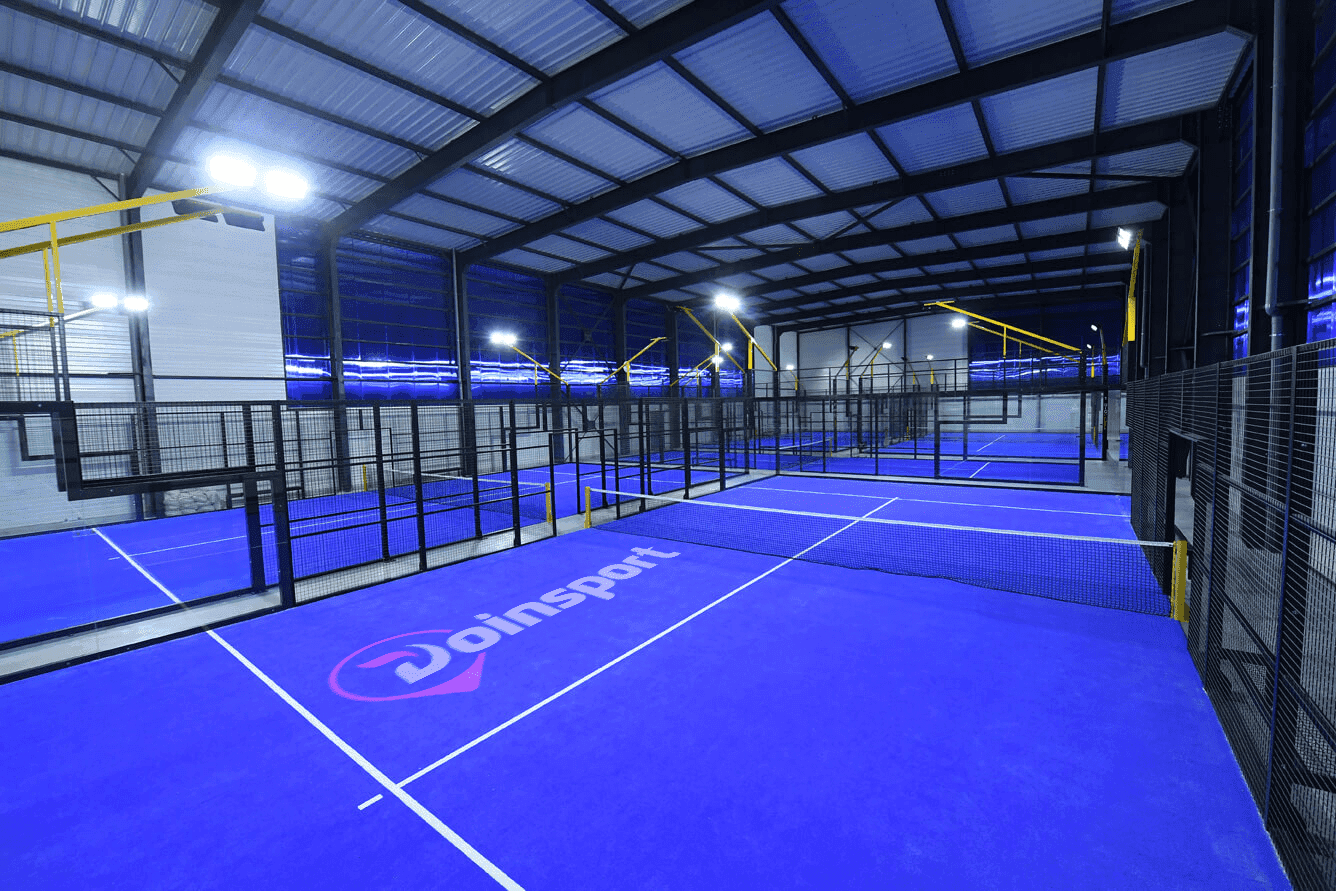
The available area — a standard padel court measures 10 m x 20 m, plus necessary clearances, changing rooms, reception, and relaxation areas. For 4 courts, budget at least 1,500 to 2,000 m² of total area.
Indoor vs outdoor — covered courts allow play 12 months a year and maximize occupancy rates, but involve much higher structural investment. Outdoor courts are more financially accessible, but sensitive to weather fluctuations.
The PLU (Local Urban Planning Plan) — before signing anything, check that your project complies with local urban planning regulations.
Administrative steps for the premises
If you plan to build new facilities or renovate existing structures, a building permit is essential. This document, issued by the municipality, ensures that your work complies with urban planning regulations and local environmental standards.
Specific authorizations may also be required depending on the location: accessibility permits for disabled individuals, parking permits if your club does not have its own parking, and potentially a noise permit if the club's activities are likely to generate noise disturbances.
Step 5: Obtain the necessary certifications and authorizations
This step is often underestimated. Here’s what you absolutely need to obtain before opening your doors.
Legal obligations in 2026
ERP status (Establishment Receiving the Public): your club is subject to strict fire safety, accessibility, and evacuation standards. A certificate of compliance for sports facilities is mandatory: it confirms that your infrastructure meets safety and quality standards, including assessments of courts, changing rooms, lighting, and security systems.
Commercial operating authorization: this certificate is issued by the local chamber of commerce and allows your business to carry out commercial activities.
Professional liability insurance: like any sports facility, you must take out professional liability insurance. It covers bodily injury, property damage, and immaterial damages caused to third parties, especially in case of injury to a player engaging the club's liability.
Liquor license: if you plan to include a bar or restaurant in your club, you will need to obtain a specific operating license.
Qualifications for supervision
No specific diploma is required to open a padel club as a manager, but qualifications are essential for teaching. The French Tennis Federation (FFT) issues the Professional Purpose Title (TPP) "padel instructor," which requires 240 hours of training and at least 100 hours of alternating internship.
If you hire instructors, each must hold this TPP.
Step 6: Build the padel courts and choose your equipment
Choose your builder wisely
The French market has several reference builders, but they are not all equal. Pay particular attention to the quality of the steel frame: low-end structures cannot withstand temperature changes and may rust quickly.
The selection criteria for a good builder:
References and achievements in France
Quality of materials (galvanized steel, safety glass, certified carpet)
After-sales service and guarantees
Realistic delivery times
Supplementary equipment
Don’t overlook the equipment that enhances player experience: quality LED lighting, sound systems, display panels, charging stations for bikes and electric cars, and efficient Wi-Fi throughout the spaces.
Step 7: Your club in a franchise or independent?
This is one of the most defining questions of your project.
Padel franchises in France
In 2026, the main padel franchises in France are 4PADEL (26+ clubs), Urban Padel (14+ clubs), Padel Shot, Casa Padel, and Esprit Padel. Each network has its own positioning, target clientele, and conditions.
Advantages of franchising: immediate notoriety, proven concept, start-up support, negotiation power with suppliers.
Disadvantages: in franchising, you will need to return between 5% and 20% of your turnover to the franchisor, in addition to entry fees ranging from 15,000 € to 50,000 €.
Independently: total freedom over strategy, pricing, and visual identity. You build your own local brand — often an asset to create a true community around your club.
Step 8: Define your business model and pricing
Revenue sources of a padel club
Court rentals remain the backbone of your turnover. Rates range from 10 € to 30 € per hour depending on time slots and geographical area. The occupancy rate is your key indicator.
Subscriptions are a powerful tool to secure your recurring revenue and retain your clientele. Offer monthly or annual packages with exclusive benefits (priority booking, preferential rates, access to classes).
Group classes and camps generate regular income while enhancing the educational offering of your club.
The bar and pro shop can represent 15 to 25% of your total turnover if well managed. Invest there seriously.
Organizing tournaments: tournaments generate significant economic returns for organizing clubs — court rentals, concessions, pro shop — with an average turnover of 15,000 to 50,000 euros per event depending on scale.
Step 9: Launch your marketing strategy and fill your courts
Opening a padel club is also about launching a local brand. Don’t underestimate this aspect.
Before opening your club
Create a Google My Business presence as soon as the address is fixed
Launch an Instagram account and publish behind-the-scenes construction content
Build a waiting list for the first founding members with a preferential rate
Contact local businesses for team-building offers
At launch
Organize an open house with free demonstrations
Offer a free first session or discounted subscriptions to retain your clients from day one.
Invite local press and sports influencers from your area
Affiliate with FFT to provide your members access to official competitions
In the long term
Establish a regular content strategy (padel tips, tournament results, member testimonials), activate word-of-mouth through a referral program, and measure your key indicators monthly: occupancy rate, revenue per court, subscriber retention rate.
Step 10: Digitalize your padel club to save time and retain
This is the step that many padel entrepreneurs neglect at the start — and that they quickly regret. A padel club generates a significant amount of data and interactions: bookings, payments, subscriptions, communication with members, tournament management…
Managing all this manually on WhatsApp or Excel is time-consuming, error-prone, and especially a customer experience below current expectations.
A club management software specifically designed for sports clubs has become essential. It allows you to:
Offer online booking 24/7 to your members (no calls, no friction)
Automatically manage payments and subscriptions
Send automatic reminders to reduce no-shows
Monitor your occupancy rate in real-time
Create and manage tournaments directly from the platform
Centralize your member database and segment your communications
This is exactly what Doinsport was designed to meet these needs.
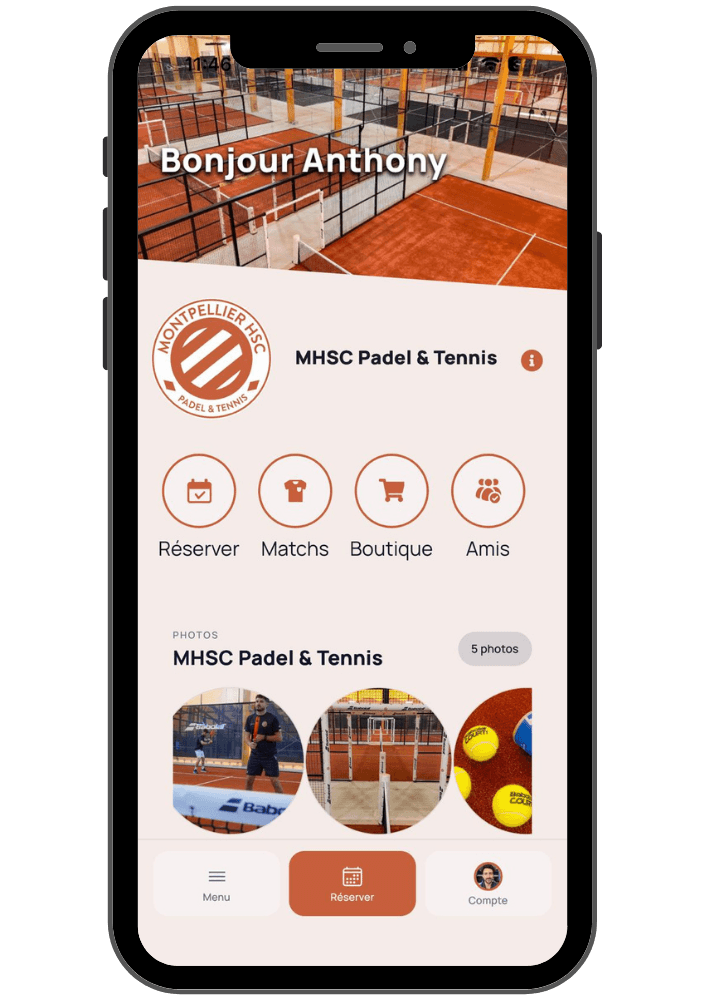
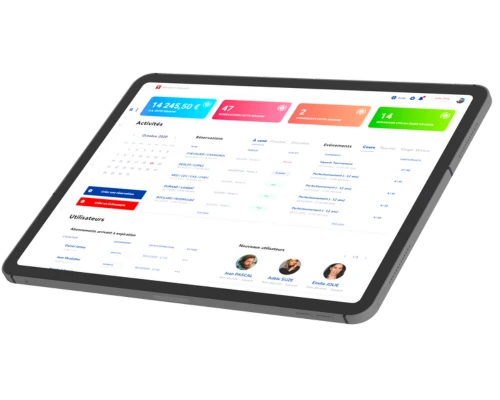
Doinsport is an all-in-one management solution specially designed for sports clubs, and specifically for padel clubs. The platform is used by hundreds of clubs in France and Europe. It offers you a white-label mobile application in your colors, an integrated online booking system, subscription and hour management, as well as marketing tools to engage your community.
In concrete terms: less time spent on administration, more time to develop your club.
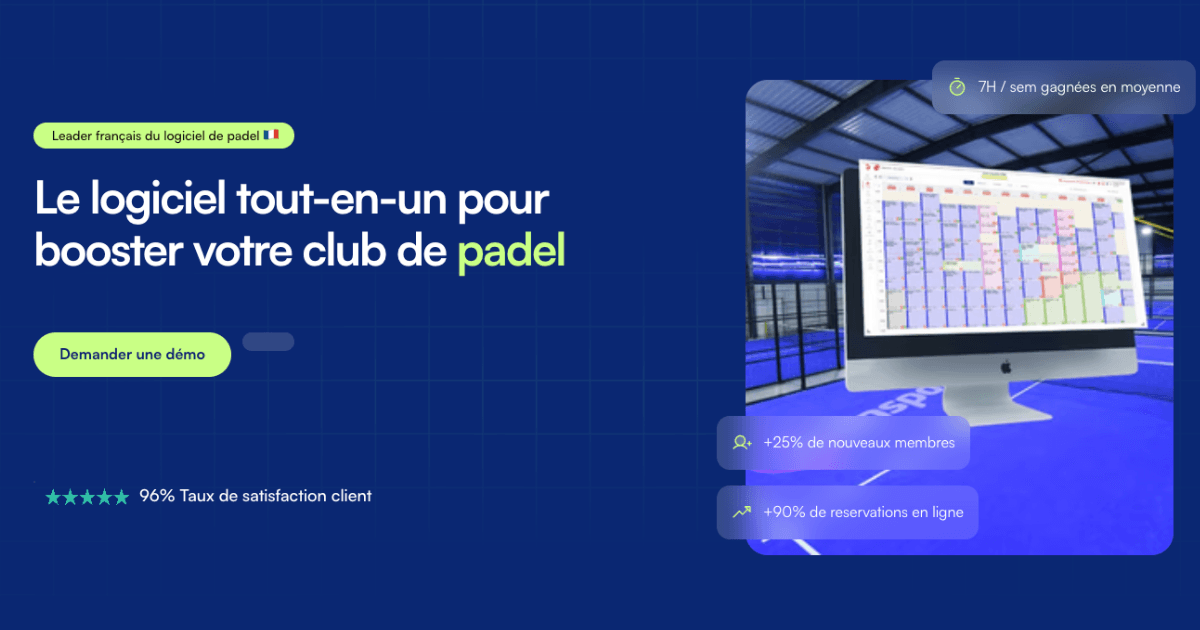
👉 Request a Doinsport demo — and start your club with the right tools from day one.
FAQ — Frequently asked questions about opening a padel club in 2026
How much does it really cost to open a padel club? For a project of 4 courts — the standard configuration to aim for good profitability — the initial investment ranges from 250,000 to 500,000 euros.
Do you need a diploma to open a padel club? No specific diploma is required to be a manager, but it is recommended to have knowledge in business, marketing, or a degree like STAPS. However, to supervise and teach, an FFT certification is mandatory.
How long does it take for a padel club to become profitable? A well-managed padel club can achieve profitability in 2 to 3 years, with a net margin between 13% and 20%.
Is it better to opt for a franchise or remain independent? It depends on your profile. Franchising provides immediate notoriety and structured support, but it reduces your margins and operational freedom. Independence allows you to build a strong local identity and keep 100% of your revenue.
Are there public subsidies available? Yes — in 2026, the main support comes from the National Sports Agency (ANS), often in partnership with the FFT. These subsidies target clubs and communities wishing to develop sports infrastructure.
Conclusion
Opening a padel club in 2026 is a solid entrepreneurial opportunity, driven by a strong structural demand. But it is also a demanding project that requires rigorous preparation: market study, financial setup, site selection, administrative steps, recruitment, marketing… and digitalization.
Successful clubs are not necessarily those with the most courts or the biggest budget. They are the ones that provide the best player experience from the moment a member books online to the shared drink after the match.
Put all the chances on your side: surround yourself with the right partners, choose tools designed for your profession, and build a solid community around your club.
Estimated reading time: 12 minutes
Padel is booming in France: why now is the right time
Padel is no longer a passing trend — it is a wave. France has gone from 628 clubs in 2023 to over 925 in 2024, and projections estimate more than 1,300 clubs by the end of 2025. The sector today represents a market of over 2 billion euros in France, with more than 600,000 regular players and an annual growth rate of 50%.
For an entrepreneur, the numbers are clear: a well-managed padel club can become profitable in 2 to 3 years, with a net margin between 13% and 20% of turnover.
So, how do you open a padel club from A to Z? Here’s the complete guide, without any beating around the bush.
Step 1: Validate your project with market research
Before any investment, you need to understand your territory. Your market study should focus on your region and more specifically on the geographical area where you wish to create your club, to ensure that demand is sufficient to be profitable.
Analyze concretely:
The number of competing clubs within a 20 km radius
The population density and socio-demographic profile (CSP+, active between 25–50 years)
Car access and availability of parking (decisive criterion)
Areas still under-equipped
Padel is particularly strong in the south and major cities, but coastal and border areas still offer numerous opportunities. The most dynamic regions remain Île-de-France, the Côte d'Azur, and the Lyon region.
Good to know: even in already equipped areas, demand often exceeds supply. With 3,000 courts spread across 1,000 clubs by 2025, current facilities are often saturated.
Step 2: Choose the right legal structure
Creating a legal entity is mandatory to operate a padel club commercially. The statutes of your company must define its purpose (opening a padel club) and the rules of operation. To ensure compliance, it is advisable to consult a lawyer or an accountant.
The most suitable legal forms:
SAS (Société par Actions Simplifiée) — the most common for projects with partners. Great statutory flexibility, ideal if you are raising funds or integrating investors.
SARL — relevant for family projects or between 2–3 partners with modest capital.
1901 law association — possible if you opt for a non-profit model, often coupled with FFT affiliation. Advantage: easier access to public subsidies.
Once the statutes are drafted, you must deposit the share capital in a professional bank account, then register with the Trade and Companies Register (RCS).
Step 3: Estimate the budget and find financing
This is the step that discourages many project leaders — wrongly, as financing solutions are numerous.
The initial budget
You should budget between 250,000 and 500,000 euros to start a project with 4 courts. Here’s the typical breakdown of expense items:
Construction of courts: the cost of the courts represents a significant share of the initial budget, with a minimum of 50,000 € per padel court.
Clubhouse and reception area: the budget varies widely — from 20,000 € for simple fitting to over 150,000 € for a complete building.
Changing rooms and sanitary facilities: essential for customer comfort, budget between 15,000 € and 40,000 € depending on size and level of finishing.
Bar and pro shop area: the setup and initial stock can represent between 10,000 € and 30,000 €. This is a supplementary source of income not to be overlooked.
Long-term maintenance: a well-constructed court can last 15 years, but you will need to replace the carpet every 7 years (between 6,000 € and 10,000 € per court).
Funding sources
Personal contribution: generally 20 to 30 % of the project
Traditional bank loan: the cornerstone of the financing plan, supported by a solid business plan
Public subsidies: in 2026, the main grant for the creation of padel courts comes from the National Sports Agency (ANS), often in partnership with the French Tennis Federation (FFT), with aid targeting clubs and local authorities.
Crowdfunding / private debt: increasingly used to complement the funding round
Private investors: relevant if you aim for a large-scale project from the start
Step 4: Find and secure the ideal location for your padel
Location is undoubtedly the most strategic decision of your project. A poor site can ruin an excellent concept.
Essential criteria in 2026
Visibility and accessibility — your club should be easily found, ideally on a busy road or near a commercial area. Parking is non-negotiable.
The available area — a standard padel court measures 10 m x 20 m, plus necessary clearances, changing rooms, reception, and relaxation areas. For 4 courts, budget at least 1,500 to 2,000 m² of total area.
Indoor vs outdoor — covered courts allow play 12 months a year and maximize occupancy rates, but involve much higher structural investment. Outdoor courts are more financially accessible, but sensitive to weather fluctuations.
The PLU (Local Urban Planning Plan) — before signing anything, check that your project complies with local urban planning regulations.
Administrative steps for the premises
If you plan to build new facilities or renovate existing structures, a building permit is essential. This document, issued by the municipality, ensures that your work complies with urban planning regulations and local environmental standards.
Specific authorizations may also be required depending on the location: accessibility permits for disabled individuals, parking permits if your club does not have its own parking, and potentially a noise permit if the club's activities are likely to generate noise disturbances.
Step 5: Obtain the necessary certifications and authorizations
This step is often underestimated. Here’s what you absolutely need to obtain before opening your doors.
Legal obligations in 2026
ERP status (Establishment Receiving the Public): your club is subject to strict fire safety, accessibility, and evacuation standards. A certificate of compliance for sports facilities is mandatory: it confirms that your infrastructure meets safety and quality standards, including assessments of courts, changing rooms, lighting, and security systems.
Commercial operating authorization: this certificate is issued by the local chamber of commerce and allows your business to carry out commercial activities.
Professional liability insurance: like any sports facility, you must take out professional liability insurance. It covers bodily injury, property damage, and immaterial damages caused to third parties, especially in case of injury to a player engaging the club's liability.
Liquor license: if you plan to include a bar or restaurant in your club, you will need to obtain a specific operating license.
Qualifications for supervision
No specific diploma is required to open a padel club as a manager, but qualifications are essential for teaching. The French Tennis Federation (FFT) issues the Professional Purpose Title (TPP) "padel instructor," which requires 240 hours of training and at least 100 hours of alternating internship.
If you hire instructors, each must hold this TPP.
Step 6: Build the padel courts and choose your equipment
Choose your builder wisely
The French market has several reference builders, but they are not all equal. Pay particular attention to the quality of the steel frame: low-end structures cannot withstand temperature changes and may rust quickly.
The selection criteria for a good builder:
References and achievements in France
Quality of materials (galvanized steel, safety glass, certified carpet)
After-sales service and guarantees
Realistic delivery times
Supplementary equipment
Don’t overlook the equipment that enhances player experience: quality LED lighting, sound systems, display panels, charging stations for bikes and electric cars, and efficient Wi-Fi throughout the spaces.
Step 7: Your club in a franchise or independent?
This is one of the most defining questions of your project.
Padel franchises in France
In 2026, the main padel franchises in France are 4PADEL (26+ clubs), Urban Padel (14+ clubs), Padel Shot, Casa Padel, and Esprit Padel. Each network has its own positioning, target clientele, and conditions.
Advantages of franchising: immediate notoriety, proven concept, start-up support, negotiation power with suppliers.
Disadvantages: in franchising, you will need to return between 5% and 20% of your turnover to the franchisor, in addition to entry fees ranging from 15,000 € to 50,000 €.
Independently: total freedom over strategy, pricing, and visual identity. You build your own local brand — often an asset to create a true community around your club.
Step 8: Define your business model and pricing
Revenue sources of a padel club
Court rentals remain the backbone of your turnover. Rates range from 10 € to 30 € per hour depending on time slots and geographical area. The occupancy rate is your key indicator.
Subscriptions are a powerful tool to secure your recurring revenue and retain your clientele. Offer monthly or annual packages with exclusive benefits (priority booking, preferential rates, access to classes).
Group classes and camps generate regular income while enhancing the educational offering of your club.
The bar and pro shop can represent 15 to 25% of your total turnover if well managed. Invest there seriously.
Organizing tournaments: tournaments generate significant economic returns for organizing clubs — court rentals, concessions, pro shop — with an average turnover of 15,000 to 50,000 euros per event depending on scale.
Step 9: Launch your marketing strategy and fill your courts
Opening a padel club is also about launching a local brand. Don’t underestimate this aspect.
Before opening your club
Create a Google My Business presence as soon as the address is fixed
Launch an Instagram account and publish behind-the-scenes construction content
Build a waiting list for the first founding members with a preferential rate
Contact local businesses for team-building offers
At launch
Organize an open house with free demonstrations
Offer a free first session or discounted subscriptions to retain your clients from day one.
Invite local press and sports influencers from your area
Affiliate with FFT to provide your members access to official competitions
In the long term
Establish a regular content strategy (padel tips, tournament results, member testimonials), activate word-of-mouth through a referral program, and measure your key indicators monthly: occupancy rate, revenue per court, subscriber retention rate.
Step 10: Digitalize your padel club to save time and retain
This is the step that many padel entrepreneurs neglect at the start — and that they quickly regret. A padel club generates a significant amount of data and interactions: bookings, payments, subscriptions, communication with members, tournament management…
Managing all this manually on WhatsApp or Excel is time-consuming, error-prone, and especially a customer experience below current expectations.
A club management software specifically designed for sports clubs has become essential. It allows you to:
Offer online booking 24/7 to your members (no calls, no friction)
Automatically manage payments and subscriptions
Send automatic reminders to reduce no-shows
Monitor your occupancy rate in real-time
Create and manage tournaments directly from the platform
Centralize your member database and segment your communications
This is exactly what Doinsport was designed to meet these needs.
Doinsport is an all-in-one management solution specially designed for sports clubs, and specifically for padel clubs. The platform is used by hundreds of clubs in France and Europe. It offers you a white-label mobile application in your colors, an integrated online booking system, subscription and hour management, as well as marketing tools to engage your community.
In concrete terms: less time spent on administration, more time to develop your club.
👉 Request a Doinsport demo — and start your club with the right tools from day one.
FAQ — Frequently asked questions about opening a padel club in 2026
How much does it really cost to open a padel club? For a project of 4 courts — the standard configuration to aim for good profitability — the initial investment ranges from 250,000 to 500,000 euros.
Do you need a diploma to open a padel club? No specific diploma is required to be a manager, but it is recommended to have knowledge in business, marketing, or a degree like STAPS. However, to supervise and teach, an FFT certification is mandatory.
How long does it take for a padel club to become profitable? A well-managed padel club can achieve profitability in 2 to 3 years, with a net margin between 13% and 20%.
Is it better to opt for a franchise or remain independent? It depends on your profile. Franchising provides immediate notoriety and structured support, but it reduces your margins and operational freedom. Independence allows you to build a strong local identity and keep 100% of your revenue.
Are there public subsidies available? Yes — in 2026, the main support comes from the National Sports Agency (ANS), often in partnership with the FFT. These subsidies target clubs and communities wishing to develop sports infrastructure.
Conclusion
Opening a padel club in 2026 is a solid entrepreneurial opportunity, driven by a strong structural demand. But it is also a demanding project that requires rigorous preparation: market study, financial setup, site selection, administrative steps, recruitment, marketing… and digitalization.
Successful clubs are not necessarily those with the most courts or the biggest budget. They are the ones that provide the best player experience from the moment a member books online to the shared drink after the match.
Put all the chances on your side: surround yourself with the right partners, choose tools designed for your profession, and build a solid community around your club.
Similar articles

Oct 1, 2026
Comment fidéliser les joueurs de votre club de padel ? Découvrez 10 stratégies pour augmenter les réservations, réactiver vos membres et développer votre CA.

Sep 23, 2026
Découvrez comment réduire les annulations et les no-shows dans votre club de padel grâce aux paiements anticipés, aux rappels automatiques et à une meilleure gestion.

Take your club to the next level
Ready to transform your padel, tennis, and country club?
Join the +1,000 clubs that trust Doinsport. Get started in less than 30 minutes and see the difference from the very first day.
We are here to support you.


Take your club to the next level
Ready to transform your padel, tennis, and country club?
Join the +1,000 clubs that trust Doinsport. Get started in less than 30 minutes and see the difference from the very first day.
Take your club to the next level
Ready to transform your padel, tennis, and country club?
Join the +1,000 clubs that trust Doinsport. Get started in less than 30 minutes and see the difference from the very first day.
We are here to support you.