

EN
EN
Padel
How do you organize a padel tournament at your club?
FFT approval, formats, budget, communication and tools: the complete guide for club managers.
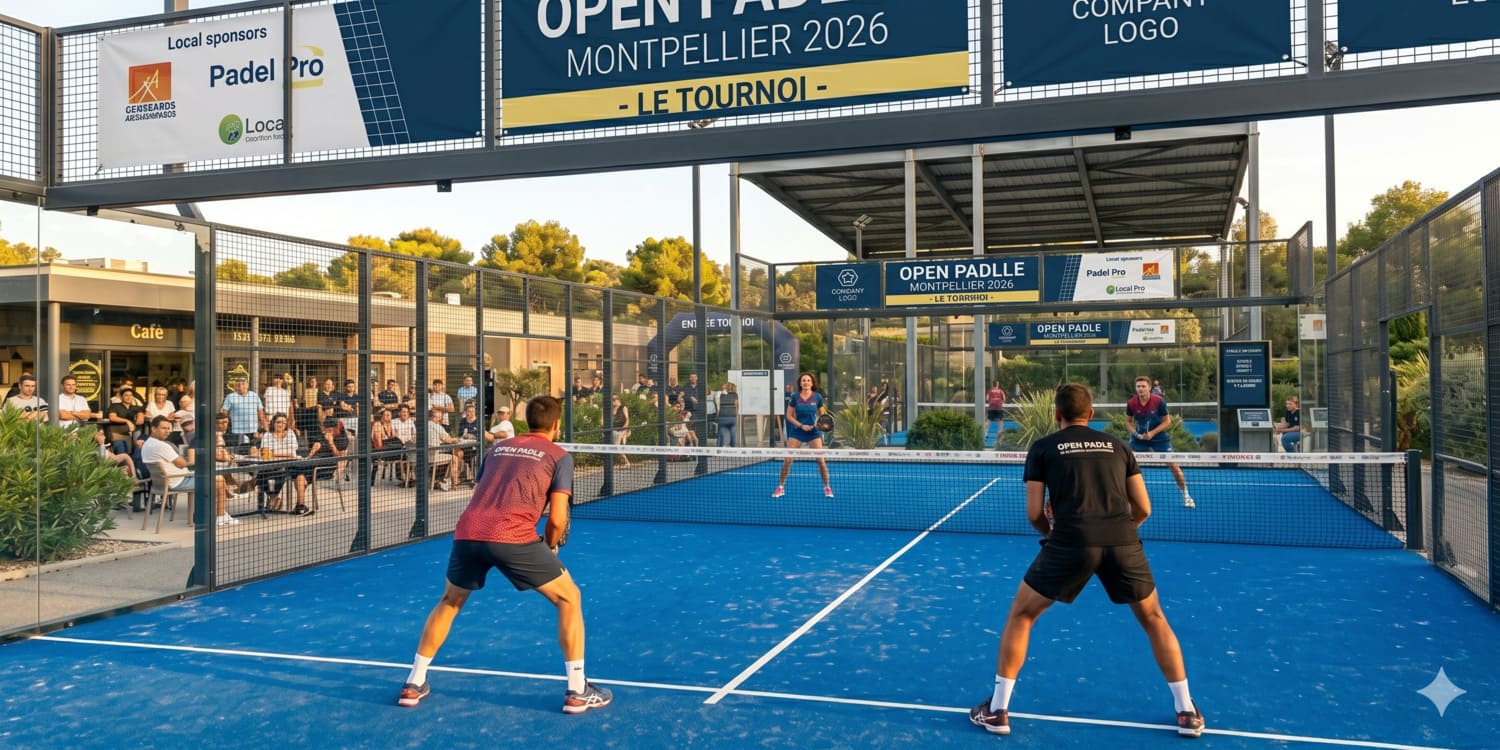
FFT Approval · Formats · Operations · Digitalization
Why running tournaments is strategic for your club
A successful tournament is more than a sporting event — it’s a powerful business driver.
On paper: a few days of competition. In reality: full courts throughout the event, a bar running at full speed, a stronger community, new players discovering your club, meaningful ancillary revenue, and local visibility that keeps paying off for months.
Clubs that run tournaments regularly achieve structurally higher occupancy rates and retain members better than those that simply rent out courts.
So, how do you organize a padel tournament from A to Z in 2026? Here is the complete step-by-step guide.
The different types of tournaments you can organize
Not all tournaments are created equal. Before you get started, choose the format that fits your goals.
FFT-sanctioned tournaments
The FFT recognizes several tournament categories based on the points and/or prize money awarded: P25, P50 (new for 2026), P100, P250, P500, P1000, P1500 and P2000.
The higher the level, the more the points count toward the national ranking — and the more advanced players you attract. P25 and P100 are perfect for getting started. P250 and P500 are the sweet spot for established clubs. Beyond that, you need a real organizational structure.
Tournaments can be organized by the FFT, leagues, departmental committees, affiliated clubs, or approved organizations. To sanction a padel tournament, the club must have at least one approved padel court declared in the federation’s administrative database.
Internal, non-sanctioned tournaments
Club opens, night events, season kick-off tournaments, club cups, inter-company challenges… these formats do not earn FFT points, but they are extremely effective for energizing your community and filling your time slots.
Modern community formats
Americanos have been booming for the last two years: players change partners after every match, everyone plays with everyone, and the social atmosphere is guaranteed. Ideal for mixing skill levels and onboarding new players.
Round-Robins and King of the Court also work very well for recurring themed evenings — each player faces every other player, or chains together one-on-one matchups on the same court.
Step 1 — Define your goals and format
Before any logistics, ask yourself three questions:
What is your main objective? Direct profitability (entries + bar sales), acquiring new players, retaining existing members, local visibility, or positioning the club as a premium venue? Each objective calls for a different format.
Who is your target audience? A P500 attracts competitors. A corporate tournament targets non-members who can become customers. A Saturday-morning Americano helps retain your regulars. A mixed tournament broadens your base.
How many courts and how much time do you have? This determines the number of possible pairs, match duration, and the format (groups, knockout bracket, double elimination).
Step 2 — Obtain FFT approval (for official tournaments)
For sanctioned tournaments, the process is handled entirely through the federation application.
The affiliated club or FFT-approved structure must submit its sanctioning request directly in the ADOC application. Lead times vary depending on the tournament category and the league, with several submission windows throughout the year.
Key points to check without fail:
Your club must be FFT-affiliated or an approved structure
At least one approved court declared in the federation’s administrative database
Compliance with the annual tournament quota per club (set by your league)
A qualified referee (JAP) physically present throughout the entire tournament
The JAP (Padel Referee) must hold the required qualification, be active, and officiate physically for the full duration of the event. They cannot referee two overlapping tournaments, nor can they coach or play in the tournament they are officiating.
Watch out for sanctioning fees: they are automatically charged to the club account after approval. Sanctioning fees vary by category and are free for tournaments consisting only of youth events.
Step 3 — Build your tournament budget
A well-budgeted tournament is a profitable tournament. Here are the cost lines to anticipate.
Expenses
FFT sanctioning fees (for official tournaments)
Referee compensation — negotiable, between €100 and €300/day depending on the category
Prize money for P100 and above
Partner prizes — ask padel brands to reduce this cost line
Official balls — budget at least 3 balls per match
Catering / bar service — stock accordingly; this is often the most profitable line item
Marketing — creative assets, Instagram posts, printing, targeted ads
Front-of-house staff during tournament days
Revenue
Entry fees (set by the league, with a cap in some regions)
Bar and catering — up to 30% of tournament revenue
Local sponsorship — businesses, retailers, equipment brands
Member bookings from spectators or casual players outside the tournament
Pro-shop sales (rackets, apparel, tubes of balls)
A well-run tournament should generate a net profit — even if modest. If you merely break even, something can likely be optimized.
Step 4 — Promote and fill registrations
This is the step that makes the difference between a successful tournament and one that gets canceled for lack of participants.
6 weeks before: announce the event to your member base via push notification and email. Publish a professional visual on social media.
4 weeks before: open online registration. Make the process ultra-simple — one page, three clicks, payment included. Any friction costs sign-ups.
2 weeks before: follow up with players who saw the announcement but haven’t registered yet. A personalized message is worth 10 Instagram posts.
1 week before: send the final schedule, category time slots, and logistical reminders (parking, changing rooms, bar).
Day of the event: push notifications for match confirmations, live result sharing on your social channels.
Step 5 — Manage the tournament on the day
Tournament logistics are dense: registrations to validate, draws to create, schedules to communicate, results to enter, and matches to keep moving with no downtime.
Traditionally, all of this was done with Excel + WhatsApp + paper — leading to errors, stress, and an overwhelmed referee.
In 2026, a well-designed digital tool changes the game completely:
Automatically generated draws as soon as registrations close
Automatic notifications to players for every schedule change
Real-time score entry and instant sharing with participants and spectators
Centralized payments — no more chasing checks or cash
Automatic reporting for FFT tournament closing
The JAP must close the tournament in the Padel application and publish the results within 24 hours of the tournament ending. A good management tool makes this step almost automatic.
Step 6 — Capitalize after the tournament
The tournament is over, the dust settles — and that is where most clubs miss the real opportunity.
A tournament is above all a fresh database: players from other clubs, curious spectators, sponsoring companies, and partners who discovered you. This data should feed your retention strategy in the weeks that follow.
In practical terms:
Send a personalized message to each participant within 48 hours (photos, thank-you note, preferential booking offer)
Offer a discovery membership to non-members who played
Publish a full recap with photos and videos to keep the momentum going
Set the date for the next event — and announce it before participants leave the club
A well-capitalized tournament brings in 20 to 30% new members within the following 3 months.
Doinsport: manage your tournaments end-to-end from a single tool
Running a tournament with 10 different tools (Excel for registrations, WhatsApp for communications, paper for draws, manual cash register for the bar…) is the fastest way to lose time and players.
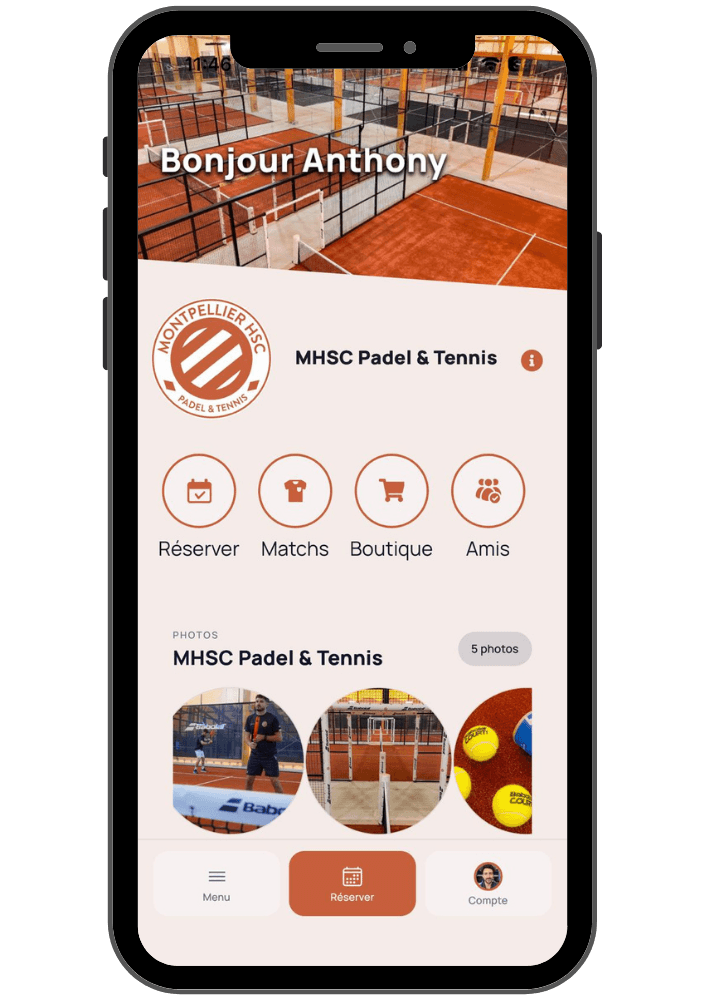
The Doinsport club management app for padel clubs centralizes your entire tournament from a single platform:
Seamless online registration — your players sign up from your white-label mobile app, pay their entry fee in seconds, and receive instant confirmation. Zero friction.
Automatic brackets — Americanos, Round-Robins, groups, knockout: formats are generated automatically from registrations, with seed management based on FFT rankings.
Integrated communications — push notifications for match reminders, SMS for last-minute changes, email for official summons. Everything is sent from the same interface, automatically segmented by category and match.
Centralized payments and collections — online entry fees, connected POS for the bar and catering, accounting reports exportable in one click to simplify closing with your accountant.
Automatically enriched database — every non-member participant is added to your CRM. After the tournament, you can follow up with targeted offers to convert them into regular members.
Real-time performance tracking — tournament occupancy rate, revenue generated, court performance, revenue by source: all your KPIs consolidated in a single dashboard.
👉 Request a free Doinsport demo — an expert will call you back within 30 minutes to show you how to run your tournaments without wasting time.
Mistakes to absolutely avoid
Underestimating the referee — an experienced JAP makes the difference between a smooth tournament and a chaotic one. Don’t try to save money here.
Forgetting your courts’ real capacity — a P500 on 3 courts over 2 days is not the same as an Americano on 4 courts in one evening. Always calculate the number of possible matches before opening registrations.
Ignoring catering — a tournament where people get hungry between matches is a tournament they won’t come back to. The bar matters just as much as the courts.
Communicating only on Instagram — your best participants are already in your member database. Reach them directly by push notification or email — it’s infinitely more effective than a public post.
Not closing in ADOC within 24 hours — a common oversight that can delay FFT points validation and frustrate participants.
FAQ — Organizing a padel tournament
Which tournament category should I choose for a first event? Start with a P25 or P100 to get comfortable. These are the most accessible categories, with few administrative constraints and manageable logistics. Once you gain experience, scale up gradually.
How long does it take to prepare a tournament? Allow 6 to 8 weeks between sanctioning approval and the event day for an official tournament. For an internal community format (Americano, club night), 3 weeks is enough.
Do I need to be FFT-affiliated to organize a tournament? Only for sanctioned tournaments (P25 to P2000). You can absolutely organize internal tournaments, Americanos, corporate challenges, or themed evenings without any affiliation.
What is the average registration fee for a tournament? Between €15 and €40 per player for amateur tournaments. Entry fees for sanctioned tournaments are sometimes capped by leagues to prevent abuse.
Can a tournament be profitable from the very first event? Yes, provided you control the budget carefully. The key: maximize ancillary revenue (bar, pro-shop, sponsorship) rather than relying solely on entry fees.
FFT Approval · Formats · Operations · Digitalization
Why running tournaments is strategic for your club
A successful tournament is more than a sporting event — it’s a powerful business driver.
On paper: a few days of competition. In reality: full courts throughout the event, a bar running at full speed, a stronger community, new players discovering your club, meaningful ancillary revenue, and local visibility that keeps paying off for months.
Clubs that run tournaments regularly achieve structurally higher occupancy rates and retain members better than those that simply rent out courts.
So, how do you organize a padel tournament from A to Z in 2026? Here is the complete step-by-step guide.
The different types of tournaments you can organize
Not all tournaments are created equal. Before you get started, choose the format that fits your goals.
FFT-sanctioned tournaments
The FFT recognizes several tournament categories based on the points and/or prize money awarded: P25, P50 (new for 2026), P100, P250, P500, P1000, P1500 and P2000.
The higher the level, the more the points count toward the national ranking — and the more advanced players you attract. P25 and P100 are perfect for getting started. P250 and P500 are the sweet spot for established clubs. Beyond that, you need a real organizational structure.
Tournaments can be organized by the FFT, leagues, departmental committees, affiliated clubs, or approved organizations. To sanction a padel tournament, the club must have at least one approved padel court declared in the federation’s administrative database.
Internal, non-sanctioned tournaments
Club opens, night events, season kick-off tournaments, club cups, inter-company challenges… these formats do not earn FFT points, but they are extremely effective for energizing your community and filling your time slots.
Modern community formats
Americanos have been booming for the last two years: players change partners after every match, everyone plays with everyone, and the social atmosphere is guaranteed. Ideal for mixing skill levels and onboarding new players.
Round-Robins and King of the Court also work very well for recurring themed evenings — each player faces every other player, or chains together one-on-one matchups on the same court.
Step 1 — Define your goals and format
Before any logistics, ask yourself three questions:
What is your main objective? Direct profitability (entries + bar sales), acquiring new players, retaining existing members, local visibility, or positioning the club as a premium venue? Each objective calls for a different format.
Who is your target audience? A P500 attracts competitors. A corporate tournament targets non-members who can become customers. A Saturday-morning Americano helps retain your regulars. A mixed tournament broadens your base.
How many courts and how much time do you have? This determines the number of possible pairs, match duration, and the format (groups, knockout bracket, double elimination).
Step 2 — Obtain FFT approval (for official tournaments)
For sanctioned tournaments, the process is handled entirely through the federation application.
The affiliated club or FFT-approved structure must submit its sanctioning request directly in the ADOC application. Lead times vary depending on the tournament category and the league, with several submission windows throughout the year.
Key points to check without fail:
Your club must be FFT-affiliated or an approved structure
At least one approved court declared in the federation’s administrative database
Compliance with the annual tournament quota per club (set by your league)
A qualified referee (JAP) physically present throughout the entire tournament
The JAP (Padel Referee) must hold the required qualification, be active, and officiate physically for the full duration of the event. They cannot referee two overlapping tournaments, nor can they coach or play in the tournament they are officiating.
Watch out for sanctioning fees: they are automatically charged to the club account after approval. Sanctioning fees vary by category and are free for tournaments consisting only of youth events.
Step 3 — Build your tournament budget
A well-budgeted tournament is a profitable tournament. Here are the cost lines to anticipate.
Expenses
FFT sanctioning fees (for official tournaments)
Referee compensation — negotiable, between €100 and €300/day depending on the category
Prize money for P100 and above
Partner prizes — ask padel brands to reduce this cost line
Official balls — budget at least 3 balls per match
Catering / bar service — stock accordingly; this is often the most profitable line item
Marketing — creative assets, Instagram posts, printing, targeted ads
Front-of-house staff during tournament days
Revenue
Entry fees (set by the league, with a cap in some regions)
Bar and catering — up to 30% of tournament revenue
Local sponsorship — businesses, retailers, equipment brands
Member bookings from spectators or casual players outside the tournament
Pro-shop sales (rackets, apparel, tubes of balls)
A well-run tournament should generate a net profit — even if modest. If you merely break even, something can likely be optimized.
Step 4 — Promote and fill registrations
This is the step that makes the difference between a successful tournament and one that gets canceled for lack of participants.
6 weeks before: announce the event to your member base via push notification and email. Publish a professional visual on social media.
4 weeks before: open online registration. Make the process ultra-simple — one page, three clicks, payment included. Any friction costs sign-ups.
2 weeks before: follow up with players who saw the announcement but haven’t registered yet. A personalized message is worth 10 Instagram posts.
1 week before: send the final schedule, category time slots, and logistical reminders (parking, changing rooms, bar).
Day of the event: push notifications for match confirmations, live result sharing on your social channels.
Step 5 — Manage the tournament on the day
Tournament logistics are dense: registrations to validate, draws to create, schedules to communicate, results to enter, and matches to keep moving with no downtime.
Traditionally, all of this was done with Excel + WhatsApp + paper — leading to errors, stress, and an overwhelmed referee.
In 2026, a well-designed digital tool changes the game completely:
Automatically generated draws as soon as registrations close
Automatic notifications to players for every schedule change
Real-time score entry and instant sharing with participants and spectators
Centralized payments — no more chasing checks or cash
Automatic reporting for FFT tournament closing
The JAP must close the tournament in the Padel application and publish the results within 24 hours of the tournament ending. A good management tool makes this step almost automatic.
Step 6 — Capitalize after the tournament
The tournament is over, the dust settles — and that is where most clubs miss the real opportunity.
A tournament is above all a fresh database: players from other clubs, curious spectators, sponsoring companies, and partners who discovered you. This data should feed your retention strategy in the weeks that follow.
In practical terms:
Send a personalized message to each participant within 48 hours (photos, thank-you note, preferential booking offer)
Offer a discovery membership to non-members who played
Publish a full recap with photos and videos to keep the momentum going
Set the date for the next event — and announce it before participants leave the club
A well-capitalized tournament brings in 20 to 30% new members within the following 3 months.
Doinsport: manage your tournaments end-to-end from a single tool
Running a tournament with 10 different tools (Excel for registrations, WhatsApp for communications, paper for draws, manual cash register for the bar…) is the fastest way to lose time and players.
The Doinsport club management app for padel clubs centralizes your entire tournament from a single platform:
Seamless online registration — your players sign up from your white-label mobile app, pay their entry fee in seconds, and receive instant confirmation. Zero friction.
Automatic brackets — Americanos, Round-Robins, groups, knockout: formats are generated automatically from registrations, with seed management based on FFT rankings.
Integrated communications — push notifications for match reminders, SMS for last-minute changes, email for official summons. Everything is sent from the same interface, automatically segmented by category and match.
Centralized payments and collections — online entry fees, connected POS for the bar and catering, accounting reports exportable in one click to simplify closing with your accountant.
Automatically enriched database — every non-member participant is added to your CRM. After the tournament, you can follow up with targeted offers to convert them into regular members.
Real-time performance tracking — tournament occupancy rate, revenue generated, court performance, revenue by source: all your KPIs consolidated in a single dashboard.
👉 Request a free Doinsport demo — an expert will call you back within 30 minutes to show you how to run your tournaments without wasting time.
Mistakes to absolutely avoid
Underestimating the referee — an experienced JAP makes the difference between a smooth tournament and a chaotic one. Don’t try to save money here.
Forgetting your courts’ real capacity — a P500 on 3 courts over 2 days is not the same as an Americano on 4 courts in one evening. Always calculate the number of possible matches before opening registrations.
Ignoring catering — a tournament where people get hungry between matches is a tournament they won’t come back to. The bar matters just as much as the courts.
Communicating only on Instagram — your best participants are already in your member database. Reach them directly by push notification or email — it’s infinitely more effective than a public post.
Not closing in ADOC within 24 hours — a common oversight that can delay FFT points validation and frustrate participants.
FAQ — Organizing a padel tournament
Which tournament category should I choose for a first event? Start with a P25 or P100 to get comfortable. These are the most accessible categories, with few administrative constraints and manageable logistics. Once you gain experience, scale up gradually.
How long does it take to prepare a tournament? Allow 6 to 8 weeks between sanctioning approval and the event day for an official tournament. For an internal community format (Americano, club night), 3 weeks is enough.
Do I need to be FFT-affiliated to organize a tournament? Only for sanctioned tournaments (P25 to P2000). You can absolutely organize internal tournaments, Americanos, corporate challenges, or themed evenings without any affiliation.
What is the average registration fee for a tournament? Between €15 and €40 per player for amateur tournaments. Entry fees for sanctioned tournaments are sometimes capped by leagues to prevent abuse.
Can a tournament be profitable from the very first event? Yes, provided you control the budget carefully. The key: maximize ancillary revenue (bar, pro-shop, sponsorship) rather than relying solely on entry fees.
Similar articles
Oct 22, 2026
How much should you charge per hour for padel? 2026 market rates, peak vs. off-peak pricing, and memberships: the complete guide to setting your club's rates.

Oct 14, 2026
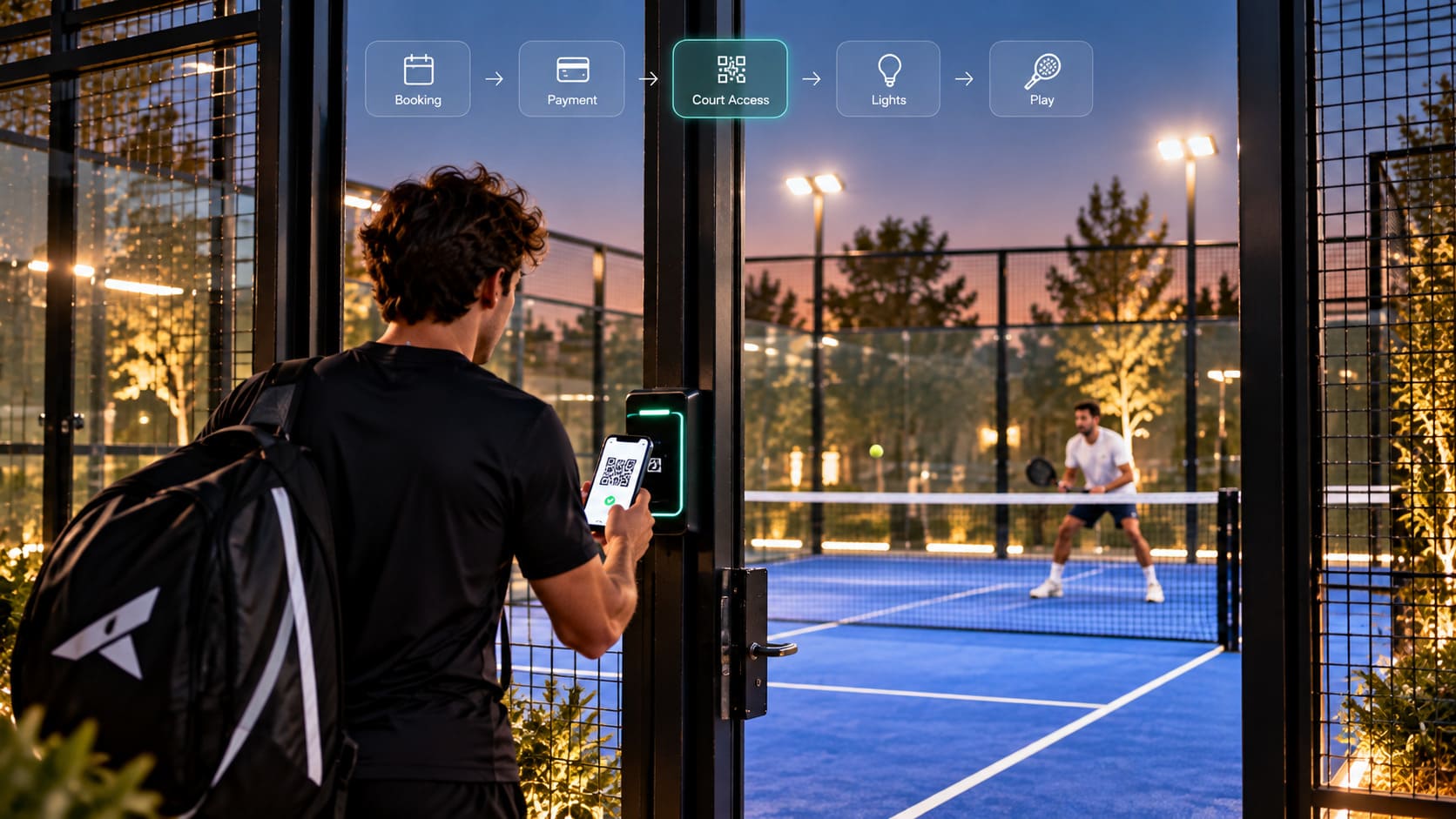
How Does Access Control Work for Padel Clubs? QR Codes, RFID, Smart Locks, Court Lighting, and Bookings Explained.

See Doinsport in action
Ready to grow your padel or tennis club?
Join over 1,000 clubs that run on Doinsport. Book a free demo and see what it can do for your club.
We're here to help.


See Doinsport in action
Ready to grow your padel or tennis club?
Join over 1,000 clubs that run on Doinsport. Book a free demo and see what it can do for your club.
See Doinsport in action
Ready to grow your padel or tennis club?
Join over 1,000 clubs that run on Doinsport. Book a free demo and see what it can do for your club.
We're here to help.