

EN
EN
Padel
Autonomous padel courts: How to launch your club without on-site staff in 2026?
Autonomous padel is becoming the standard in 2026: lower operating costs, 24/7 access, full automation, and fast ROI. How it works, profitability, and the key steps for implementation.
Complete guide · Profitability · Technology · Practical steps
The autonomous model: the new standard for padel clubs in 2026
With nearly 4,500 padel courts in France, the sport continues to grow rapidly. And in this booming market, one model is increasingly becoming the benchmark for new clubs: the autonomous padel court.
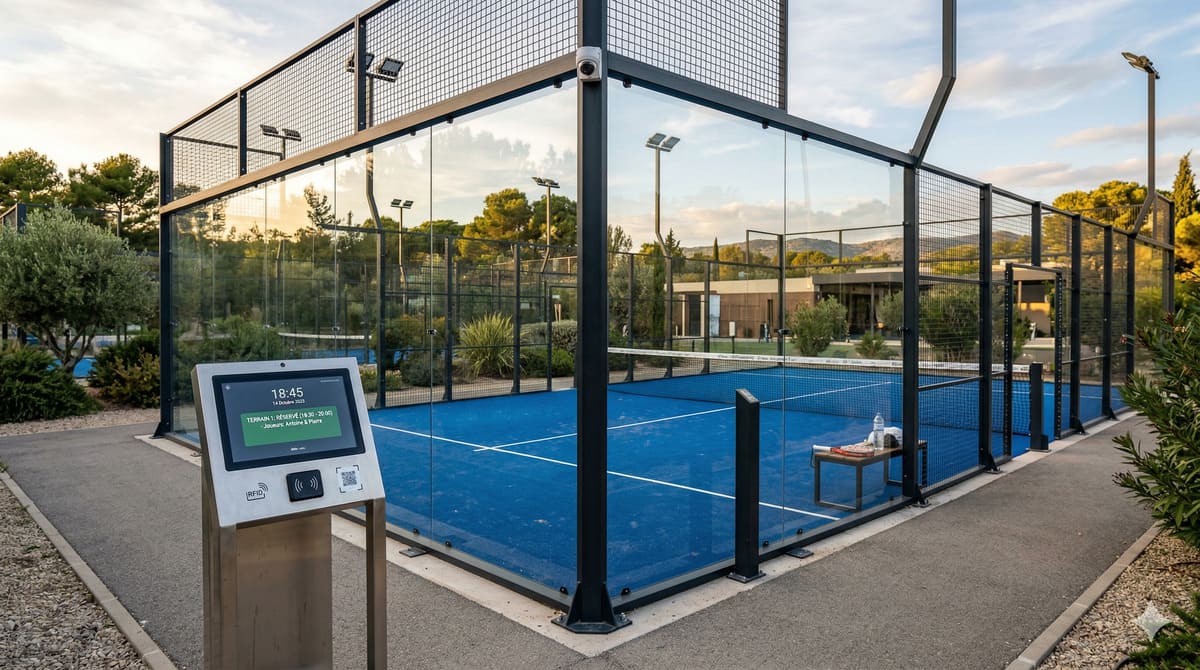
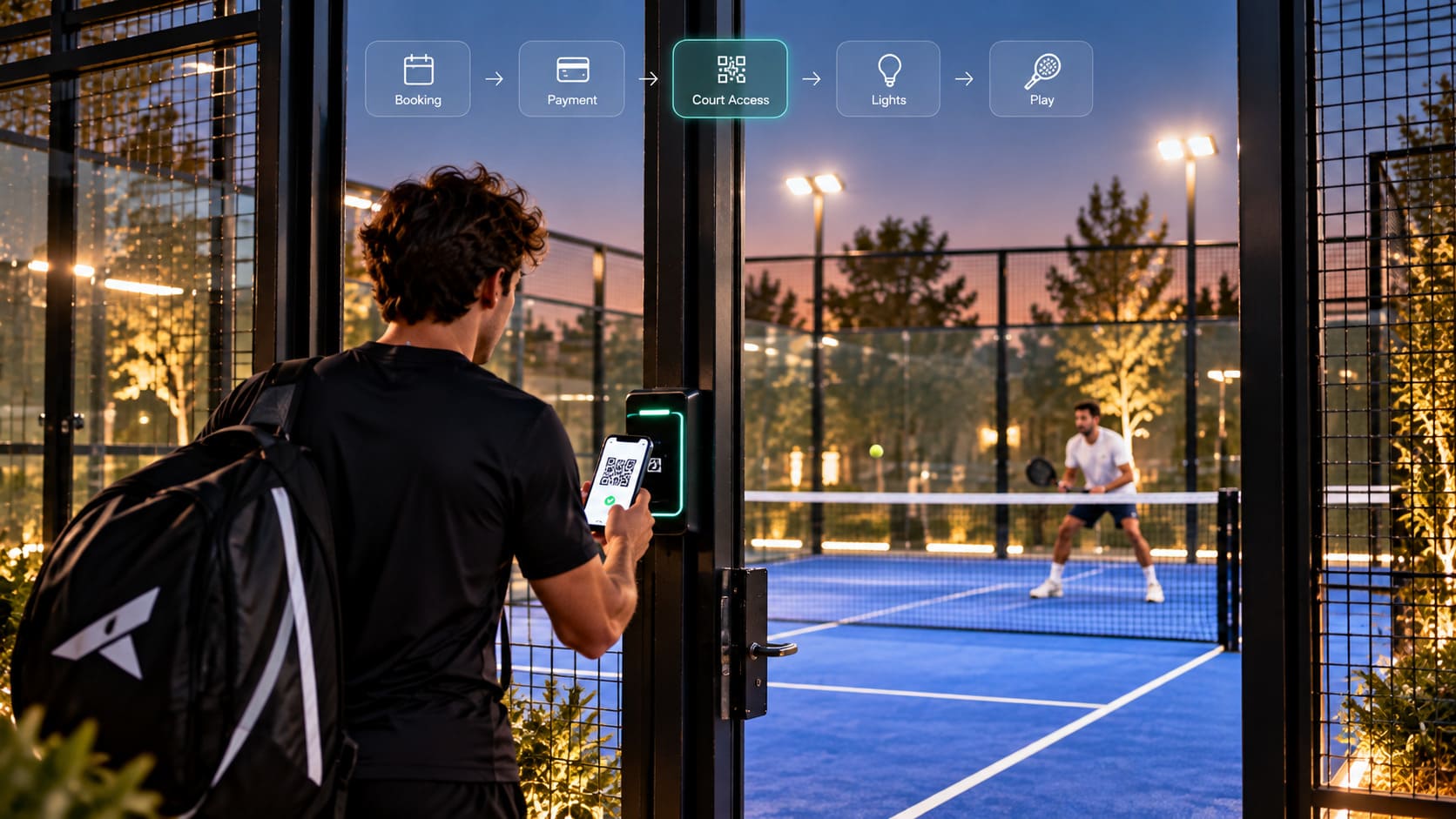
The principle is simple: your players book online, pay in advance, receive a one-time access code on their smartphone, and enter the court without any staff member on site. Lighting turns on automatically. The door locks at the end of the time slot. You are elsewhere — or asleep.
This is no longer a futuristic vision. Doinsport has developed an offer fully dedicated to autonomous padel courts, enabling the creation or transformation of a fully automated padel club, with no upfront investment and no commitment. Hundreds of clubs in France have already adopted it. Here is everything you need to know.
Why autonomy fundamentally changes a club’s economic equation
Reduce staffing costs => your biggest expense line
Salaries are one of the heaviest expenses for a padel club, especially during the launch phase. Having front-desk staff on site in the morning, evening, and weekends represents a significant fixed monthly cost — whether your courts are full or empty.
Managers report savings equivalent to 2 full salaries, or €3,800 per month, after switching to autonomous operations. Over 12 months, that is more than €45,000 in reduced costs — without cutting any service for your players.
Open 24/7 at no additional cost
This is the most powerful profitability lever of the autonomous model. With front-desk staff, opening hours are constrained by work schedules. With an automated system, nothing prevents you from renting out your courts 24/7 — especially relevant in summer, when extreme heat pushes players to play much later in the evening or even at night.
Managers report up to +35% revenue in 3 months by opening night slots. Time slots from 6 a.m. to 8 a.m. and from 10 p.m. to midnight, impossible to monetize with on-site staff, become net revenue-generating windows with almost no operating costs.
Meet structurally underserved demand
In most French regions, demand far exceeds supply — try booking a padel court in Marseille between 6 p.m. and 10 p.m. on any day within the next 5 days, and you will see how difficult, even impossible, it is.
By extending your available slots to off-peak hours, you capture demand that had nowhere to go. Loyal players, used to playing early or late, who consistently return to your club because you are the only one available at their preferred time.
How an autonomous padel court works in practice
The setup is intentionally simple, designed for both players and club managers.
Player side: Your member opens your mobile app, selects an available time slot, chooses a court, and pays for the booking online by credit card, credits, or wallet. As game time approaches, they receive a QR code or one-time code directly on their smartphone. They arrive at the court and scan the code: the door unlocks and lighting turns on immediately for the exact duration of their booking. At the end of the slot, lighting switches off automatically and access closes. Zero human interaction required.
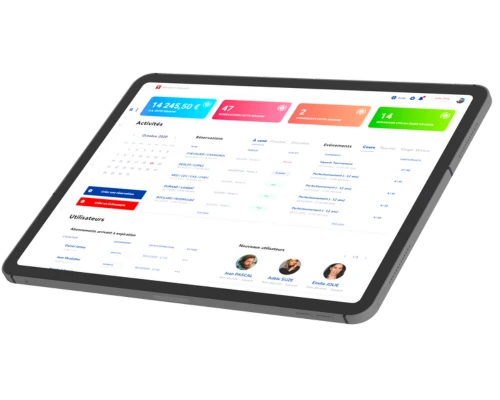
Manager side: You monitor bookings, payments, and performance metrics in real time from your dashboard, accessible from anywhere. You do not need to be on site. Your club runs in your absence, reliably and securely.
The 4 essential technical components
For a padel club to operate autonomously, four components must work together in an integrated way.
1. Access control system
This is the core of the setup. Doinsport offers several options: connected 4G locks in standalone battery-powered version or wired electrical version, keypad, QR code. The right choice depends on your court configuration (indoor, outdoor, fencing, gate…). What matters most: the system must be directly connected to your booking software, with no intermediary layer.
2. Automated lighting management
Autonomous access control is connected simultaneously to court lighting. When the door unlocks, lights turn on. They switch off automatically at the booking end time. Result: significant energy savings, and assurance that no court stays lit unnecessarily.
3. Power supply and connectivity
Power can come from mains electricity or photovoltaic panels. Connectivity runs via 4G or 5G, with a backup battery ensuring continuous 24/7 operation. System reliability is non-negotiable: a breakdown on a Saturday night with no staff on site is a disaster.
4. Connected management software
This is the brain of the whole system. A padel management software is essential in an autonomous club: it generates access codes, sends them to players, controls lighting, and centralizes payments. Without connected software, autonomy is impossible. That is why choosing an end-to-end integrated solution like Doinsport’s is infinitely more reliable than assembling multiple separate tools.
Doinsport’s autonomous padel court offer: all-inclusive, with no upfront investment
Traditionally, switching to autonomous mode required significant hardware investment upfront — connected locks, lighting systems, installation, and configuration before collecting the first euro.
Doinsport’s offer breaks this model: all hardware is included from day one to protect your cash flow, with monthly subscriptions starting at €150 excl. VAT, including all required equipment and services. No upfront contribution. No commitment.
What the offer includes in practice:
Access control hardware (locks, QR code, keypad depending on your configuration)
Automated lighting management
Connected management software with real-time dashboard
A white-label mobile app for your players
Complete installation within 48 to 72 hours by Doinsport’s technical team
Training for your team
Technical support with a direct emergency hotline
On average, the investment pays for itself in less than 3 months.
👉 Discover Doinsport’s autonomous padel court offer and access the economic simulator to estimate your gains.
100% autonomous or hybrid model: which one should you choose?
This is a strategic question every manager must answer based on their project and customer base.
The 100% autonomous model is particularly suitable for clubs that want to minimize fixed costs from launch, project owners with limited budgets, clubs in areas with strong off-peak demand, and facilities that want to manage operations remotely.
The hybrid model — autonomous on selected slots (early morning, late evening) and staffed during peak hours — is often the best approach for clubs with an active clubhouse, a bar, group classes, or a strong community identity.
Automating courts 100% may seem attractive in the short term but can prove limiting over the long term in some setups, because a club is above all a social and community space. The key is finding the right balance between profitable automation and a differentiating human experience.
5 questions to ask before getting started
1. Which time slots are currently underutilized in my club? Identify slots where you have no staff but demand exists (early morning, after 10 p.m., weekend mornings). These are your first slots to open in autonomous mode.
2. What is my monthly front-desk staffing cost? This is the basis of your profitability calculation. If you save €2,000 to €4,000 per month in staffing, the €150 excl. VAT subscription pays for itself in just a few days.
3. Does my catchment area play early or late? Active urban profile = strong demand for night slots. Family residential area = strong demand on weekend mornings. Adapt your slot strategy accordingly.
4. Is my facility compatible with an autonomous system? Indoor or outdoor courts, with or without fencing, single or multiple gates: Doinsport is compatible with all racket sports and court types — Padel, Tennis, Squash, Badminton, Pickleball, Indoor Football.
5. Am I ready to handle unforeseen issues remotely? A player who lost their code, a door that will not open: you need responsive technical support available quickly. Check your provider’s response times before signing.
FAQ: Autonomous padel court
Can an existing club become autonomous without rebuilding everything? Yes. The Doinsport system is installed on existing courts in 48 to 72 hours. In the vast majority of cases, no structural modification is required.
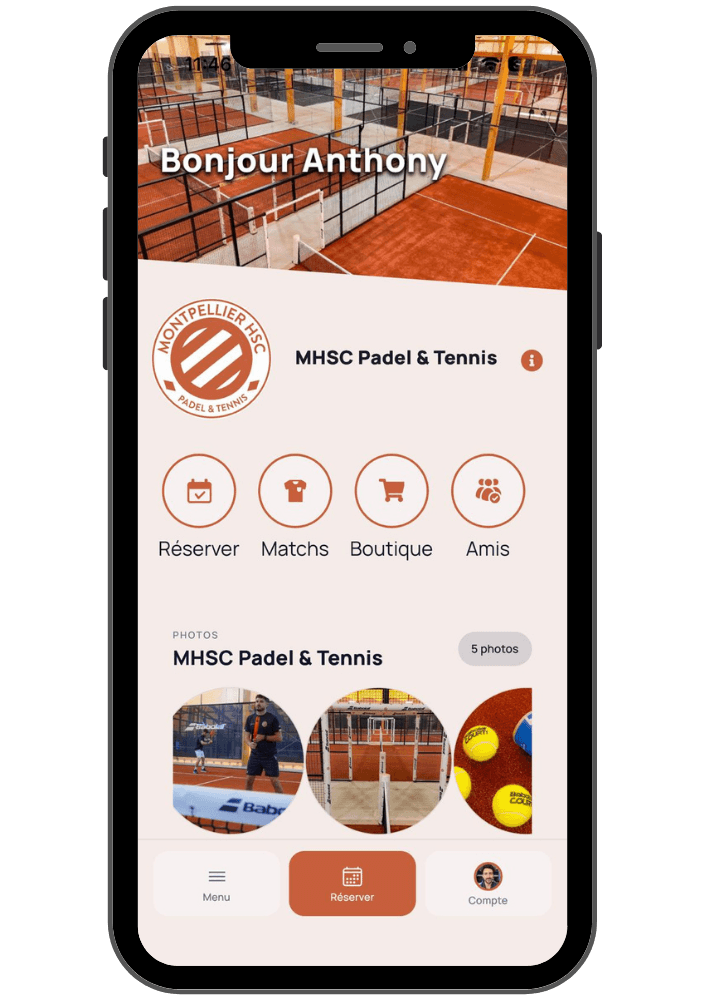
Do players need to download a specific app? They use your club’s app — branded in your colors — where they book, pay, and receive their access code. Everything is centralized in one tool.
What happens in the event of a power or connection outage? The system runs on a backup battery to ensure 24/7 operation, with 4G and 5G connectivity as an alternative to Wi-Fi.
Do lights really switch off automatically? Yes — lighting turns on at the booking start time and switches off automatically at the end time. No manual intervention, no misuse possible.
What is the real ROI of switching to autonomous mode? It depends on your situation, but between staffing savings, revenue from new time slots, and lower energy costs, most clubs see a return on investment in under 3 months.
Complete guide · Profitability · Technology · Practical steps
The autonomous model: the new standard for padel clubs in 2026
With nearly 4,500 padel courts in France, the sport continues to grow rapidly. And in this booming market, one model is increasingly becoming the benchmark for new clubs: the autonomous padel court.
The principle is simple: your players book online, pay in advance, receive a one-time access code on their smartphone, and enter the court without any staff member on site. Lighting turns on automatically. The door locks at the end of the time slot. You are elsewhere — or asleep.
This is no longer a futuristic vision. Doinsport has developed an offer fully dedicated to autonomous padel courts, enabling the creation or transformation of a fully automated padel club, with no upfront investment and no commitment. Hundreds of clubs in France have already adopted it. Here is everything you need to know.
Why autonomy fundamentally changes a club’s economic equation
Reduce staffing costs => your biggest expense line
Salaries are one of the heaviest expenses for a padel club, especially during the launch phase. Having front-desk staff on site in the morning, evening, and weekends represents a significant fixed monthly cost — whether your courts are full or empty.
Managers report savings equivalent to 2 full salaries, or €3,800 per month, after switching to autonomous operations. Over 12 months, that is more than €45,000 in reduced costs — without cutting any service for your players.
Open 24/7 at no additional cost
This is the most powerful profitability lever of the autonomous model. With front-desk staff, opening hours are constrained by work schedules. With an automated system, nothing prevents you from renting out your courts 24/7 — especially relevant in summer, when extreme heat pushes players to play much later in the evening or even at night.
Managers report up to +35% revenue in 3 months by opening night slots. Time slots from 6 a.m. to 8 a.m. and from 10 p.m. to midnight, impossible to monetize with on-site staff, become net revenue-generating windows with almost no operating costs.
Meet structurally underserved demand
In most French regions, demand far exceeds supply — try booking a padel court in Marseille between 6 p.m. and 10 p.m. on any day within the next 5 days, and you will see how difficult, even impossible, it is.
By extending your available slots to off-peak hours, you capture demand that had nowhere to go. Loyal players, used to playing early or late, who consistently return to your club because you are the only one available at their preferred time.
How an autonomous padel court works in practice
The setup is intentionally simple, designed for both players and club managers.
Player side: Your member opens your mobile app, selects an available time slot, chooses a court, and pays for the booking online by credit card, credits, or wallet. As game time approaches, they receive a QR code or one-time code directly on their smartphone. They arrive at the court and scan the code: the door unlocks and lighting turns on immediately for the exact duration of their booking. At the end of the slot, lighting switches off automatically and access closes. Zero human interaction required.
Manager side: You monitor bookings, payments, and performance metrics in real time from your dashboard, accessible from anywhere. You do not need to be on site. Your club runs in your absence, reliably and securely.
The 4 essential technical components
For a padel club to operate autonomously, four components must work together in an integrated way.
1. Access control system
This is the core of the setup. Doinsport offers several options: connected 4G locks in standalone battery-powered version or wired electrical version, keypad, QR code. The right choice depends on your court configuration (indoor, outdoor, fencing, gate…). What matters most: the system must be directly connected to your booking software, with no intermediary layer.
2. Automated lighting management
Autonomous access control is connected simultaneously to court lighting. When the door unlocks, lights turn on. They switch off automatically at the booking end time. Result: significant energy savings, and assurance that no court stays lit unnecessarily.
3. Power supply and connectivity
Power can come from mains electricity or photovoltaic panels. Connectivity runs via 4G or 5G, with a backup battery ensuring continuous 24/7 operation. System reliability is non-negotiable: a breakdown on a Saturday night with no staff on site is a disaster.
4. Connected management software
This is the brain of the whole system. A padel management software is essential in an autonomous club: it generates access codes, sends them to players, controls lighting, and centralizes payments. Without connected software, autonomy is impossible. That is why choosing an end-to-end integrated solution like Doinsport’s is infinitely more reliable than assembling multiple separate tools.
Doinsport’s autonomous padel court offer: all-inclusive, with no upfront investment
Traditionally, switching to autonomous mode required significant hardware investment upfront — connected locks, lighting systems, installation, and configuration before collecting the first euro.
Doinsport’s offer breaks this model: all hardware is included from day one to protect your cash flow, with monthly subscriptions starting at €150 excl. VAT, including all required equipment and services. No upfront contribution. No commitment.
What the offer includes in practice:
Access control hardware (locks, QR code, keypad depending on your configuration)
Automated lighting management
Connected management software with real-time dashboard
A white-label mobile app for your players
Complete installation within 48 to 72 hours by Doinsport’s technical team
Training for your team
Technical support with a direct emergency hotline
On average, the investment pays for itself in less than 3 months.
👉 Discover Doinsport’s autonomous padel court offer and access the economic simulator to estimate your gains.
100% autonomous or hybrid model: which one should you choose?
This is a strategic question every manager must answer based on their project and customer base.
The 100% autonomous model is particularly suitable for clubs that want to minimize fixed costs from launch, project owners with limited budgets, clubs in areas with strong off-peak demand, and facilities that want to manage operations remotely.
The hybrid model — autonomous on selected slots (early morning, late evening) and staffed during peak hours — is often the best approach for clubs with an active clubhouse, a bar, group classes, or a strong community identity.
Automating courts 100% may seem attractive in the short term but can prove limiting over the long term in some setups, because a club is above all a social and community space. The key is finding the right balance between profitable automation and a differentiating human experience.
5 questions to ask before getting started
1. Which time slots are currently underutilized in my club? Identify slots where you have no staff but demand exists (early morning, after 10 p.m., weekend mornings). These are your first slots to open in autonomous mode.
2. What is my monthly front-desk staffing cost? This is the basis of your profitability calculation. If you save €2,000 to €4,000 per month in staffing, the €150 excl. VAT subscription pays for itself in just a few days.
3. Does my catchment area play early or late? Active urban profile = strong demand for night slots. Family residential area = strong demand on weekend mornings. Adapt your slot strategy accordingly.
4. Is my facility compatible with an autonomous system? Indoor or outdoor courts, with or without fencing, single or multiple gates: Doinsport is compatible with all racket sports and court types — Padel, Tennis, Squash, Badminton, Pickleball, Indoor Football.
5. Am I ready to handle unforeseen issues remotely? A player who lost their code, a door that will not open: you need responsive technical support available quickly. Check your provider’s response times before signing.
FAQ: Autonomous padel court
Can an existing club become autonomous without rebuilding everything? Yes. The Doinsport system is installed on existing courts in 48 to 72 hours. In the vast majority of cases, no structural modification is required.
Do players need to download a specific app? They use your club’s app — branded in your colors — where they book, pay, and receive their access code. Everything is centralized in one tool.
What happens in the event of a power or connection outage? The system runs on a backup battery to ensure 24/7 operation, with 4G and 5G connectivity as an alternative to Wi-Fi.
Do lights really switch off automatically? Yes — lighting turns on at the booking start time and switches off automatically at the end time. No manual intervention, no misuse possible.
What is the real ROI of switching to autonomous mode? It depends on your situation, but between staffing savings, revenue from new time slots, and lower energy costs, most clubs see a return on investment in under 3 months.
Similar articles
Oct 22, 2026
How much should you charge per hour for padel? 2026 market rates, peak vs. off-peak pricing, and memberships: the complete guide to setting your club's rates.

Oct 14, 2026
How Does Access Control Work for Padel Clubs? QR Codes, RFID, Smart Locks, Court Lighting, and Bookings Explained.

See Doinsport in action
Ready to grow your padel or tennis club?
Join over 1,000 clubs that run on Doinsport. Book a free demo and see what it can do for your club.
We're here to help.


See Doinsport in action
Ready to grow your padel or tennis club?
Join over 1,000 clubs that run on Doinsport. Book a free demo and see what it can do for your club.
See Doinsport in action
Ready to grow your padel or tennis club?
Join over 1,000 clubs that run on Doinsport. Book a free demo and see what it can do for your club.
We're here to help.