

EN
EN
Padel
How to Price a Padel Court per Hour: The 2026 Club Pricing Guide
How much should you charge per hour for padel? 2026 market rates, peak vs. off-peak pricing, and memberships: the complete guide to setting your club's rates.

Price too high, and your courts sit empty during the day. Price too low, and you operate at capacity without ever reaching profitability. The hourly court rate is one of the most powerful business levers for your club, yet many managers set it simply by glancing at the competition down the street.
In this guide, we examine actual pricing benchmarks in France for 2026, outline how to calculate your floor price, design a high-performing peak/off-peak pricing grid, and leverage memberships, session packs, and digital wallets without devaluing your court time.
Key Takeaways
In France, a 90-minute doubles padel booking typically sells for €10 to €16 per player, equivalent to approximately €28 to €43 per hour per court.
The price spread between off-peak and peak hours averages 30% to 40% across analyzed facilities.
Your floor price must be derived from your operational costs and a realistic occupancy rate, not from your competitor’s rates.
Two or three pricing tiers are ideal; beyond that, your rate structure becomes confusing for players.
Memberships, session packs, and in-app wallets should drive player retention while securing upfront cash flow.
How Much Does an Hour of Padel Cost in France in 2026?
While there is no standard statutory rate, published club tariffs provide reliable benchmarks. In France, most facilities sell doubles matches in 90-minute slots and display pricing on a per-player basis.
Dijon Padel (Dijon): €11 per player off-peak, €14.50 peak, for a 90-minute slot
Le Court (Hyères): €12 per player off-peak, €16 peak, for a 90-minute slot
Le Set (Le Bignon, near Nantes): €10.50 per player off-peak, €14.50 peak, for a 90-minute slot
Public rates observed in October 2026 on respective club websites.
Calculated per hour per court, this translates to approximately €28 to €32 for off-peak and €39 to €43 for peak hours. This serves as a solid baseline for your club, subject to adjustments based on location, local competition, and amenities (indoor courts, locker rooms, clubhouse bar, parking).

Per-Player vs. Per-Court Pricing: What’s the Best Display Strategy?
While total revenue remains identical, user perception shifts dramatically. “€12 per player” feels accessible, whereas “€48 per court” can create friction for an individual booking before having confirmed the rest of the fourball.
Per-player pricing: Highly legible and appealing, particularly when each participant can settle their share directly during online booking.
Per-court pricing: More straightforward for established groups and corporate bookings requiring a single consolidated invoice.
Many operators display both formats, such as Le Court in Hyères (€12 per person, €48 per court during off-peak hours). The crucial factor is payment flexibility: if you advertise per-player pricing, ensure your system supports split payments, avoiding a scenario where the booking lead must front the full cost and chase teammates for reimbursement.
How to Calculate Your Floor Price
Before benchmarking against the local market, determine the absolute baseline below which every booked hour generates a loss. The formula is straightforward:
Hourly Floor Price = Total Monthly Operating Costs ÷ (Number of Courts × Monthly Operating Hours × Projected Occupancy Rate)
Let’s examine a sample business case (to be updated with your actual metrics):
Monthly operating expenses (rent, debt service, payroll, utilities, software, court maintenance): €20,000
4 courts open 14 hours per day, 30 days per month: 1,680 available court hours
Realistic average occupancy rate: 50%, representing 840 billable hours
Floor Price Calculation: €20,000 ÷ 840 hrs = approx. €24 per hour per court, which equals €9 per player for a 90-minute match. Selling below this threshold is value-destructive. Pricing above it generates your operating margin.

This equation highlights a core operational reality: occupancy rate impacts your bottom line as heavily as your headline price. At a 40% occupancy rate, the exact same facility must charge €30/hour simply to break even. This is why revenue management and court utilization must be optimized concurrently.
Related Reading: How to boost your padel club's court occupancy rate and How many courts do you need for a profitable padel club?.
Peak vs. Off-Peak: Building an Optimized Time-Slot Grid
Court demand on a Tuesday at 3:00 PM bears no resemblance to a Thursday at 7:00 PM. A time-differentiated grid allows you to capture maximum yield during prime times while stimulating traffic during low-demand periods.
In our market benchmark, peak hours command a 32% to 38% premium over off-peak slots. For instance, Le Court in Hyères structures its time bands as follows:
Off-peak: Weekdays, 6:00 AM – 12:00 PM and 2:00 PM – 5:00 PM
Peak: Weekdays, 12:00 PM – 2:00 PM and 5:00 PM – 11:00 PM, plus all weekends and public holidays

Best practices for an effective rate schedule:
Cap it at two or three tiers. Le Set uses an intermediate “lunchtime” rate (€11.50) between off-peak (€10.50) and peak (€14.50). Adding more variations complicates the customer journey and dampens conversions.
Base adjustments on your PMS data. Pinpoint recurring low-utilization slots in your weekly booking charts: these should be designated off-peak, regardless of how other local clubs define theirs.
Review seasonally. Utilization profiles for Sunday mornings or mid-August differ significantly from standard patterns in November.
Memberships, Session Packs, and In-App Wallets: Rewarding Loyalty Without Diluting Yield
Single pay-and-play bookings are only one component of your revenue mix. Structured retention programs drive customer lifetime value and secure upfront working capital—provided unit economics remain protected.
Session multi-packs: At Le Set, a 20-session off-peak pack retails for €195 (€9.75/session vs. €10.50 standard). The discount is modest, but the club collects €195 in upfront cash flow.
Prepaid digital wallets: Le Court in Hyères credits €110 for a €100 top-up, €230 for €200, and €480 for €400. Tiered bonus credits incentivize higher deposits, moving cash immediately onto your balance sheet.
Recurring memberships: Also at Hyères, subscription options (€75 for 6 months or €120 annually) unlock preferred pricing per match (e.g., €11.25 instead of €12 off-peak). The club locks in recurring revenue while incentivizing frequent court play.
Core management rule: consistently audit the effective hourly realized rate across every package to ensure it consistently clears your floor price.
Related Reading: 10 proven strategies to boost player retention in your padel club.
Segmented Pricing: Students, Corporate Accounts, and Coaching
Targeted player segments can drive substantial incremental volume when framed with clear parameters:
Students & U25: Dijon Padel offers a €7 off-peak rate for players under 25 (vs. €11 standard). This is an effective lever to monetize weekday afternoon court availability.
Corporate / B2B: Dedicated corporate court rates or flat-fee event packages with consolidated billing.
Lessons & Academy: Separate pricing streams, billed per player for group clinics and per session for private instruction.
Capitalize on ancillary revenue opportunities that add up over the fiscal year: racket rentals (€3 at Le Set, €5 at Dijon Padel) and pro-shop ball sales.
Should You Implement Dynamic Pricing?
Dynamic pricing continuously recalibrates court rates based on real-time supply and demand: yielding up when demand spikes, and discounting distressed inventory when courts risk going unbooked, similar to airline or hotel revenue management.
In theory, it maximizes yield per available court hour. In practice, erratic price volatility can alienate regular members. For most sports club managers, a phased strategy delivers the best return:
Deploy a clean, well-defined baseline grid distinguishing peak from off-peak periods.
Introduce targeted, automated last-minute flash rates for distressed inventory remaining 24 hours prior.
Track the net impact on court utilization and revPAH (revenue per available hour) before adopting broader automation.
Common Pricing Pitfalls to Avoid
Copying competing venues blindly without running your own cost and break-even models.
Discounting peak hours: high-demand slots sell out organically; protect your primary profit center.
Over-complicating rate cards: redundant tiers and fragmented exceptions undermine online self-booking.
Allowing unpaid reservations: unconfirmed slots carry significant no-show risk and leave courts sitting unmonetized.
Leaving prices static for years: overhead, inflation, and utility costs rise; your pricing model must adapt accordingly.
Related Reading: How to reduce cancellations and no-shows in your padel club.
Automate and Execute Your Pricing Strategy with Doinsport
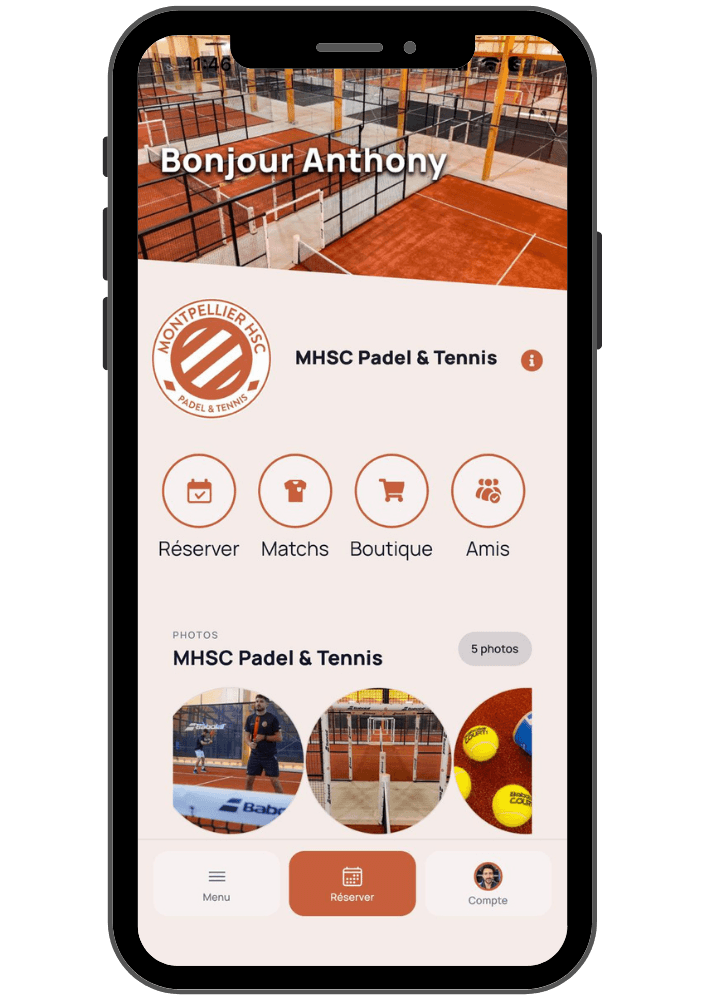
A high-yield pricing strategy falls flat if it creates administrative burden at the front desk. With Doinsport’s sports club management and booking platform, you can configure complex rate structures, player quotas, slot durations, and payment workflows in seconds, unlocking frictionless 24/7 online booking.
Configurable online payments: Full upfront checkout, seamless split payments among players, deposits, or card pre-authorization.
Retention tools: Automated recurring SEPA memberships, prepaid session packages, and top-up digital wallets.
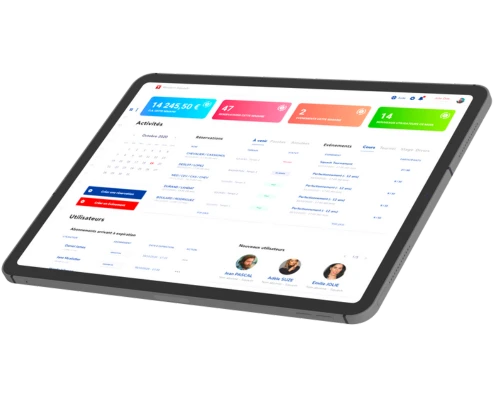
Real-time business intelligence: Track gross revenue, court occupancy rates, and average spend per court to iterate pricing dynamically across seasons.
Related Reading: Integrated online payments for padel and tennis clubs.
FAQ
What is the average hourly price of padel in France?
Across surveyed facilities, a 90-minute doubles match costs €10.50 to €12 per player off-peak, and €14.50 to €16 during peak hours, representing an hourly court rate of approximately €28 to €43.
Should clubs list per-player or per-court pricing?
Per-player pricing creates lower psychological friction for casual bookings, while per-court pricing suits corporate and private group organizers. Leading venues publish both, paired with an integrated split-payment checkout.
What is the optimal price delta between peak and off-peak hours?
Market data shows peak rates are typically 32% to 38% higher than off-peak. The ideal gap should reflect your specific low-demand volume: larger spreads are recommended when you need stronger financial incentives to shift daytime play.
How can I ensure my club's court rates remain profitable?
Calculate your hourly floor price by dividing monthly operating expenses by total billable hours sold. Verify that all discounted packages (packs, subscriptions, wallet promotions) consistently sit above this threshold on a net hourly basis.
How often should a sports club revise its pricing structure?
Audit your rate matrix at least once per season against granular utilization metrics per slot. Material shifts in facility overhead, energy prices, or commercial lease rates should also prompt an immediate tariff review.
Price too high, and your courts sit empty during the day. Price too low, and you operate at capacity without ever reaching profitability. The hourly court rate is one of the most powerful business levers for your club, yet many managers set it simply by glancing at the competition down the street.
In this guide, we examine actual pricing benchmarks in France for 2026, outline how to calculate your floor price, design a high-performing peak/off-peak pricing grid, and leverage memberships, session packs, and digital wallets without devaluing your court time.
Key Takeaways
In France, a 90-minute doubles padel booking typically sells for €10 to €16 per player, equivalent to approximately €28 to €43 per hour per court.
The price spread between off-peak and peak hours averages 30% to 40% across analyzed facilities.
Your floor price must be derived from your operational costs and a realistic occupancy rate, not from your competitor’s rates.
Two or three pricing tiers are ideal; beyond that, your rate structure becomes confusing for players.
Memberships, session packs, and in-app wallets should drive player retention while securing upfront cash flow.
How Much Does an Hour of Padel Cost in France in 2026?
While there is no standard statutory rate, published club tariffs provide reliable benchmarks. In France, most facilities sell doubles matches in 90-minute slots and display pricing on a per-player basis.
Dijon Padel (Dijon): €11 per player off-peak, €14.50 peak, for a 90-minute slot
Le Court (Hyères): €12 per player off-peak, €16 peak, for a 90-minute slot
Le Set (Le Bignon, near Nantes): €10.50 per player off-peak, €14.50 peak, for a 90-minute slot
Public rates observed in October 2026 on respective club websites.
Calculated per hour per court, this translates to approximately €28 to €32 for off-peak and €39 to €43 for peak hours. This serves as a solid baseline for your club, subject to adjustments based on location, local competition, and amenities (indoor courts, locker rooms, clubhouse bar, parking).
Per-Player vs. Per-Court Pricing: What’s the Best Display Strategy?
While total revenue remains identical, user perception shifts dramatically. “€12 per player” feels accessible, whereas “€48 per court” can create friction for an individual booking before having confirmed the rest of the fourball.
Per-player pricing: Highly legible and appealing, particularly when each participant can settle their share directly during online booking.
Per-court pricing: More straightforward for established groups and corporate bookings requiring a single consolidated invoice.
Many operators display both formats, such as Le Court in Hyères (€12 per person, €48 per court during off-peak hours). The crucial factor is payment flexibility: if you advertise per-player pricing, ensure your system supports split payments, avoiding a scenario where the booking lead must front the full cost and chase teammates for reimbursement.
How to Calculate Your Floor Price
Before benchmarking against the local market, determine the absolute baseline below which every booked hour generates a loss. The formula is straightforward:
Hourly Floor Price = Total Monthly Operating Costs ÷ (Number of Courts × Monthly Operating Hours × Projected Occupancy Rate)
Let’s examine a sample business case (to be updated with your actual metrics):
Monthly operating expenses (rent, debt service, payroll, utilities, software, court maintenance): €20,000
4 courts open 14 hours per day, 30 days per month: 1,680 available court hours
Realistic average occupancy rate: 50%, representing 840 billable hours
Floor Price Calculation: €20,000 ÷ 840 hrs = approx. €24 per hour per court, which equals €9 per player for a 90-minute match. Selling below this threshold is value-destructive. Pricing above it generates your operating margin.
This equation highlights a core operational reality: occupancy rate impacts your bottom line as heavily as your headline price. At a 40% occupancy rate, the exact same facility must charge €30/hour simply to break even. This is why revenue management and court utilization must be optimized concurrently.
Related Reading: How to boost your padel club's court occupancy rate and How many courts do you need for a profitable padel club?.
Peak vs. Off-Peak: Building an Optimized Time-Slot Grid
Court demand on a Tuesday at 3:00 PM bears no resemblance to a Thursday at 7:00 PM. A time-differentiated grid allows you to capture maximum yield during prime times while stimulating traffic during low-demand periods.
In our market benchmark, peak hours command a 32% to 38% premium over off-peak slots. For instance, Le Court in Hyères structures its time bands as follows:
Off-peak: Weekdays, 6:00 AM – 12:00 PM and 2:00 PM – 5:00 PM
Peak: Weekdays, 12:00 PM – 2:00 PM and 5:00 PM – 11:00 PM, plus all weekends and public holidays
Best practices for an effective rate schedule:
Cap it at two or three tiers. Le Set uses an intermediate “lunchtime” rate (€11.50) between off-peak (€10.50) and peak (€14.50). Adding more variations complicates the customer journey and dampens conversions.
Base adjustments on your PMS data. Pinpoint recurring low-utilization slots in your weekly booking charts: these should be designated off-peak, regardless of how other local clubs define theirs.
Review seasonally. Utilization profiles for Sunday mornings or mid-August differ significantly from standard patterns in November.
Memberships, Session Packs, and In-App Wallets: Rewarding Loyalty Without Diluting Yield
Single pay-and-play bookings are only one component of your revenue mix. Structured retention programs drive customer lifetime value and secure upfront working capital—provided unit economics remain protected.
Session multi-packs: At Le Set, a 20-session off-peak pack retails for €195 (€9.75/session vs. €10.50 standard). The discount is modest, but the club collects €195 in upfront cash flow.
Prepaid digital wallets: Le Court in Hyères credits €110 for a €100 top-up, €230 for €200, and €480 for €400. Tiered bonus credits incentivize higher deposits, moving cash immediately onto your balance sheet.
Recurring memberships: Also at Hyères, subscription options (€75 for 6 months or €120 annually) unlock preferred pricing per match (e.g., €11.25 instead of €12 off-peak). The club locks in recurring revenue while incentivizing frequent court play.
Core management rule: consistently audit the effective hourly realized rate across every package to ensure it consistently clears your floor price.
Related Reading: 10 proven strategies to boost player retention in your padel club.
Segmented Pricing: Students, Corporate Accounts, and Coaching
Targeted player segments can drive substantial incremental volume when framed with clear parameters:
Students & U25: Dijon Padel offers a €7 off-peak rate for players under 25 (vs. €11 standard). This is an effective lever to monetize weekday afternoon court availability.
Corporate / B2B: Dedicated corporate court rates or flat-fee event packages with consolidated billing.
Lessons & Academy: Separate pricing streams, billed per player for group clinics and per session for private instruction.
Capitalize on ancillary revenue opportunities that add up over the fiscal year: racket rentals (€3 at Le Set, €5 at Dijon Padel) and pro-shop ball sales.
Should You Implement Dynamic Pricing?
Dynamic pricing continuously recalibrates court rates based on real-time supply and demand: yielding up when demand spikes, and discounting distressed inventory when courts risk going unbooked, similar to airline or hotel revenue management.
In theory, it maximizes yield per available court hour. In practice, erratic price volatility can alienate regular members. For most sports club managers, a phased strategy delivers the best return:
Deploy a clean, well-defined baseline grid distinguishing peak from off-peak periods.
Introduce targeted, automated last-minute flash rates for distressed inventory remaining 24 hours prior.
Track the net impact on court utilization and revPAH (revenue per available hour) before adopting broader automation.
Common Pricing Pitfalls to Avoid
Copying competing venues blindly without running your own cost and break-even models.
Discounting peak hours: high-demand slots sell out organically; protect your primary profit center.
Over-complicating rate cards: redundant tiers and fragmented exceptions undermine online self-booking.
Allowing unpaid reservations: unconfirmed slots carry significant no-show risk and leave courts sitting unmonetized.
Leaving prices static for years: overhead, inflation, and utility costs rise; your pricing model must adapt accordingly.
Related Reading: How to reduce cancellations and no-shows in your padel club.
Automate and Execute Your Pricing Strategy with Doinsport
A high-yield pricing strategy falls flat if it creates administrative burden at the front desk. With Doinsport’s sports club management and booking platform, you can configure complex rate structures, player quotas, slot durations, and payment workflows in seconds, unlocking frictionless 24/7 online booking.
Configurable online payments: Full upfront checkout, seamless split payments among players, deposits, or card pre-authorization.
Retention tools: Automated recurring SEPA memberships, prepaid session packages, and top-up digital wallets.
Real-time business intelligence: Track gross revenue, court occupancy rates, and average spend per court to iterate pricing dynamically across seasons.
Related Reading: Integrated online payments for padel and tennis clubs.
FAQ
What is the average hourly price of padel in France?
Across surveyed facilities, a 90-minute doubles match costs €10.50 to €12 per player off-peak, and €14.50 to €16 during peak hours, representing an hourly court rate of approximately €28 to €43.
Should clubs list per-player or per-court pricing?
Per-player pricing creates lower psychological friction for casual bookings, while per-court pricing suits corporate and private group organizers. Leading venues publish both, paired with an integrated split-payment checkout.
What is the optimal price delta between peak and off-peak hours?
Market data shows peak rates are typically 32% to 38% higher than off-peak. The ideal gap should reflect your specific low-demand volume: larger spreads are recommended when you need stronger financial incentives to shift daytime play.
How can I ensure my club's court rates remain profitable?
Calculate your hourly floor price by dividing monthly operating expenses by total billable hours sold. Verify that all discounted packages (packs, subscriptions, wallet promotions) consistently sit above this threshold on a net hourly basis.
How often should a sports club revise its pricing structure?
Audit your rate matrix at least once per season against granular utilization metrics per slot. Material shifts in facility overhead, energy prices, or commercial lease rates should also prompt an immediate tariff review.
Similar articles
Oct 14, 2026
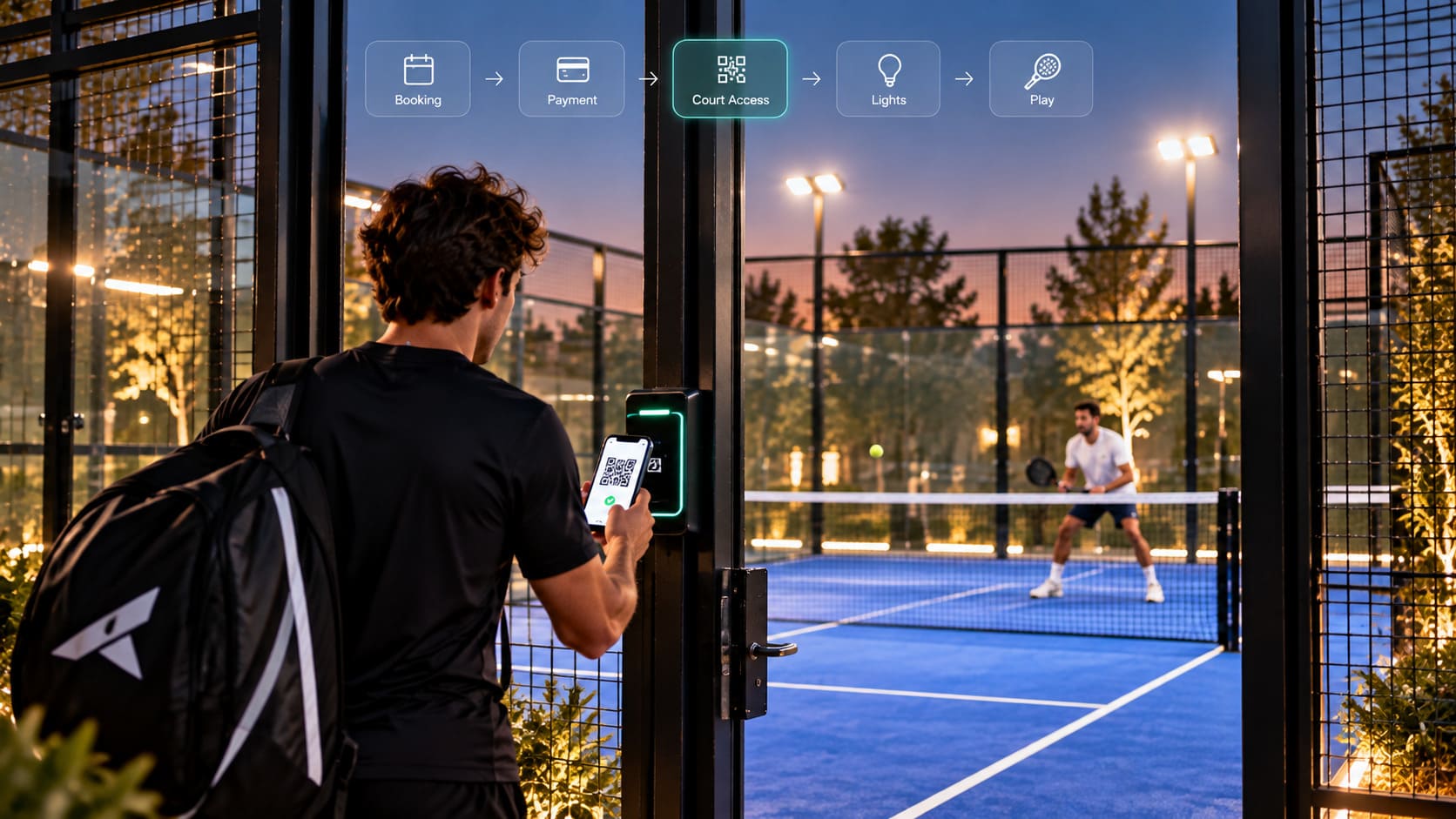
How Does Access Control Work for Padel Clubs? QR Codes, RFID, Smart Locks, Court Lighting, and Bookings Explained.

Oct 1, 2026
How to Drive Player Retention at Your Padel Club: Discover 10 Proven Strategies to Boost Court Bookings, Re-engage Members, and Grow Your Revenue.

See Doinsport in action
Ready to grow your padel or tennis club?
Join over 1,000 clubs that run on Doinsport. Book a free demo and see what it can do for your club.
We're here to help.


See Doinsport in action
Ready to grow your padel or tennis club?
Join over 1,000 clubs that run on Doinsport. Book a free demo and see what it can do for your club.
See Doinsport in action
Ready to grow your padel or tennis club?
Join over 1,000 clubs that run on Doinsport. Book a free demo and see what it can do for your club.
We're here to help.