

EN
EN
Padel
Retaining Your Padel Players: 10 Effective Strategies
How to Drive Player Retention at Your Padel Club: Discover 10 Proven Strategies to Boost Court Bookings, Re-engage Members, and Grow Your Revenue.

Attracting new players to a padel club is only the first step. Getting them to return regularly is just as critical to the long-term profitability of your facility.
A player who books once a month does not generate the same revenue as one who plays every week. Yet, many clubs still focus most of their marketing efforts on member acquisition, leaving the full revenue potential of their existing database untapped.
Between occasional bookings, players who drop off after a few matches, and members who split their time across competing venues, player retention has become a major growth driver for padel clubs.
How do you convert occasional players into regulars? How do you identify members at risk of churning? What strategies can you implement to increase booking frequency without constantly relying on discounts?
Discover 10 actionable strategies to boost player loyalty, build an engaged community, and drive higher recurring revenue for your padel club.
Why Player Retention Is Vital for Padel Club Profitability
A padel club operates with a fixed inventory: a set number of courts and daily time slots.
Unlike an e-commerce store, a facility cannot scale booking volume indefinitely without building new courts or extending opening hours.
To maximize revenue, operators rely on several core levers:
Acquiring new players;
Increasing booking frequency among existing players;
Optimizing court occupancy rates;
Driving ancillary sales (pro shop, F&B);
Minimizing off-peak downtime.
Among these levers, customer retention offers a unique commercial advantage: you have already established a relationship with these players.
They are familiar with your venue, have tested your courts, and likely already have an account on your booking platform.
As a result, the cost and effort required to drive a repeat booking are significantly lower than acquiring a first-time customer from scratch.
The Real Challenge: Customer Lifetime Value (LTV)
Consider this practical scenario.
A player organizes court bookings at your club averaging €36 per month.
Over the course of a full year, that represents:
12 bookings × €36 = €432 in annual revenue.
If that same player increases their frequency to two bookings per month:
24 bookings × €36 = €864 in annual revenue.
You have effectively doubled their booking revenue without spending a single euro on new customer acquisition.
This calculation reflects total court fees billed by the club rather than the individual spend of all four participants. It also assumes that these additional bookings do not cannibalize other peak-hour sales.
Scaled across a member database of hundreds of active bookers, even minor gains in booking frequency yield significant revenue growth.
How to Measure Player Retention in a Padel Club
Before launching a customer loyalty initiative, you need a clear baseline of your database's booking behavior.
A club may boast 5,000 registered accounts yet have only 800 genuinely active players.
Conversely, a venue with a smaller, highly engaged community can generate substantial booking volume.
Total registered accounts is therefore a vanity metric—it does not reflect business health.
1. Booking Frequency
This is one of your most critical operational KPIs.
Average Frequency = Total Bookings / Number of Active Bookers over a given period.
For example:
600 monthly bookings;
300 accounts that completed at least one booking.
Your average booking frequency is two bookings per active account per month.
Note: If your system only tracks the individual who books and pays for the court, this figure will not fully capture the actual playing frequency of all four participants on court.
Where your software allows, tracking both primary bookers and tagged court participants provides a much more accurate picture.
2. Retention Rate
Retention measures the percentage of players who return to book again after their initial period of activity.
For example:
You identify 100 new players who made their first booking in January.
Of those 100, 40 book a court again in February.
Your month-one retention rate for that cohort is 40%.
Maintaining consistent tracking parameters over time is essential for spotting trends.
3. Reactivation Rate
This metric tracks the percentage of lapsed or dormant players who return to make a booking.
For example:
200 players with no recorded booking in the last 60 days;
30 complete a booking following a win-back campaign.
Your observed reactivation rate is 15%.
Keep in mind that not all 30 bookings are necessarily direct campaign conversions. To measure true campaign incrementality, benchmark your results against an uncontacted control group.
4. Average Revenue Per Active Player (ARPU)
Finally, analyze the total monetization of your active player base.
This includes all revenue streams:
Court bookings;
Memberships and recurring passes;
Coaching and clinics;
Tournaments and leagues;
Pro shop and equipment retail;
Clubhouse bar and catering sales.
This gives club managers a complete view of their community's overall economic value.
1. Turn First-Time Bookers into Regulars
Customer loyalty starts during a player's very first visit.
When someone discovers your club, they need an immediate, compelling reason to return.
Court quality, top-tier facilities, and warm on-site hospitality are fundamental.
However, optimizing post-booking follow-ups is just as critical for repeat visits.
Prompt the Next Booking Automatically
After their first match, don't wait for players to remember your venue on their own.
Proactively engage them with targeted options:
A recommended time slot for the following week;
A coaching clinic tailored to their skill level;
A social mixer to connect with other local players;
An introductory welcome offer;
A multi-session booking pass.
The goal is to remove friction and make booking their next session effortless.
Post-Booking Automation Example
“Thanks for playing at our club! Ready for your next match? Check out available court slots for next week directly in your member portal.”
Keep automated messages clear, contextually relevant, and compliant with player communication preferences and opt-ins.
Eliminate Checkout Friction
If players have to create a new account, search through pricing tables, or re-enter payment details every time they visit, booking becomes a chore.
Deploying dedicated padel club management and booking software centralizes court scheduling and enables seamless one-click repeat bookings.
The smoother your booking journey, the faster your club becomes a staple in your players' weekly routines.
2. Segment Your Player Database for Personalized Retention
A one-size-fits-all communication strategy doesn't work for modern sports clubs.
A competitive player who books three times a week has completely different expectations than someone who played once six months ago.
Yet, many clubs still send generic promotional blasts to their entire member list.
Effective sports CRM starts with intelligent customer segmentation.
Sample Segmentation Strategy for Padel Clubs
Segment | Sample Criteria | Marketing Objective |
|---|---|---|
New Players | Recent first court booking | Drive the 2nd visit |
Occasional Players | 1 booking per month | Increase booking frequency |
Regular Players | Multiple monthly bookings | Reinforce regular playing habits |
Power Users / VIPs | Frequent weekly bookings | Maximize loyalty and advocacy |
Dormant Players | No bookings for 30–60 days | Win-back & reactivation |
Lapsed Players | No bookings for 90+ days | Identify drop-off reasons & re-engage |
These thresholds serve as starting guidelines and should be adapted to your facility’s specific usage patterns.
For instance, a player who naturally plays every other week shouldn't be flagged as inactive after just 21 days.
The real power lies in tracking shifts in individual booking behavior.
A regular who used to play twice a week but hasn't visited in a month requires immediate, personalized outreach compared to someone who has always booked quarterly.
3. Leverage Subscriptions, Memberships, and Multi-Session Passes
Recurring memberships and session passes are proven tools to lock in consistent court utilization.
They encourage players to plan sessions well in advance while providing your club with predictable, recurring cash flow.
Here are the most effective models for racquet clubs.
Credit Packs and Punch Passes
For example:
Prepaid 10-session passes, packaged with a small volume discount or bonus credit.
Players hold a digital balance they can draw from each time they reserve a court.
For operators, upfront passes secure cash flow and incentivize repeat visits.
Make sure to establish transparent terms of use: validity periods, eligible court hours, refund policies, and cancellation windows.
Monthly Recurring Memberships
You can structure tiered memberships that provide exclusive perks:
Discounted court hire rates;
Priority advance booking windows;
Discounts on private and group coaching;
Special rates on ancillary activities;
Complimentary equipment rentals or guest passes.
Your membership structure should reflect your revenue model and peak court demand.
Recurring Standing Bookings
Many avid players simply want the peace of mind of having the exact same court reserved every week.
For example:
Every Thursday at 7:00 PM.
Offering standing reservations locks in repeat business and eliminates weekly booking friction for your best customers.
However, be strategic: avoid over-committing prime peak hours to fixed slots so that new members can still access popular times.
Balance guaranteed recurring revenue against court availability and yield optimization.
4. Reactivate Dormant and At-Risk Players
When a member hasn't booked for several weeks, it doesn't mean they've churned for good.
Life events, lack of available partners, or simply falling out of the routine could be the cause.
Instead of waiting for them to return on their own, launch automated win-back workflows.
Segment by Inactivity Windows
Set up automated audience segments based on last booking date:
No booking in 30 days
→ Club update, new coaching programs, or upcoming event highlights.
No booking in 60 days
→ Tailored invitations to clinics, social mixers, or available peak-adjacent slots.
No booking in 90 days
→ Re-engagement campaign paired with a quick feedback survey.
Adjust these timeframes based on your club's historical member lifecycle.
Choose the Most Effective Channel
Reach players through their preferred touchpoints:
Email campaigns;
Direct SMS alerts;
Mobile push notifications.
Reactivation messaging doesn't always have to rely on aggressive discounting.
Often, a simple, relevant update is all it takes:
Announcing a new clinic or coaching schedule;
Registration opening for an upcoming tournament or league;
Last-minute court availability during their favorite time slot;
Invitations to social match-play sessions.
Re-Engagement Copy Example
“We’ve missed seeing you on the courts! We’re hosting a friendly match-play session for your skill level next Thursday. Care to join?”
Contextual, personalized messaging will always outperform generic marketing blasts.
To streamline this process, explore DoinSport's club communication and loyalty features, including customer segmentation, targeted email/SMS automations, and push notifications.
Always ensure full compliance with regional electronic marketing regulations (such as GDPR) and include clear unsubscribe options.
5. Deliver a Frictionless Mobile Booking Experience
Player retention is driven by more than just pricing perks.
Your digital user experience plays a decisive role in customer loyalty.
Compare two competing padel clubs with similar court facilities.
At the first club, players must call the front desk or wait for an email reply to check availability.
At the second club, they open an app, view real-time court availability, split payments, and confirm their slot in under 30 seconds.
A superior digital experience builds booking habits that competitors cannot easily break.
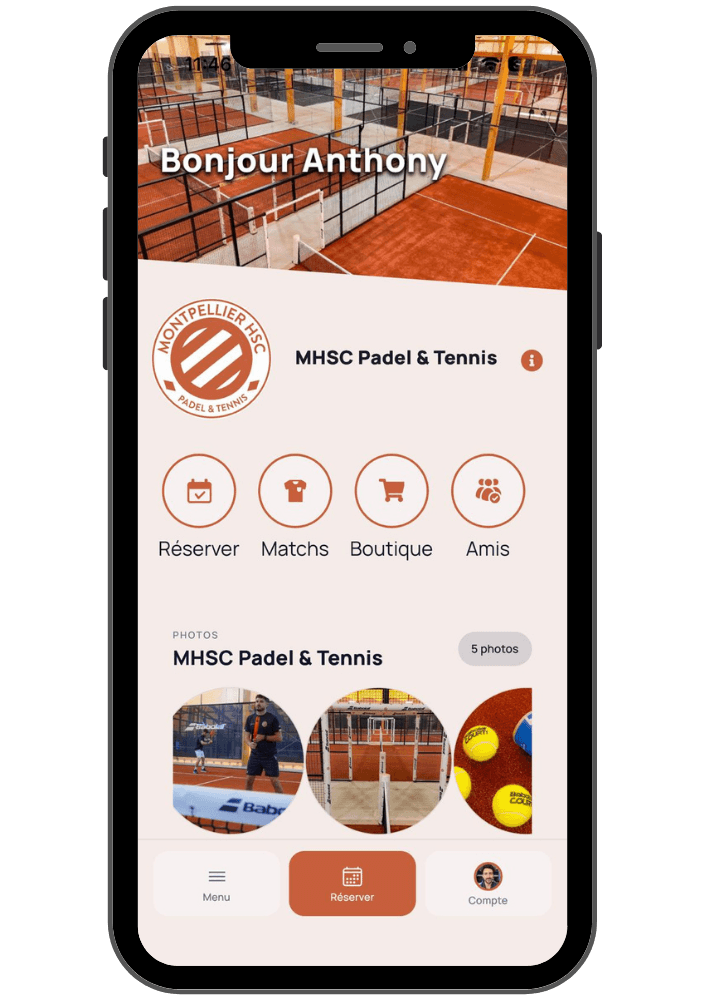
A Custom-Branded App for Your Sports Club
A branded mobile app keeps your facility front-and-center on your players' home screens.
From the app, members can effortlessly:
Check real-time court availability;
Book courts instantly;
Pay and split court fees with other players;
Redeem multi-session credits;
Manage recurring memberships;
Register for tournaments and events;
Stay updated on club news.
Beyond smooth reservations, the strategic value runs deeper.
Your app becomes your primary direct communication channel with your community.
You can send direct push notifications for tournament registrations, social events, or unfilled court openings.
Investing in a white-label mobile app for your padel club reinforces your brand equity instead of surrendering customer relationships to a generic marketplace aggregator.
For sports venues focused on sustainable multi-year customer lifetime value, this direct customer ownership is an invaluable asset.
6. Build an Engaged Club Community
Padel has an inherent commercial advantage: it is naturally social.
Retention is never just about court surfaces or competitive pricing.
Players return consistently because they want to connect with:
Their regular playing partners;
Their network of friends;
Players of comparable skill levels;
Their favorite coaches;
The social vibe of your clubhouse.
A club that cultivates a thriving community evolves from a mere court-rental facility into a lifestyle hub.
Organize Level-Based Matchmaking Sessions
Many members want to play more often but face one constant hurdle: finding three other compatible players at the right time.
Solve this problem for them by organizing:
Beginner mixer sessions;
Intermediate competitive meetups;
Open match-play sessions;
Level-based ladders and Americano tournaments;
Introductory discovery clinics.
Connecting players builds local networks, which directly fuels higher organic booking volume.
Invest in Clubhouse Social Spaces
The post-match beer, the lounge area, and social clubhouse events are critical to member attachment.
Players will consistently choose your club over closer competitors simply because they feel at home and know the staff and other regulars.
True retention extends far beyond the court lines.
To learn more, explore our guide on optimizing the player experience in padel clubs.
7. Implement a Value-Driven Loyalty Program
An effective loyalty program should never be a race to the bottom with endless price discounting.
Its true objective is to reward behaviors that generate tangible commercial value for your club.
For example:
Maintaining regular booking cadences;
Joining club tournaments and clinics;
Purchasing session packs or recurring passes;
Referring new players to the club;
Trying new activities or services;
Booking designated off-peak slots.
Reward Consistent Play
Design progressive reward milestones triggered by booking activity.
For example:
5 bookings → Pro shop perk or drink voucher
10 bookings → Wallet credit or priority booking access
20 bookings → VIP tier status and exclusive event invitations
These examples should be calibrated against your club's operating margins and court capacity.
Prioritize High-Perceived-Value Rewards
The most impactful rewards aren't necessarily cash discounts.
High-value incentives include:
Early-access registration for popular tournaments;
Free equipment demo sessions with new racquets;
Complimentary entry to social events;
Free upgrades to off-peak slots;
Branded club merchandise;
Exclusive member-only perks.
Clarity is essential: keep reward rules simple and progress visible in the player app.
Track Reward Unit Economics
Before rolling out any incentive program, evaluate the opportunity cost of every reward.
A complimentary court credit redeemed on a Tuesday at 11:00 AM costs your venue very little; redeeming that same credit on a Thursday at 7:00 PM during prime-time demand results in lost court revenue.
Always align your loyalty rewards with your court capacity and yield management strategy.
8. Use Tournaments and Events to Drive Predictable Repeat Bookings
Hosting internal events is the most reliable way to energize club culture.
Events introduce extra touchpoints that bring members to your facility outside their standard weekly games.
Explore several successful event formats:
Regular Club Tournaments
Host monthly weekend tournaments or round-robin formats segmented strictly by skill tier.
Internal Box Leagues
Organize seasonal box leagues where teams play scheduled matches over several weeks.
This creates sustained booking demand over long multi-month stretches.
Themed Social Nights
Popular formats include:
Padel & Tapas / Pizza evenings;
Mixed-doubles mixers;
Corporate & B2B networking leagues;
Introductory beginner clinics;
Parent & child mini-tournaments;
Sponsor & partner exhibition matches.
Group Clinics and Intensive Bootcamps
Skill progression is a proven retention catalyst.
When players noticeably improve through structured coaching, their commitment and playing frequency naturally increase.
The objective is to establish recurring calendar events that players look forward to, rather than isolated, ad-hoc weekend fillers.
9. Personalize Offers Based on Player Booking Habits
Every player interacts with your facility differently.
Some book exclusively on weekday evenings.
Others play Sunday mornings.
A growing segment works remotely and plays during daytime business hours.
Utilizing player behavioral data allows you to create high-converting, tailored offers.
Identify Player Usage Profiles
Consider three typical member personas:
Profile A — Weekday Evening Regular
Consistently books courts after 6:00 PM on weekdays.
Profile B — Daytime / Flexible Worker
Prefers mid-morning or early-afternoon slots.
Profile C — Weekend Warrior
Only books on Saturdays and Sundays.
Broadcasting the exact same promotion to all three personas delivers poor engagement.
A discounted package for Tuesday at 11:00 AM will resonate strongly with Profile B, while offering zero value to Profile A.
Monetize Low-Demand Court Hours
Instead of discounting across the board, deploy targeted incentives specifically for low-utilization time slots.
This strategy achieves two high-value operational objectives at once:
Driving incremental booking frequency
and
Optimizing off-peak occupancy and yield.
Be sure to monitor your metrics to verify that these targeted promotions generate truly incremental bookings rather than subsidizing players who would have paid standard rates.
To dive deeper into schedule optimization, read our guide on how to boost court occupancy in your padel club.
10. Gather Feedback from Lapsed Players to Fix Churn
Customer retention isn't just about sending promotional messages.
It requires uncovering why members stop booking in the first place.
Player churn typically stems from a few identifiable reasons:
Pricing and perceived value;
Inconvenient court schedules or prime-time shortages;
Difficulty coordinating three other partners;
Lack of balanced, level-appropriate games;
Court surface quality or facility maintenance issues;
A clunky or frustrating booking process;
Lack of social mixers and events;
Personal schedule changes or relocation;
Migration to a newly opened competitor.
No marketing promotion can fix an unaddressed operational issue.
Deploy a Lightweight Exit Survey
Trigger an automated one-question survey to players after 60 days of inactivity:
“What’s the main reason you haven't been playing as often at our club?”
Provide clear, multiple-choice options:
I don't have enough partners to play with;
Available court times don't suit my schedule;
Pricing is too high;
I'm playing at another venue;
I'm short on time right now;
Other reason.
Keep it friction-free—avoid long, tedious questionnaires.
Your sole objective is to identify systemic root causes of member churn.
Turn Player Feedback into Operational Improvements
If players frequently cite a lack of partners, introduce open matchmaking sessions and social ladders.
If they report shortages after 6:00 PM, consider adjusting prime-time scheduling parameters and booking limits.
If pricing sensitivity is a recurring theme, evaluate off-peak passes and credit packs.
Sustainable retention begins by solving the real-world friction points that cause players to leave.
Financial Impact: How Much Revenue Can Stronger Retention Generate?
Let's look at the financial impact through a practical simulation.
Imagine a facility with an active core of 100 regular court bookers.
Currently, each organizer books an average of one court session per month at €36 per booking.
Current monthly court booking revenue from this group:
100 bookers × 1 booking × €36 = €3,600 / month.
The club implements a targeted retention playbook:
Automated re-engagement workflows;
Flexible session packs and memberships;
Weekly level-based mixers and tournaments;
Personalized off-peak communications;
A frictionless mobile app booking flow.
These measures increase the group's average booking frequency from 1.0 to 1.5 bookings per month.
The new revenue calculation:
100 bookers × 1.5 bookings × €36 = €5,400 / month.
Revenue Impact Model
Metric | Baseline | With Retention Strategy |
|---|---|---|
Target Active Bookers | 100 | 100 |
Avg. Monthly Bookings / Player | 1.0 | 1.5 |
Total Monthly Bookings | 100 | 150 |
Average Court Fee | €36 | €36 |
Associated Monthly Revenue | €3,600 | €5,400 |
Net Gain: +€1,800 in incremental monthly court revenue (+€21,600 annualized).
This is an illustrative financial model, not a guaranteed benchmark from DoinSport.
This projection assumes the 50 incremental monthly bookings utilize genuinely vacant slots, do not cannibalize regular full-price demand, and maintain the average court rate.
It represents gross booking revenue before transaction fees, variable club overhead, and campaign marketing costs.
Even so, it highlights an essential business reality: small, incremental improvements in player booking frequency generate substantial bottom-line revenue without expanding your customer database.
Key Retention KPIs Every Sports Club Manager Should Track
A scalable retention strategy relies on clear, trackable data.
We recommend monitoring these core metrics on your club management dashboard:
KPI | Calculation Method | Strategic Purpose |
|---|---|---|
Active Players | Unique players with activity in the period | Gauge true community size |
Booking Frequency | Total Bookings / Active Bookers | Track playing habits |
Second-Booking Rate | First-time bookers returning within target window / Total new bookers | Measure onboarding & activation |
Retention Rate | Cohort players returning in subsequent period / Total cohort size | Measure long-term player loyalty |
Reactivation Rate | Dormant players who book / Total targeted dormant players | Measure win-back effectiveness |
Revenue Per Active Player (ARPU) | Total Attributable Revenue / Active Players | Track customer economic value |
Court Occupancy Rate | Total Booked Hours / Total Available Court Hours | Monitor court utilization |
Track these figures month-over-month, but also segment them across player cohorts.
For example: do players acquired in September demonstrate the same 90-day retention as those acquired in June?
Do players who compete in your internal leagues play more frequently than pure casual bookers?
Do session pass holders show higher average spend across the pro shop and bar?
Cohort analysis surfaces hidden growth opportunities that aggregate numbers conceal.

A Practical 30-Day Player Retention Roadmap
You don't need to overhaul everything at once.
Here is a phased 4-week execution plan to launch your retention strategy.
Week 1 => Audit Your Member Database
Extract and analyze historical booking data from your management software.
Identify your key member segments:
First-time bookers;
High-frequency regulars;
Occasional casual bookers;
At-risk dormant players;
High-demand peak vs. underutilized off-peak hours.
Establish baseline KPIs for frequency and retention.
Week 2 => Deploy Your First Targeted CRM Workflow
Select one specific player segment to focus on.
A high-impact target: previously regular players who haven't booked in the last 45 days.
Draft tailored messaging giving them a concrete reason to return.
Track booking conversions against an uncontacted holdout group to measure true incremental uplift.
Week 3 => Implement Habit-Building Products
Launch an offer designed to drive recurring booking frequency.
Consider introducing:
Digital session packs (e.g., 10-match passes);
Recurring standing weekly court reservations;
A weekly level-based ladder or open mixer;
A recurring monthly membership tier.
The goal is to convert sporadic bookings into predictable, weekly habits.
Week 4 => Measure, Optimize, and Iterate
Compare your 30-day outcomes against baseline figures:
Average booking frequency;
Number of reactivated players;
Incremental court hours sold;
Total booking revenue;
Promotional and incentive costs.
Double down on what works, adjust underperforming offers, and systematize successful workflows.
Sustainable customer retention is built on consistent, data-driven micro-optimizations—not one-off marketing promotions.
How DoinSport Empowers Clubs to Drive Long-Term Player Retention
To scale player loyalty, your core operating tools must seamlessly communicate with one another.
Court scheduling reveals player booking frequency.
The member database unlocks granular customer segmentation.
Automated marketing channels deliver targeted messaging to the right audiences.
Session passes and recurring memberships secure customer lifetime value.
And a branded mobile app removes all friction from the player booking journey.
The DoinSport platform brings this entire operating ecosystem into a single unified solution:
Real-time online court booking & scheduling;
Complete sports club member management (CRM);
Recurring memberships, punch passes & digital wallets;
Automated loyalty and reward features;
Advanced customer database segmentation;
Automated email and SMS campaigns;
Direct mobile push notifications;
Fully white-label, custom-branded mobile apps;
Actionable analytics and management reporting.
Instead of stitching together disconnected tools, operators run their business on an integrated platform.
Clubs can automate smart retention initiatives backed by real-time behavioral data.
The ultimate goal isn't just sending more communications—it's delivering the right experience to the right player at the right time.
FAQ: Padel Club Player Retention
How do you improve player retention in a padel club?
Effective retention combines several core operational strategies: a frictionless digital booking experience, tiered memberships and session passes, community-building events and social ladders, personalized CRM outreach, and proactive win-back automations for dormant players. Track these against regular frequency and cohort retention benchmarks.
How can you increase court booking frequency?
Start by analyzing your player usage data. Introduce session passes, standing recurring bookings, and organized social mixers that solve the challenge of finding partners. Targeted communication campaigns highlighting relevant open slots can also effectively convert casual players into weekly regulars.
What is the best loyalty program structure for a padel club?
A successful program rewards high-value behaviors: sustained booking frequency, tournament sign-ups, and off-peak play. Offer rewards like wallet credits, pro shop perks, priority booking windows, or exclusive event access. Ensure incentives carry strong perceived value without eroding your court yield margins.
How do you reactivate lapsed padel players?
Segment members whose booking frequency has declined over 30, 60, or 90 days. Send personalized messages through email, SMS, or push notifications featuring tailored opportunities: an upcoming clinic, an open slot matching their historical play times, or an invitation to a social mixer. Track campaign conversion and reactivation rates closely.
How do you calculate a club's retention rate?
Define an active player cohort over a specific baseline timeframe (e.g., all players who booked in January). Then, measure the percentage of that same cohort who return to book during a subsequent period (e.g., February). Keep your timeframes and cohort definitions consistent across tracking intervals.
Do you need to offer discounts to retain players?
No. A frictionless mobile app, welcoming hospitality, well-maintained courts, and level-based matchmaking sessions drive retention far more effectively than constant discounting. Discounts should be used strategically—for instance, to shift demand into underutilized off-peak slots—while protecting peak-hour margins.
Why do players stop coming back to a sports club?
The primary drivers of churn include lack of playing partners, unavailable peak slots, perceived poor value, neglected court surfaces, cumbersome booking processes, or competition from newer venues. Deploying a lightweight survey to dormant players allows you to pinpoint and address the exact issues at your facility.
Can club management software boost player retention?
Yes. Advanced sports club software automates behavioral segmentation, streamlines booking via custom mobile apps, manages recurring memberships, and powers automated email, SMS, and push workflows—saving managers hours of manual work while maximizing player lifetime value.
Summary: Retention Means Building Long-Term Value
Long-term player retention in a padel club isn't about isolated marketing tricks or one-off discounts.
It is the compound result of an integrated player journey:
Exceptional On-Site Experience + Frictionless Booking + An Active Community + Relevant, Timely Communication.
By continuously monitoring player habits, you can activate casual players, reinforce regular routines, win back churn risks, and maximize the lifetime value of your existing community.
The impact is as strategic as it is financial.
A regular player drives recurring revenue, enriches club culture, and naturally champions your venue to new players.
Ready to unlock the full potential of your member database and elevate player retention at your club?
Book a DoinSport demo today to see how an all-in-one platform unifies court bookings, member management, and automated marketing into one seamless solution.
Attracting new players to a padel club is only the first step. Getting them to return regularly is just as critical to the long-term profitability of your facility.
A player who books once a month does not generate the same revenue as one who plays every week. Yet, many clubs still focus most of their marketing efforts on member acquisition, leaving the full revenue potential of their existing database untapped.
Between occasional bookings, players who drop off after a few matches, and members who split their time across competing venues, player retention has become a major growth driver for padel clubs.
How do you convert occasional players into regulars? How do you identify members at risk of churning? What strategies can you implement to increase booking frequency without constantly relying on discounts?
Discover 10 actionable strategies to boost player loyalty, build an engaged community, and drive higher recurring revenue for your padel club.
Why Player Retention Is Vital for Padel Club Profitability
A padel club operates with a fixed inventory: a set number of courts and daily time slots.
Unlike an e-commerce store, a facility cannot scale booking volume indefinitely without building new courts or extending opening hours.
To maximize revenue, operators rely on several core levers:
Acquiring new players;
Increasing booking frequency among existing players;
Optimizing court occupancy rates;
Driving ancillary sales (pro shop, F&B);
Minimizing off-peak downtime.
Among these levers, customer retention offers a unique commercial advantage: you have already established a relationship with these players.
They are familiar with your venue, have tested your courts, and likely already have an account on your booking platform.
As a result, the cost and effort required to drive a repeat booking are significantly lower than acquiring a first-time customer from scratch.
The Real Challenge: Customer Lifetime Value (LTV)
Consider this practical scenario.
A player organizes court bookings at your club averaging €36 per month.
Over the course of a full year, that represents:
12 bookings × €36 = €432 in annual revenue.
If that same player increases their frequency to two bookings per month:
24 bookings × €36 = €864 in annual revenue.
You have effectively doubled their booking revenue without spending a single euro on new customer acquisition.
This calculation reflects total court fees billed by the club rather than the individual spend of all four participants. It also assumes that these additional bookings do not cannibalize other peak-hour sales.
Scaled across a member database of hundreds of active bookers, even minor gains in booking frequency yield significant revenue growth.
How to Measure Player Retention in a Padel Club
Before launching a customer loyalty initiative, you need a clear baseline of your database's booking behavior.
A club may boast 5,000 registered accounts yet have only 800 genuinely active players.
Conversely, a venue with a smaller, highly engaged community can generate substantial booking volume.
Total registered accounts is therefore a vanity metric—it does not reflect business health.
1. Booking Frequency
This is one of your most critical operational KPIs.
Average Frequency = Total Bookings / Number of Active Bookers over a given period.
For example:
600 monthly bookings;
300 accounts that completed at least one booking.
Your average booking frequency is two bookings per active account per month.
Note: If your system only tracks the individual who books and pays for the court, this figure will not fully capture the actual playing frequency of all four participants on court.
Where your software allows, tracking both primary bookers and tagged court participants provides a much more accurate picture.
2. Retention Rate
Retention measures the percentage of players who return to book again after their initial period of activity.
For example:
You identify 100 new players who made their first booking in January.
Of those 100, 40 book a court again in February.
Your month-one retention rate for that cohort is 40%.
Maintaining consistent tracking parameters over time is essential for spotting trends.
3. Reactivation Rate
This metric tracks the percentage of lapsed or dormant players who return to make a booking.
For example:
200 players with no recorded booking in the last 60 days;
30 complete a booking following a win-back campaign.
Your observed reactivation rate is 15%.
Keep in mind that not all 30 bookings are necessarily direct campaign conversions. To measure true campaign incrementality, benchmark your results against an uncontacted control group.
4. Average Revenue Per Active Player (ARPU)
Finally, analyze the total monetization of your active player base.
This includes all revenue streams:
Court bookings;
Memberships and recurring passes;
Coaching and clinics;
Tournaments and leagues;
Pro shop and equipment retail;
Clubhouse bar and catering sales.
This gives club managers a complete view of their community's overall economic value.
1. Turn First-Time Bookers into Regulars
Customer loyalty starts during a player's very first visit.
When someone discovers your club, they need an immediate, compelling reason to return.
Court quality, top-tier facilities, and warm on-site hospitality are fundamental.
However, optimizing post-booking follow-ups is just as critical for repeat visits.
Prompt the Next Booking Automatically
After their first match, don't wait for players to remember your venue on their own.
Proactively engage them with targeted options:
A recommended time slot for the following week;
A coaching clinic tailored to their skill level;
A social mixer to connect with other local players;
An introductory welcome offer;
A multi-session booking pass.
The goal is to remove friction and make booking their next session effortless.
Post-Booking Automation Example
“Thanks for playing at our club! Ready for your next match? Check out available court slots for next week directly in your member portal.”
Keep automated messages clear, contextually relevant, and compliant with player communication preferences and opt-ins.
Eliminate Checkout Friction
If players have to create a new account, search through pricing tables, or re-enter payment details every time they visit, booking becomes a chore.
Deploying dedicated padel club management and booking software centralizes court scheduling and enables seamless one-click repeat bookings.
The smoother your booking journey, the faster your club becomes a staple in your players' weekly routines.
2. Segment Your Player Database for Personalized Retention
A one-size-fits-all communication strategy doesn't work for modern sports clubs.
A competitive player who books three times a week has completely different expectations than someone who played once six months ago.
Yet, many clubs still send generic promotional blasts to their entire member list.
Effective sports CRM starts with intelligent customer segmentation.
Sample Segmentation Strategy for Padel Clubs
Segment | Sample Criteria | Marketing Objective |
|---|---|---|
New Players | Recent first court booking | Drive the 2nd visit |
Occasional Players | 1 booking per month | Increase booking frequency |
Regular Players | Multiple monthly bookings | Reinforce regular playing habits |
Power Users / VIPs | Frequent weekly bookings | Maximize loyalty and advocacy |
Dormant Players | No bookings for 30–60 days | Win-back & reactivation |
Lapsed Players | No bookings for 90+ days | Identify drop-off reasons & re-engage |
These thresholds serve as starting guidelines and should be adapted to your facility’s specific usage patterns.
For instance, a player who naturally plays every other week shouldn't be flagged as inactive after just 21 days.
The real power lies in tracking shifts in individual booking behavior.
A regular who used to play twice a week but hasn't visited in a month requires immediate, personalized outreach compared to someone who has always booked quarterly.
3. Leverage Subscriptions, Memberships, and Multi-Session Passes
Recurring memberships and session passes are proven tools to lock in consistent court utilization.
They encourage players to plan sessions well in advance while providing your club with predictable, recurring cash flow.
Here are the most effective models for racquet clubs.
Credit Packs and Punch Passes
For example:
Prepaid 10-session passes, packaged with a small volume discount or bonus credit.
Players hold a digital balance they can draw from each time they reserve a court.
For operators, upfront passes secure cash flow and incentivize repeat visits.
Make sure to establish transparent terms of use: validity periods, eligible court hours, refund policies, and cancellation windows.
Monthly Recurring Memberships
You can structure tiered memberships that provide exclusive perks:
Discounted court hire rates;
Priority advance booking windows;
Discounts on private and group coaching;
Special rates on ancillary activities;
Complimentary equipment rentals or guest passes.
Your membership structure should reflect your revenue model and peak court demand.
Recurring Standing Bookings
Many avid players simply want the peace of mind of having the exact same court reserved every week.
For example:
Every Thursday at 7:00 PM.
Offering standing reservations locks in repeat business and eliminates weekly booking friction for your best customers.
However, be strategic: avoid over-committing prime peak hours to fixed slots so that new members can still access popular times.
Balance guaranteed recurring revenue against court availability and yield optimization.
4. Reactivate Dormant and At-Risk Players
When a member hasn't booked for several weeks, it doesn't mean they've churned for good.
Life events, lack of available partners, or simply falling out of the routine could be the cause.
Instead of waiting for them to return on their own, launch automated win-back workflows.
Segment by Inactivity Windows
Set up automated audience segments based on last booking date:
No booking in 30 days
→ Club update, new coaching programs, or upcoming event highlights.
No booking in 60 days
→ Tailored invitations to clinics, social mixers, or available peak-adjacent slots.
No booking in 90 days
→ Re-engagement campaign paired with a quick feedback survey.
Adjust these timeframes based on your club's historical member lifecycle.
Choose the Most Effective Channel
Reach players through their preferred touchpoints:
Email campaigns;
Direct SMS alerts;
Mobile push notifications.
Reactivation messaging doesn't always have to rely on aggressive discounting.
Often, a simple, relevant update is all it takes:
Announcing a new clinic or coaching schedule;
Registration opening for an upcoming tournament or league;
Last-minute court availability during their favorite time slot;
Invitations to social match-play sessions.
Re-Engagement Copy Example
“We’ve missed seeing you on the courts! We’re hosting a friendly match-play session for your skill level next Thursday. Care to join?”
Contextual, personalized messaging will always outperform generic marketing blasts.
To streamline this process, explore DoinSport's club communication and loyalty features, including customer segmentation, targeted email/SMS automations, and push notifications.
Always ensure full compliance with regional electronic marketing regulations (such as GDPR) and include clear unsubscribe options.
5. Deliver a Frictionless Mobile Booking Experience
Player retention is driven by more than just pricing perks.
Your digital user experience plays a decisive role in customer loyalty.
Compare two competing padel clubs with similar court facilities.
At the first club, players must call the front desk or wait for an email reply to check availability.
At the second club, they open an app, view real-time court availability, split payments, and confirm their slot in under 30 seconds.
A superior digital experience builds booking habits that competitors cannot easily break.
A Custom-Branded App for Your Sports Club
A branded mobile app keeps your facility front-and-center on your players' home screens.
From the app, members can effortlessly:
Check real-time court availability;
Book courts instantly;
Pay and split court fees with other players;
Redeem multi-session credits;
Manage recurring memberships;
Register for tournaments and events;
Stay updated on club news.
Beyond smooth reservations, the strategic value runs deeper.
Your app becomes your primary direct communication channel with your community.
You can send direct push notifications for tournament registrations, social events, or unfilled court openings.
Investing in a white-label mobile app for your padel club reinforces your brand equity instead of surrendering customer relationships to a generic marketplace aggregator.
For sports venues focused on sustainable multi-year customer lifetime value, this direct customer ownership is an invaluable asset.
6. Build an Engaged Club Community
Padel has an inherent commercial advantage: it is naturally social.
Retention is never just about court surfaces or competitive pricing.
Players return consistently because they want to connect with:
Their regular playing partners;
Their network of friends;
Players of comparable skill levels;
Their favorite coaches;
The social vibe of your clubhouse.
A club that cultivates a thriving community evolves from a mere court-rental facility into a lifestyle hub.
Organize Level-Based Matchmaking Sessions
Many members want to play more often but face one constant hurdle: finding three other compatible players at the right time.
Solve this problem for them by organizing:
Beginner mixer sessions;
Intermediate competitive meetups;
Open match-play sessions;
Level-based ladders and Americano tournaments;
Introductory discovery clinics.
Connecting players builds local networks, which directly fuels higher organic booking volume.
Invest in Clubhouse Social Spaces
The post-match beer, the lounge area, and social clubhouse events are critical to member attachment.
Players will consistently choose your club over closer competitors simply because they feel at home and know the staff and other regulars.
True retention extends far beyond the court lines.
To learn more, explore our guide on optimizing the player experience in padel clubs.
7. Implement a Value-Driven Loyalty Program
An effective loyalty program should never be a race to the bottom with endless price discounting.
Its true objective is to reward behaviors that generate tangible commercial value for your club.
For example:
Maintaining regular booking cadences;
Joining club tournaments and clinics;
Purchasing session packs or recurring passes;
Referring new players to the club;
Trying new activities or services;
Booking designated off-peak slots.
Reward Consistent Play
Design progressive reward milestones triggered by booking activity.
For example:
5 bookings → Pro shop perk or drink voucher
10 bookings → Wallet credit or priority booking access
20 bookings → VIP tier status and exclusive event invitations
These examples should be calibrated against your club's operating margins and court capacity.
Prioritize High-Perceived-Value Rewards
The most impactful rewards aren't necessarily cash discounts.
High-value incentives include:
Early-access registration for popular tournaments;
Free equipment demo sessions with new racquets;
Complimentary entry to social events;
Free upgrades to off-peak slots;
Branded club merchandise;
Exclusive member-only perks.
Clarity is essential: keep reward rules simple and progress visible in the player app.
Track Reward Unit Economics
Before rolling out any incentive program, evaluate the opportunity cost of every reward.
A complimentary court credit redeemed on a Tuesday at 11:00 AM costs your venue very little; redeeming that same credit on a Thursday at 7:00 PM during prime-time demand results in lost court revenue.
Always align your loyalty rewards with your court capacity and yield management strategy.
8. Use Tournaments and Events to Drive Predictable Repeat Bookings
Hosting internal events is the most reliable way to energize club culture.
Events introduce extra touchpoints that bring members to your facility outside their standard weekly games.
Explore several successful event formats:
Regular Club Tournaments
Host monthly weekend tournaments or round-robin formats segmented strictly by skill tier.
Internal Box Leagues
Organize seasonal box leagues where teams play scheduled matches over several weeks.
This creates sustained booking demand over long multi-month stretches.
Themed Social Nights
Popular formats include:
Padel & Tapas / Pizza evenings;
Mixed-doubles mixers;
Corporate & B2B networking leagues;
Introductory beginner clinics;
Parent & child mini-tournaments;
Sponsor & partner exhibition matches.
Group Clinics and Intensive Bootcamps
Skill progression is a proven retention catalyst.
When players noticeably improve through structured coaching, their commitment and playing frequency naturally increase.
The objective is to establish recurring calendar events that players look forward to, rather than isolated, ad-hoc weekend fillers.
9. Personalize Offers Based on Player Booking Habits
Every player interacts with your facility differently.
Some book exclusively on weekday evenings.
Others play Sunday mornings.
A growing segment works remotely and plays during daytime business hours.
Utilizing player behavioral data allows you to create high-converting, tailored offers.
Identify Player Usage Profiles
Consider three typical member personas:
Profile A — Weekday Evening Regular
Consistently books courts after 6:00 PM on weekdays.
Profile B — Daytime / Flexible Worker
Prefers mid-morning or early-afternoon slots.
Profile C — Weekend Warrior
Only books on Saturdays and Sundays.
Broadcasting the exact same promotion to all three personas delivers poor engagement.
A discounted package for Tuesday at 11:00 AM will resonate strongly with Profile B, while offering zero value to Profile A.
Monetize Low-Demand Court Hours
Instead of discounting across the board, deploy targeted incentives specifically for low-utilization time slots.
This strategy achieves two high-value operational objectives at once:
Driving incremental booking frequency
and
Optimizing off-peak occupancy and yield.
Be sure to monitor your metrics to verify that these targeted promotions generate truly incremental bookings rather than subsidizing players who would have paid standard rates.
To dive deeper into schedule optimization, read our guide on how to boost court occupancy in your padel club.
10. Gather Feedback from Lapsed Players to Fix Churn
Customer retention isn't just about sending promotional messages.
It requires uncovering why members stop booking in the first place.
Player churn typically stems from a few identifiable reasons:
Pricing and perceived value;
Inconvenient court schedules or prime-time shortages;
Difficulty coordinating three other partners;
Lack of balanced, level-appropriate games;
Court surface quality or facility maintenance issues;
A clunky or frustrating booking process;
Lack of social mixers and events;
Personal schedule changes or relocation;
Migration to a newly opened competitor.
No marketing promotion can fix an unaddressed operational issue.
Deploy a Lightweight Exit Survey
Trigger an automated one-question survey to players after 60 days of inactivity:
“What’s the main reason you haven't been playing as often at our club?”
Provide clear, multiple-choice options:
I don't have enough partners to play with;
Available court times don't suit my schedule;
Pricing is too high;
I'm playing at another venue;
I'm short on time right now;
Other reason.
Keep it friction-free—avoid long, tedious questionnaires.
Your sole objective is to identify systemic root causes of member churn.
Turn Player Feedback into Operational Improvements
If players frequently cite a lack of partners, introduce open matchmaking sessions and social ladders.
If they report shortages after 6:00 PM, consider adjusting prime-time scheduling parameters and booking limits.
If pricing sensitivity is a recurring theme, evaluate off-peak passes and credit packs.
Sustainable retention begins by solving the real-world friction points that cause players to leave.
Financial Impact: How Much Revenue Can Stronger Retention Generate?
Let's look at the financial impact through a practical simulation.
Imagine a facility with an active core of 100 regular court bookers.
Currently, each organizer books an average of one court session per month at €36 per booking.
Current monthly court booking revenue from this group:
100 bookers × 1 booking × €36 = €3,600 / month.
The club implements a targeted retention playbook:
Automated re-engagement workflows;
Flexible session packs and memberships;
Weekly level-based mixers and tournaments;
Personalized off-peak communications;
A frictionless mobile app booking flow.
These measures increase the group's average booking frequency from 1.0 to 1.5 bookings per month.
The new revenue calculation:
100 bookers × 1.5 bookings × €36 = €5,400 / month.
Revenue Impact Model
Metric | Baseline | With Retention Strategy |
|---|---|---|
Target Active Bookers | 100 | 100 |
Avg. Monthly Bookings / Player | 1.0 | 1.5 |
Total Monthly Bookings | 100 | 150 |
Average Court Fee | €36 | €36 |
Associated Monthly Revenue | €3,600 | €5,400 |
Net Gain: +€1,800 in incremental monthly court revenue (+€21,600 annualized).
This is an illustrative financial model, not a guaranteed benchmark from DoinSport.
This projection assumes the 50 incremental monthly bookings utilize genuinely vacant slots, do not cannibalize regular full-price demand, and maintain the average court rate.
It represents gross booking revenue before transaction fees, variable club overhead, and campaign marketing costs.
Even so, it highlights an essential business reality: small, incremental improvements in player booking frequency generate substantial bottom-line revenue without expanding your customer database.
Key Retention KPIs Every Sports Club Manager Should Track
A scalable retention strategy relies on clear, trackable data.
We recommend monitoring these core metrics on your club management dashboard:
KPI | Calculation Method | Strategic Purpose |
|---|---|---|
Active Players | Unique players with activity in the period | Gauge true community size |
Booking Frequency | Total Bookings / Active Bookers | Track playing habits |
Second-Booking Rate | First-time bookers returning within target window / Total new bookers | Measure onboarding & activation |
Retention Rate | Cohort players returning in subsequent period / Total cohort size | Measure long-term player loyalty |
Reactivation Rate | Dormant players who book / Total targeted dormant players | Measure win-back effectiveness |
Revenue Per Active Player (ARPU) | Total Attributable Revenue / Active Players | Track customer economic value |
Court Occupancy Rate | Total Booked Hours / Total Available Court Hours | Monitor court utilization |
Track these figures month-over-month, but also segment them across player cohorts.
For example: do players acquired in September demonstrate the same 90-day retention as those acquired in June?
Do players who compete in your internal leagues play more frequently than pure casual bookers?
Do session pass holders show higher average spend across the pro shop and bar?
Cohort analysis surfaces hidden growth opportunities that aggregate numbers conceal.
A Practical 30-Day Player Retention Roadmap
You don't need to overhaul everything at once.
Here is a phased 4-week execution plan to launch your retention strategy.
Week 1 => Audit Your Member Database
Extract and analyze historical booking data from your management software.
Identify your key member segments:
First-time bookers;
High-frequency regulars;
Occasional casual bookers;
At-risk dormant players;
High-demand peak vs. underutilized off-peak hours.
Establish baseline KPIs for frequency and retention.
Week 2 => Deploy Your First Targeted CRM Workflow
Select one specific player segment to focus on.
A high-impact target: previously regular players who haven't booked in the last 45 days.
Draft tailored messaging giving them a concrete reason to return.
Track booking conversions against an uncontacted holdout group to measure true incremental uplift.
Week 3 => Implement Habit-Building Products
Launch an offer designed to drive recurring booking frequency.
Consider introducing:
Digital session packs (e.g., 10-match passes);
Recurring standing weekly court reservations;
A weekly level-based ladder or open mixer;
A recurring monthly membership tier.
The goal is to convert sporadic bookings into predictable, weekly habits.
Week 4 => Measure, Optimize, and Iterate
Compare your 30-day outcomes against baseline figures:
Average booking frequency;
Number of reactivated players;
Incremental court hours sold;
Total booking revenue;
Promotional and incentive costs.
Double down on what works, adjust underperforming offers, and systematize successful workflows.
Sustainable customer retention is built on consistent, data-driven micro-optimizations—not one-off marketing promotions.
How DoinSport Empowers Clubs to Drive Long-Term Player Retention
To scale player loyalty, your core operating tools must seamlessly communicate with one another.
Court scheduling reveals player booking frequency.
The member database unlocks granular customer segmentation.
Automated marketing channels deliver targeted messaging to the right audiences.
Session passes and recurring memberships secure customer lifetime value.
And a branded mobile app removes all friction from the player booking journey.
The DoinSport platform brings this entire operating ecosystem into a single unified solution:
Real-time online court booking & scheduling;
Complete sports club member management (CRM);
Recurring memberships, punch passes & digital wallets;
Automated loyalty and reward features;
Advanced customer database segmentation;
Automated email and SMS campaigns;
Direct mobile push notifications;
Fully white-label, custom-branded mobile apps;
Actionable analytics and management reporting.
Instead of stitching together disconnected tools, operators run their business on an integrated platform.
Clubs can automate smart retention initiatives backed by real-time behavioral data.
The ultimate goal isn't just sending more communications—it's delivering the right experience to the right player at the right time.
FAQ: Padel Club Player Retention
How do you improve player retention in a padel club?
Effective retention combines several core operational strategies: a frictionless digital booking experience, tiered memberships and session passes, community-building events and social ladders, personalized CRM outreach, and proactive win-back automations for dormant players. Track these against regular frequency and cohort retention benchmarks.
How can you increase court booking frequency?
Start by analyzing your player usage data. Introduce session passes, standing recurring bookings, and organized social mixers that solve the challenge of finding partners. Targeted communication campaigns highlighting relevant open slots can also effectively convert casual players into weekly regulars.
What is the best loyalty program structure for a padel club?
A successful program rewards high-value behaviors: sustained booking frequency, tournament sign-ups, and off-peak play. Offer rewards like wallet credits, pro shop perks, priority booking windows, or exclusive event access. Ensure incentives carry strong perceived value without eroding your court yield margins.
How do you reactivate lapsed padel players?
Segment members whose booking frequency has declined over 30, 60, or 90 days. Send personalized messages through email, SMS, or push notifications featuring tailored opportunities: an upcoming clinic, an open slot matching their historical play times, or an invitation to a social mixer. Track campaign conversion and reactivation rates closely.
How do you calculate a club's retention rate?
Define an active player cohort over a specific baseline timeframe (e.g., all players who booked in January). Then, measure the percentage of that same cohort who return to book during a subsequent period (e.g., February). Keep your timeframes and cohort definitions consistent across tracking intervals.
Do you need to offer discounts to retain players?
No. A frictionless mobile app, welcoming hospitality, well-maintained courts, and level-based matchmaking sessions drive retention far more effectively than constant discounting. Discounts should be used strategically—for instance, to shift demand into underutilized off-peak slots—while protecting peak-hour margins.
Why do players stop coming back to a sports club?
The primary drivers of churn include lack of playing partners, unavailable peak slots, perceived poor value, neglected court surfaces, cumbersome booking processes, or competition from newer venues. Deploying a lightweight survey to dormant players allows you to pinpoint and address the exact issues at your facility.
Can club management software boost player retention?
Yes. Advanced sports club software automates behavioral segmentation, streamlines booking via custom mobile apps, manages recurring memberships, and powers automated email, SMS, and push workflows—saving managers hours of manual work while maximizing player lifetime value.
Summary: Retention Means Building Long-Term Value
Long-term player retention in a padel club isn't about isolated marketing tricks or one-off discounts.
It is the compound result of an integrated player journey:
Exceptional On-Site Experience + Frictionless Booking + An Active Community + Relevant, Timely Communication.
By continuously monitoring player habits, you can activate casual players, reinforce regular routines, win back churn risks, and maximize the lifetime value of your existing community.
The impact is as strategic as it is financial.
A regular player drives recurring revenue, enriches club culture, and naturally champions your venue to new players.
Ready to unlock the full potential of your member database and elevate player retention at your club?
Book a DoinSport demo today to see how an all-in-one platform unifies court bookings, member management, and automated marketing into one seamless solution.
Similar articles
Oct 14, 2026
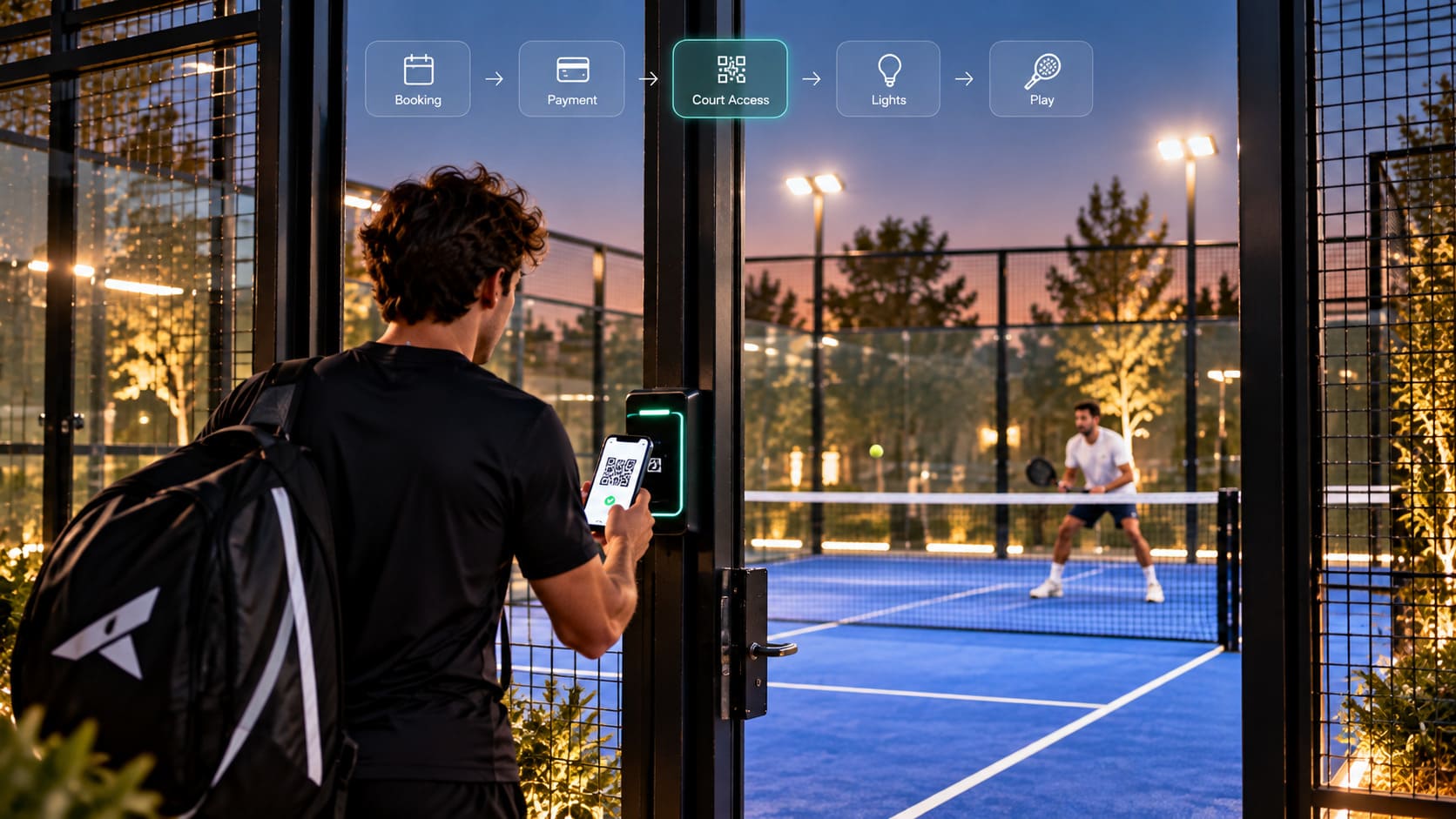
How Does Access Control Work for Padel Clubs? QR Codes, RFID, Smart Locks, Court Lighting, and Bookings Explained.

Sep 23, 2026
Discover how to reduce cancellations and no-shows at your padel club with upfront payments, automated reminders, and streamlined court management.

Take your club to the next level
Ready to transform your padel, tennis, and country club?
Join the +1,000 clubs that trust Doinsport. Get started in less than 30 minutes and see the difference from the very first day.
We are here to support you.


Take your club to the next level
Ready to transform your padel, tennis, and country club?
Join the +1,000 clubs that trust Doinsport. Get started in less than 30 minutes and see the difference from the very first day.
Take your club to the next level
Ready to transform your padel, tennis, and country club?
Join the +1,000 clubs that trust Doinsport. Get started in less than 30 minutes and see the difference from the very first day.
We are here to support you.