

EN
EN
Tennis
How to efficiently organize and manage a tennis academy
Discover how to streamline your tennis academy operations: manage registrations, group assignments, skill levels, court scheduling, payments, and player progress tracking with ease.

Managing a tennis academy involves far more than simply adding a few slots to a court schedule.
Every new season, clubs face the challenge of organizing registrations, creating well-balanced groups, matching players by age and skill level, aligning coach and court availability, tracking remaining spots, and reconciling payments.
On top of that, you have to handle mid-season group changes, late sign-ups, special family requests, and ongoing adjustments throughout the entire year.
With a few dozen students, a basic spreadsheet and some back-and-forth emails might do the trick. But as your academy grows, this manual setup quickly becomes a time-consuming administrative burden prone to costly errors.
So, how can you efficiently manage a tennis academy while drastically cutting down your club’s administrative workload?
Here are the key operational steps to streamline your organization and scale your coaching programs.
What are the core challenges of tennis academy management?
Running a successful tennis school means balancing multiple overlapping constraints simultaneously.
From the players’ perspective, you must account for:
age;
skill level / rating;
availability;
training frequency;
development goals (recreational vs. competitive);
family scheduling constraints across siblings.
From the club's operational side, managers must coordinate:
court availability and utilization;
coaching staff schedules;
maximum class capacity limits;
pricing tiers;
memberships and club dues;
payment processing and collections;
slot occupancy rates.
An efficient setup must maximize member satisfaction while optimizing your club's prime resources: courts and coaches.
As class numbers grow, managing these moving parts across disconnected spreadsheets becomes unsustainable.
1. Plan your season before launching registrations
The golden rule: never open registrations before laying the operational groundwork.
Before publishing course offerings to members, the academy director must define:
the season timeframe;
player categories;
skill levels;
class groups;
training days;
time slots;
session durations;
capacity caps per group;
pricing models;
eligibility prerequisites.
Thorough upfront planning prevents the need for constant, disruptive changes once bookings go live.
Separate the registration window from the teaching term
It is essential to distinguish between two distinct operational timelines.
The registration window
The designated period during which members can browse available courses and secure their spots.
The teaching term
The actual calendar dates when coaching sessions and court activities take place.
An academy running from September to June can smoothly open sign-ups several weeks or even months in advance.
This separation streamlines back-to-school season prep and provides members with clear, professional timelines.
2. Build balanced, consistent groups
The reputation of your coaching program hinges on the balance and chemistry within each group.
Grouping simply by who is free at 5 PM on a Tuesday is a recipe for member dissatisfaction.
Managers need to cross-reference multiple criteria.
Age brackets
Mini-tennis, juniors, teens, adults: coaching methodologies, group dynamics, and session formats vary drastically across age segments.
Skill levels
Two players of the exact same age can have vastly different technical skills.
Segmenting your offerings into clear tiers is crucial:
Beginner;
Intermediate;
Advanced;
Competition / Performance.
Player goals and practice intensity
Some members are looking for fun, social, and fitness-driven play.
Others demand rigorous technical coaching and tournament prep.
Availability
Finally, you must align the ultimate puzzle:
Players + Coach + Court + Time slot.
This matrix quickly turns into a logistical nightmare when managing hundreds of active students without automated tools.
3. Implement automated eligibility criteria
The easiest way to streamline group placements is by setting strict access rules for each course.
For example:
Junior Intermediate Tennis
Age: 10 to 13 years old
Level: Intermediate
Slot: Wednesday, 2:00 PM – 3:30 PM
Capacity: 8 players
Prerequisite: Active club membership
Any member not meeting these criteria should automatically be prevented from booking that slot.
This eliminates the need for coaching directors to spend hours manually screening and validating sign-ups after the fact.
These rules can be fully automated using dedicated tennis academy management software featuring dynamic restrictions based on age, skill level, membership tier, or subscription status.
4. Set and enforce capacity limits per group
Sessions must be neither under-filled nor overcrowded.
A class with too few players burns court capacity and undermines revenue margins.
Conversely, packing too many players onto a court degrades coaching quality and member satisfaction.
Every class requires a strictly defined cap.
Group | Time Slot | Capacity | Enrolled |
|---|---|---|---|
Mini-Tennis | Wednesday 10:00 AM | 6 | 5 |
Junior Beginner | Wednesday 2:00 PM | 8 | 8 |
Junior Intermediate | Wednesday 4:00 PM | 8 | 6 |
Adult Beginner | Thursday 7:00 PM | 6 | 4 |
A real-time overview like this allows managers to instantly identify:
sold-out groups;
open spots still available for sale;
under-utilized court slots;
capacities that need reallocation.
Once a class reaches its cap, registration should automatically lock down to prevent overbooking.
5. Digitize the registration workflow
Registration day is traditionally one of the most stressful operational peaks of the sports club calendar.
A manual, offline process is painfully fragmented:
Paper form → Manual check → Member back-and-forth → Roster assignment → Data entry → Payment chasing → Confirmation email.
Every single registration triggers multiple manual touchpoints for your front desk.
With an automated digital journey, the member experience transforms into:
Login → Filtered eligible courses → Self-serve booking → Online payment → Instant confirmation.
Members enjoy 24/7 self-service convenience while roster data syncs straight into your club management platform in real time.
For club managers, this drastically reduces:
repetitive manual data entry;
inbox clutter and endless email chains;
front-desk phone traffic;
misallocations and group mismatches;
overbooking errors on popular slots.
6. Roll out staggered registration phases
You do not always want to open all courses to everyone at the exact same moment.
Running phased rollouts gives your club complete control over sales momentum.
Course Preview
Members can view the upcoming timetable, coach assignments, and pricing before booking officially opens.
Priority Re-enrollment
Reward returning members with an exclusive early-access window to retain loyal club patrons.
General Public Launch
Remaining spots open up to new prospects and the wider public.
Registration Cut-off
The booking window automatically closes on a predefined date to finalize rosters.
This structured approach gives leadership total oversight of season ramp-up without manual gatekeeping.
7. Simplify multi-child family registrations
Family management is a critical success factor for any racquets club.
A parent often needs to sign up multiple children:
Emma, 8 years old
and
Lucas, 12 years old
each with different skill levels, age groups, and schedule requirements.
Forcing parents to create separate profiles or complete separate checkout flows creates friction and leads to abandoned bookings.
With dedicated family account management, parents simply select the child, instantly view the programs tailored to their age and rating, and add classes to a single cart.
All sign-ups are consolidated into one seamless transaction.
This frictionless flow is a major competitive advantage for clubs with large junior academies.
8. Connect registration directly to payment processing
Separating course sign-up from payment collection immediately creates an administrative headache.
Club staff are forced into endless manual reconciliations:
Who has actually paid?
How much was collected?
Which specific course does this transaction cover?
Which invoices and receivables are still outstanding?
When managing hundreds of students, manual payment tracking drains valuable hours and hurts cash flow.
The solution is an end-to-end integrated flow:
Player → Group → Registration → Instant Payment.
Members select their class and complete their purchase in the exact same step.
Implementing integrated online payments for tennis clubs automates collection, reduces default risk, and eliminates hours of balance sheet auditing.
9. Build flexibility for seamless group transfers
Even with flawless preseason planning, rosters will evolve once balls start bouncing.
A coach might quickly notice after week one that a junior player is punching above their weight and needs a more competitive group.
Or a family’s academic schedule changes, requiring a move to a different training day.
In spreadsheet-based operations, transferring a single player requires multiple tedious steps:
removing them from Group A;
updating and saving Roster A;
checking remaining capacity in Group B;
manually typing their details into Roster B;
emailing the respective coaches;
verifying payment status and adjusting pricing balances.
When your software allows 1-click player transfers between groups, this process takes five seconds.
Multiplied across dozens of mid-season adjustments, this capability saves days of administrative overhead every season.
10. Track and optimize academy occupancy rates
Elite sports management isn't just about recording sign-ups—it's about maximizing facility yield and revenue performance.
Academy managers should be able to track business metrics in real time:
How many total players are enrolled?
Which groups are 100% full?
Which classes still have available capacity to monetize?
Which time slots are chronically under-performing?
Which age categories generate the highest demand?
Actionable business intelligence empowers strategic decision-making.
Market classes with remaining capacity
Direct-market an under-filled adult beginner session to members matching that exact profile.
Optimize court programming schedules
Repurpose consistently low-demand coaching slots into open court bookings or popular social mixers for the following term.
Scale high-demand programs
If intermediate padel clinics are perpetually sold out with waitlists, open up additional courts to capture unrealized revenue.
Data transforms academy oversight from reactive clerical work into proactive, revenue-driving club management.
11. Empower coaches with real-time digital access
Your coaching staff need accurate, up-to-the-minute attendance data on court.
Coaches need immediate clarity on:
active group rosters and emergency contacts;
exact class sizes;
recent player additions or transfers.
Rosters used on court must stem from the exact same live database as the front desk.
A centralized system eliminates outdated paper sheets and un-synced digital copies that lead to on-court confusion.
12. Unify academy coaching with overall club management
A tennis or padel academy does not operate in a silo—it drives overall club ecosystem engagement.
An academy student frequently interacts with the club across multiple revenue channels:
booking casual court hours;
renewing seasonal club memberships;
entering club tournaments and leagues;
purchasing racquets, balls, and apparel from the pro shop;
enrolling in holiday training camps;
receiving club newsletters and push notifications.
Relying on fragmented point solutions results in tech stack bloat:
Academy tool + Court booking app + Billing processor + Member CRM + POS system + Email software.
This creates duplicate records, fragmented customer data, and high subscription overhead.
Adopting comprehensive tennis club management software unites your academy, court booking, POS, and membership operations into a single, cohesive ecosystem.
13. Deliver a premium mobile experience for members
Today’s sports consumers expect a seamless digital experience on the go.
The overwhelming majority of players and parents interact with your club straight from their mobile devices.
Discovering, booking, and managing coaching sessions must be fast, intuitive, and mobile-first.
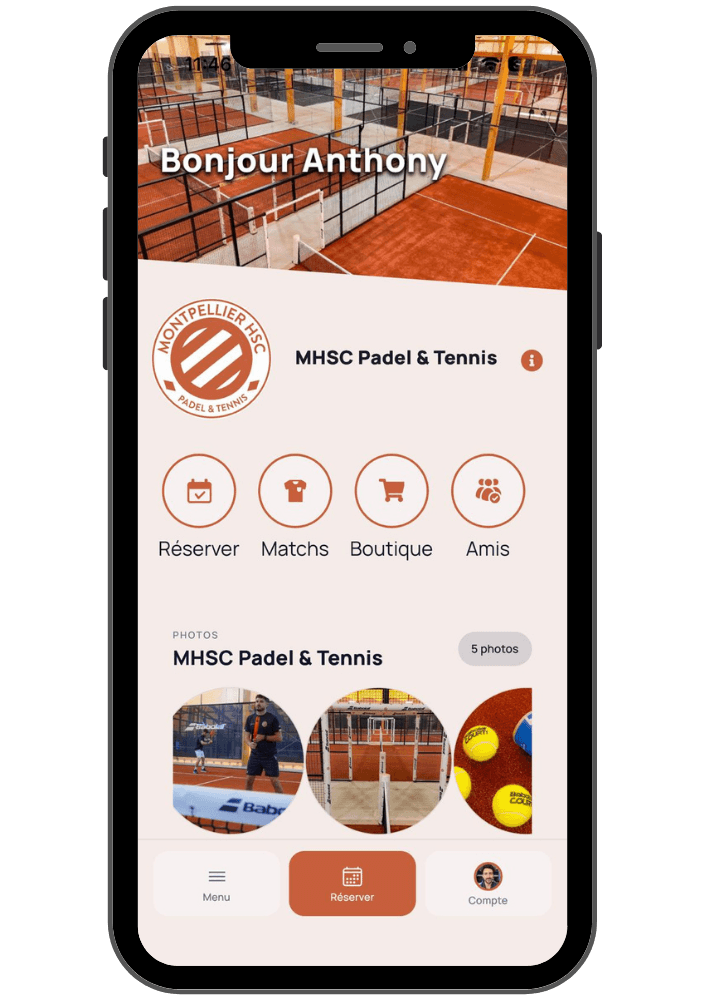
A branded mobile app for tennis clubs brings the complete club lifestyle into their pocket:
academy courses and group clinics;
court bookings and partner matching;
instant mobile checkouts;
membership passes and digital access;
push notifications and club updates.
Members no longer jump through hoops across multiple platforms.
For the facility, a dedicated mobile app boosts retention, engagement, and direct revenue generation.
14. Sync coaching programs directly with court calendars
Running group lessons requires reserving your most valuable club asset: court space.
A court dedicated to an academy training session must instantly be blocked from casual member bookings.
Your academy timetable must integrate natively with your club's central court grid.
Complete scheduling integration allows managers to effortlessly balance:
court utilization;
public vs. member booking slots;
academy sessions and private lessons;
tournaments and corporate events;
open casual play.
An all-in-one tennis club court reservation software guarantees that coaching programs, events, and pay-and-play bookings live on one conflict-free schedule.
Is Excel enough to manage a tennis academy?
For a micro-club with a handful of players, yes.
A basic spreadsheet works fine when managing two coaches and twenty recreational students.
However, severe operational breakdowns happen as soon as you scale up:
class volumes;
active players;
coaching rosters;
rating categories;
payment tracking;
schedule adjustments;
family accounts.
The real cost of using spreadsheets isn’t software licensing.
It is the massive amount of staff payroll spent manually updating and fixing records.
Whenever data must be manually copy-pasted across multiple sheets, human error and double-bookings are inevitable.
When should you digitize your tennis academy operations?
There isn't a strict headcount threshold before switching to dedicated SaaS management, but clear operational bottlenecks reveal when it's time to upgrade:
Enrollment requires multiple full-time staff
Your team spends weeks drowning in data entry, confirmation calls, and eligibility checks.
You maintain multiple spreadsheets for the same player base
Your customer and scheduling data is dangerously fragmented.
Payment reconciliation requires manual tracking
Bookings and collections are handled across disconnected channels.
Group adjustments take forever
A simple roster transfer demands manual updates across several independent files.
You experience capacity and overbooking issues
Your on-court rosters do not match what was booked at the desk.
You lack real-time visibility into your occupancy rates
Determining remaining slots requires manual calculations across multiple workbooks.
If your facility faces any of these symptoms, centralizing your academy management is imperative.
What key features should you look for in tennis academy software?
When evaluating club management software, make sure it meets the dynamic demands of modern racquets facilities:
Term & Window Scheduling
Can you schedule precise opening and closing times for your registration windows?
Flexible Group Creation
Can you easily configure recurring lessons, court assignments, coaches, and capacities?
Automated Eligibility Rules
Can you restrict class access based on player age, skill rating, and gender?
Dynamic Capacity Control
Does the system automatically shut down registrations the second a group sells out?
Membership-Gated Booking
Can you reserve early access or discounted tiers exclusively for active club members?
Family Accounts
Can parents seamlessly register multiple kids from one master profile?
Integrated Online Payments
Are transactions and installment plans automatically linked to course enrollments?
Instant Roster Transfers
Can you move a player from one session to another in a single click?
Executive Analytics
Do you have a clear bird’s-eye dashboard showing occupancy, revenue, and capacity rates?
Instant Roster Exports
Can coaches export clean, print-ready or digital rosters whenever required?
The larger your academy, the more critical these automated workflows become to your bottom line.
How to optimize operations across your coaching academy
Great management software must be backed by sound operational best practices.
A streamlined club relies on clear, transparent rules:
standardize skill rating criteria across coaches;
minimize custom scheduling exceptions;
strictly define court-to-player ratios for every program;
communicate registration launch dates well in advance;
maintain a single source of truth for club data;
track and remarket open slots in under-filled sessions;
analyze rejected or waitlisted booking requests.
Waitlist data is a goldmine for growing your business.
If twenty players were turned away from a sold-out Wednesday 5 PM clinic, that is clear market demand to add another court or coach to that time slot next season.
Can this framework be applied to a padel academy?
Absolutely.
The operational architecture is identical.
A high-performing padel academy requires the exact same workflows:
group structuring;
skill rating tiers;
junior and adult programs;
strict court capacity rules;
recurring slot management;
online registration;
automated payments.
For multi-sport racquets clubs operating both tennis and padel, unifying all coaching and court operations within a single SaaS ecosystem delivers massive efficiency gains.
FAQ — Tennis Academy Management
How do you set up an efficient tennis academy?
Start by structuring age groups, skill levels, time slots, court capacities, and pricing tiers. Then, set a clear registration window and ensure players are automatically matched to classes corresponding to their profile.
How do you build balanced tennis coaching groups?
Base your groups primarily on age brackets, skill ratings, training ambitions, and calendar availability across players, coaches, and courts.
How do you manage tennis academy sign-ups efficiently?
Move away from paper and spreadsheets to an online booking portal. A centralized platform directly ties the player, class slot, remaining capacity, and payment together in a single automated step.
How do you scale a large tennis academy?
As player counts climb, you must centralize group setup, eligibility criteria, self-serve booking, payments, and coaching rosters into a unified club management platform.
How do you prevent overbooked tennis classes?
Set hard capacity caps per group that automatically shut down online enrollments the moment the limit is reached.
How do you manage multi-child registrations for families?
Use family account features that allow a parent to manage and book age-appropriate programs for multiple siblings under a single login and checkout.
How do you handle mid-term group changes?
Use software that enables 1-click player transfers between groups without requiring staff to delete, re-create, or manually re-invoice the enrollment.
How do you track academy occupancy rates?
Track real-time management dashboards that aggregate all classes, showing current enrollments versus total available court spots.
Is Excel sufficient for tennis academy management?
Spreadsheets work only for very small setups. Once you manage high volumes of players, multiple coaches, payments, and roster changes, maintaining disparate files leads to administrative gridlock.
Can you manage tennis and padel within the same software?
Yes. For multi-racquet sports clubs, unifying both disciplines in one platform centralizes member data, simplifies billing, and streamlines scheduling.
Key Takeaways
Successful tennis academy management relies on four operational pillars:
Well-balanced player groups
Automated eligibility criteria
Frictionless member booking journeys
A centralized single source of truth
As your academy scales, digitization eliminates repetitive administrative tasks: manual data entry, capacity policing, payment reconciliation, group transfers, and roster generation.
Your sports management team can refocus their energy where it matters most: delivering world-class coaching and driving club growth.
Ready to see how DoinSport transforms operations for your tennis or padel club?
Managing a tennis academy involves far more than simply adding a few slots to a court schedule.
Every new season, clubs face the challenge of organizing registrations, creating well-balanced groups, matching players by age and skill level, aligning coach and court availability, tracking remaining spots, and reconciling payments.
On top of that, you have to handle mid-season group changes, late sign-ups, special family requests, and ongoing adjustments throughout the entire year.
With a few dozen students, a basic spreadsheet and some back-and-forth emails might do the trick. But as your academy grows, this manual setup quickly becomes a time-consuming administrative burden prone to costly errors.
So, how can you efficiently manage a tennis academy while drastically cutting down your club’s administrative workload?
Here are the key operational steps to streamline your organization and scale your coaching programs.
What are the core challenges of tennis academy management?
Running a successful tennis school means balancing multiple overlapping constraints simultaneously.
From the players’ perspective, you must account for:
age;
skill level / rating;
availability;
training frequency;
development goals (recreational vs. competitive);
family scheduling constraints across siblings.
From the club's operational side, managers must coordinate:
court availability and utilization;
coaching staff schedules;
maximum class capacity limits;
pricing tiers;
memberships and club dues;
payment processing and collections;
slot occupancy rates.
An efficient setup must maximize member satisfaction while optimizing your club's prime resources: courts and coaches.
As class numbers grow, managing these moving parts across disconnected spreadsheets becomes unsustainable.
1. Plan your season before launching registrations
The golden rule: never open registrations before laying the operational groundwork.
Before publishing course offerings to members, the academy director must define:
the season timeframe;
player categories;
skill levels;
class groups;
training days;
time slots;
session durations;
capacity caps per group;
pricing models;
eligibility prerequisites.
Thorough upfront planning prevents the need for constant, disruptive changes once bookings go live.
Separate the registration window from the teaching term
It is essential to distinguish between two distinct operational timelines.
The registration window
The designated period during which members can browse available courses and secure their spots.
The teaching term
The actual calendar dates when coaching sessions and court activities take place.
An academy running from September to June can smoothly open sign-ups several weeks or even months in advance.
This separation streamlines back-to-school season prep and provides members with clear, professional timelines.
2. Build balanced, consistent groups
The reputation of your coaching program hinges on the balance and chemistry within each group.
Grouping simply by who is free at 5 PM on a Tuesday is a recipe for member dissatisfaction.
Managers need to cross-reference multiple criteria.
Age brackets
Mini-tennis, juniors, teens, adults: coaching methodologies, group dynamics, and session formats vary drastically across age segments.
Skill levels
Two players of the exact same age can have vastly different technical skills.
Segmenting your offerings into clear tiers is crucial:
Beginner;
Intermediate;
Advanced;
Competition / Performance.
Player goals and practice intensity
Some members are looking for fun, social, and fitness-driven play.
Others demand rigorous technical coaching and tournament prep.
Availability
Finally, you must align the ultimate puzzle:
Players + Coach + Court + Time slot.
This matrix quickly turns into a logistical nightmare when managing hundreds of active students without automated tools.
3. Implement automated eligibility criteria
The easiest way to streamline group placements is by setting strict access rules for each course.
For example:
Junior Intermediate Tennis
Age: 10 to 13 years old
Level: Intermediate
Slot: Wednesday, 2:00 PM – 3:30 PM
Capacity: 8 players
Prerequisite: Active club membership
Any member not meeting these criteria should automatically be prevented from booking that slot.
This eliminates the need for coaching directors to spend hours manually screening and validating sign-ups after the fact.
These rules can be fully automated using dedicated tennis academy management software featuring dynamic restrictions based on age, skill level, membership tier, or subscription status.
4. Set and enforce capacity limits per group
Sessions must be neither under-filled nor overcrowded.
A class with too few players burns court capacity and undermines revenue margins.
Conversely, packing too many players onto a court degrades coaching quality and member satisfaction.
Every class requires a strictly defined cap.
Group | Time Slot | Capacity | Enrolled |
|---|---|---|---|
Mini-Tennis | Wednesday 10:00 AM | 6 | 5 |
Junior Beginner | Wednesday 2:00 PM | 8 | 8 |
Junior Intermediate | Wednesday 4:00 PM | 8 | 6 |
Adult Beginner | Thursday 7:00 PM | 6 | 4 |
A real-time overview like this allows managers to instantly identify:
sold-out groups;
open spots still available for sale;
under-utilized court slots;
capacities that need reallocation.
Once a class reaches its cap, registration should automatically lock down to prevent overbooking.
5. Digitize the registration workflow
Registration day is traditionally one of the most stressful operational peaks of the sports club calendar.
A manual, offline process is painfully fragmented:
Paper form → Manual check → Member back-and-forth → Roster assignment → Data entry → Payment chasing → Confirmation email.
Every single registration triggers multiple manual touchpoints for your front desk.
With an automated digital journey, the member experience transforms into:
Login → Filtered eligible courses → Self-serve booking → Online payment → Instant confirmation.
Members enjoy 24/7 self-service convenience while roster data syncs straight into your club management platform in real time.
For club managers, this drastically reduces:
repetitive manual data entry;
inbox clutter and endless email chains;
front-desk phone traffic;
misallocations and group mismatches;
overbooking errors on popular slots.
6. Roll out staggered registration phases
You do not always want to open all courses to everyone at the exact same moment.
Running phased rollouts gives your club complete control over sales momentum.
Course Preview
Members can view the upcoming timetable, coach assignments, and pricing before booking officially opens.
Priority Re-enrollment
Reward returning members with an exclusive early-access window to retain loyal club patrons.
General Public Launch
Remaining spots open up to new prospects and the wider public.
Registration Cut-off
The booking window automatically closes on a predefined date to finalize rosters.
This structured approach gives leadership total oversight of season ramp-up without manual gatekeeping.
7. Simplify multi-child family registrations
Family management is a critical success factor for any racquets club.
A parent often needs to sign up multiple children:
Emma, 8 years old
and
Lucas, 12 years old
each with different skill levels, age groups, and schedule requirements.
Forcing parents to create separate profiles or complete separate checkout flows creates friction and leads to abandoned bookings.
With dedicated family account management, parents simply select the child, instantly view the programs tailored to their age and rating, and add classes to a single cart.
All sign-ups are consolidated into one seamless transaction.
This frictionless flow is a major competitive advantage for clubs with large junior academies.
8. Connect registration directly to payment processing
Separating course sign-up from payment collection immediately creates an administrative headache.
Club staff are forced into endless manual reconciliations:
Who has actually paid?
How much was collected?
Which specific course does this transaction cover?
Which invoices and receivables are still outstanding?
When managing hundreds of students, manual payment tracking drains valuable hours and hurts cash flow.
The solution is an end-to-end integrated flow:
Player → Group → Registration → Instant Payment.
Members select their class and complete their purchase in the exact same step.
Implementing integrated online payments for tennis clubs automates collection, reduces default risk, and eliminates hours of balance sheet auditing.
9. Build flexibility for seamless group transfers
Even with flawless preseason planning, rosters will evolve once balls start bouncing.
A coach might quickly notice after week one that a junior player is punching above their weight and needs a more competitive group.
Or a family’s academic schedule changes, requiring a move to a different training day.
In spreadsheet-based operations, transferring a single player requires multiple tedious steps:
removing them from Group A;
updating and saving Roster A;
checking remaining capacity in Group B;
manually typing their details into Roster B;
emailing the respective coaches;
verifying payment status and adjusting pricing balances.
When your software allows 1-click player transfers between groups, this process takes five seconds.
Multiplied across dozens of mid-season adjustments, this capability saves days of administrative overhead every season.
10. Track and optimize academy occupancy rates
Elite sports management isn't just about recording sign-ups—it's about maximizing facility yield and revenue performance.
Academy managers should be able to track business metrics in real time:
How many total players are enrolled?
Which groups are 100% full?
Which classes still have available capacity to monetize?
Which time slots are chronically under-performing?
Which age categories generate the highest demand?
Actionable business intelligence empowers strategic decision-making.
Market classes with remaining capacity
Direct-market an under-filled adult beginner session to members matching that exact profile.
Optimize court programming schedules
Repurpose consistently low-demand coaching slots into open court bookings or popular social mixers for the following term.
Scale high-demand programs
If intermediate padel clinics are perpetually sold out with waitlists, open up additional courts to capture unrealized revenue.
Data transforms academy oversight from reactive clerical work into proactive, revenue-driving club management.
11. Empower coaches with real-time digital access
Your coaching staff need accurate, up-to-the-minute attendance data on court.
Coaches need immediate clarity on:
active group rosters and emergency contacts;
exact class sizes;
recent player additions or transfers.
Rosters used on court must stem from the exact same live database as the front desk.
A centralized system eliminates outdated paper sheets and un-synced digital copies that lead to on-court confusion.
12. Unify academy coaching with overall club management
A tennis or padel academy does not operate in a silo—it drives overall club ecosystem engagement.
An academy student frequently interacts with the club across multiple revenue channels:
booking casual court hours;
renewing seasonal club memberships;
entering club tournaments and leagues;
purchasing racquets, balls, and apparel from the pro shop;
enrolling in holiday training camps;
receiving club newsletters and push notifications.
Relying on fragmented point solutions results in tech stack bloat:
Academy tool + Court booking app + Billing processor + Member CRM + POS system + Email software.
This creates duplicate records, fragmented customer data, and high subscription overhead.
Adopting comprehensive tennis club management software unites your academy, court booking, POS, and membership operations into a single, cohesive ecosystem.
13. Deliver a premium mobile experience for members
Today’s sports consumers expect a seamless digital experience on the go.
The overwhelming majority of players and parents interact with your club straight from their mobile devices.
Discovering, booking, and managing coaching sessions must be fast, intuitive, and mobile-first.
A branded mobile app for tennis clubs brings the complete club lifestyle into their pocket:
academy courses and group clinics;
court bookings and partner matching;
instant mobile checkouts;
membership passes and digital access;
push notifications and club updates.
Members no longer jump through hoops across multiple platforms.
For the facility, a dedicated mobile app boosts retention, engagement, and direct revenue generation.
14. Sync coaching programs directly with court calendars
Running group lessons requires reserving your most valuable club asset: court space.
A court dedicated to an academy training session must instantly be blocked from casual member bookings.
Your academy timetable must integrate natively with your club's central court grid.
Complete scheduling integration allows managers to effortlessly balance:
court utilization;
public vs. member booking slots;
academy sessions and private lessons;
tournaments and corporate events;
open casual play.
An all-in-one tennis club court reservation software guarantees that coaching programs, events, and pay-and-play bookings live on one conflict-free schedule.
Is Excel enough to manage a tennis academy?
For a micro-club with a handful of players, yes.
A basic spreadsheet works fine when managing two coaches and twenty recreational students.
However, severe operational breakdowns happen as soon as you scale up:
class volumes;
active players;
coaching rosters;
rating categories;
payment tracking;
schedule adjustments;
family accounts.
The real cost of using spreadsheets isn’t software licensing.
It is the massive amount of staff payroll spent manually updating and fixing records.
Whenever data must be manually copy-pasted across multiple sheets, human error and double-bookings are inevitable.
When should you digitize your tennis academy operations?
There isn't a strict headcount threshold before switching to dedicated SaaS management, but clear operational bottlenecks reveal when it's time to upgrade:
Enrollment requires multiple full-time staff
Your team spends weeks drowning in data entry, confirmation calls, and eligibility checks.
You maintain multiple spreadsheets for the same player base
Your customer and scheduling data is dangerously fragmented.
Payment reconciliation requires manual tracking
Bookings and collections are handled across disconnected channels.
Group adjustments take forever
A simple roster transfer demands manual updates across several independent files.
You experience capacity and overbooking issues
Your on-court rosters do not match what was booked at the desk.
You lack real-time visibility into your occupancy rates
Determining remaining slots requires manual calculations across multiple workbooks.
If your facility faces any of these symptoms, centralizing your academy management is imperative.
What key features should you look for in tennis academy software?
When evaluating club management software, make sure it meets the dynamic demands of modern racquets facilities:
Term & Window Scheduling
Can you schedule precise opening and closing times for your registration windows?
Flexible Group Creation
Can you easily configure recurring lessons, court assignments, coaches, and capacities?
Automated Eligibility Rules
Can you restrict class access based on player age, skill rating, and gender?
Dynamic Capacity Control
Does the system automatically shut down registrations the second a group sells out?
Membership-Gated Booking
Can you reserve early access or discounted tiers exclusively for active club members?
Family Accounts
Can parents seamlessly register multiple kids from one master profile?
Integrated Online Payments
Are transactions and installment plans automatically linked to course enrollments?
Instant Roster Transfers
Can you move a player from one session to another in a single click?
Executive Analytics
Do you have a clear bird’s-eye dashboard showing occupancy, revenue, and capacity rates?
Instant Roster Exports
Can coaches export clean, print-ready or digital rosters whenever required?
The larger your academy, the more critical these automated workflows become to your bottom line.
How to optimize operations across your coaching academy
Great management software must be backed by sound operational best practices.
A streamlined club relies on clear, transparent rules:
standardize skill rating criteria across coaches;
minimize custom scheduling exceptions;
strictly define court-to-player ratios for every program;
communicate registration launch dates well in advance;
maintain a single source of truth for club data;
track and remarket open slots in under-filled sessions;
analyze rejected or waitlisted booking requests.
Waitlist data is a goldmine for growing your business.
If twenty players were turned away from a sold-out Wednesday 5 PM clinic, that is clear market demand to add another court or coach to that time slot next season.
Can this framework be applied to a padel academy?
Absolutely.
The operational architecture is identical.
A high-performing padel academy requires the exact same workflows:
group structuring;
skill rating tiers;
junior and adult programs;
strict court capacity rules;
recurring slot management;
online registration;
automated payments.
For multi-sport racquets clubs operating both tennis and padel, unifying all coaching and court operations within a single SaaS ecosystem delivers massive efficiency gains.
FAQ — Tennis Academy Management
How do you set up an efficient tennis academy?
Start by structuring age groups, skill levels, time slots, court capacities, and pricing tiers. Then, set a clear registration window and ensure players are automatically matched to classes corresponding to their profile.
How do you build balanced tennis coaching groups?
Base your groups primarily on age brackets, skill ratings, training ambitions, and calendar availability across players, coaches, and courts.
How do you manage tennis academy sign-ups efficiently?
Move away from paper and spreadsheets to an online booking portal. A centralized platform directly ties the player, class slot, remaining capacity, and payment together in a single automated step.
How do you scale a large tennis academy?
As player counts climb, you must centralize group setup, eligibility criteria, self-serve booking, payments, and coaching rosters into a unified club management platform.
How do you prevent overbooked tennis classes?
Set hard capacity caps per group that automatically shut down online enrollments the moment the limit is reached.
How do you manage multi-child registrations for families?
Use family account features that allow a parent to manage and book age-appropriate programs for multiple siblings under a single login and checkout.
How do you handle mid-term group changes?
Use software that enables 1-click player transfers between groups without requiring staff to delete, re-create, or manually re-invoice the enrollment.
How do you track academy occupancy rates?
Track real-time management dashboards that aggregate all classes, showing current enrollments versus total available court spots.
Is Excel sufficient for tennis academy management?
Spreadsheets work only for very small setups. Once you manage high volumes of players, multiple coaches, payments, and roster changes, maintaining disparate files leads to administrative gridlock.
Can you manage tennis and padel within the same software?
Yes. For multi-racquet sports clubs, unifying both disciplines in one platform centralizes member data, simplifies billing, and streamlines scheduling.
Key Takeaways
Successful tennis academy management relies on four operational pillars:
Well-balanced player groups
Automated eligibility criteria
Frictionless member booking journeys
A centralized single source of truth
As your academy scales, digitization eliminates repetitive administrative tasks: manual data entry, capacity policing, payment reconciliation, group transfers, and roster generation.
Your sports management team can refocus their energy where it matters most: delivering world-class coaching and driving club growth.
Ready to see how DoinSport transforms operations for your tennis or padel club?
Similar articles
Oct 14, 2026
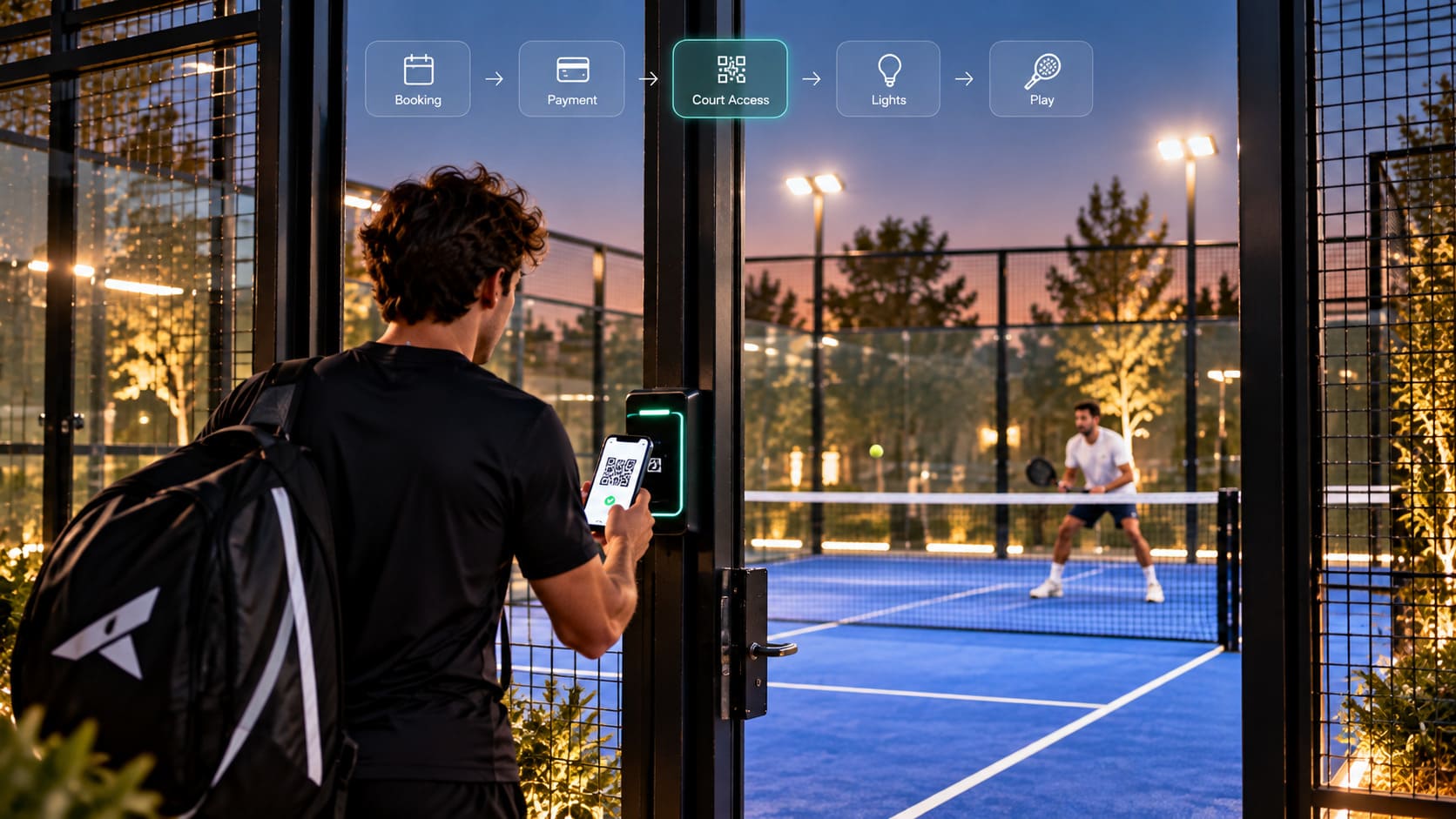
How Does Access Control Work for Padel Clubs? QR Codes, RFID, Smart Locks, Court Lighting, and Bookings Explained.

Oct 1, 2026
How to Drive Player Retention at Your Padel Club: Discover 10 Proven Strategies to Boost Court Bookings, Re-engage Members, and Grow Your Revenue.

Take your club to the next level
Ready to transform your padel, tennis, and country club?
Join the +1,000 clubs that trust Doinsport. Get started in less than 30 minutes and see the difference from the very first day.
We are here to support you.


Take your club to the next level
Ready to transform your padel, tennis, and country club?
Join the +1,000 clubs that trust Doinsport. Get started in less than 30 minutes and see the difference from the very first day.
Take your club to the next level
Ready to transform your padel, tennis, and country club?
Join the +1,000 clubs that trust Doinsport. Get started in less than 30 minutes and see the difference from the very first day.
We are here to support you.