

EN
Expertise
Business Plan Gym: WHAT MUST BE AVOIDED AT ALL COSTS!

Whether you are passionate about fitness or looking to capitalize on a high-growth business opportunity, you are planning to open your own fitness club or sports facility. You have now reached the critical business model stage. A well-crafted Business Plan serves several key objectives:
Define the commercial and financial strategies for your sports facility.
Demonstrate project feasibility
Build credibility for your venture
Convince banks and investors to secure your financing
“A rock-solid business plan is critical to your success”
Here are the top pitfalls to avoid when building the business plan for your sports club:
Failing to present the team and the project's background
Rushing through market research
Underestimating the power of digital marketing
Underestimating capital expenditures and operational costs
Overlooking ancillary revenue streams and upselling
Mistake #1: Failing to present the team and the project's background
Before it is about the numbers, running a facility is a human adventure. You will not secure funding without providing compelling context for your vision.
Lenders and investors want to understand what drives your entrepreneurial journey. They also want to know who is at the helm and evaluate the core team supporting you.
At this stage, spotlighting the skills, track record, and personality of your key stakeholders is essential. Keep in mind that investors (banks, funds, or private angels) back the business model, but above all, they invest in the people running it.
Mistake #2: Rushing through your market research
Market research is the heartbeat of your business plan. Its primary goal is to validate the commercial viability of your sports facility.
This process entails a thorough analysis of the local sports and fitness industry. Gather data and dive deep into current market dynamics and sports participation trends.
Key questions to ask yourself:
Is the macro-environment favorable for this business?
Map out the pros and cons. The goal is to build an objective understanding of the market you are entering.
For example (PESTEL analysis):
Political: Government initiatives promoting sports and wellness (+)
Economic: Inflation and purchasing power constraints post-COVID
Social: Booming health and wellness lifestyle trends (+)
Technological: Rise of connected fitness apps and home workouts
Environmental: Growing demand for eco-friendly, energy-efficient sports venues
Legal: Safety, accessibility, and public facility compliance regulations
What are the Key Success Factors (KSFs) in this sector?
Here, you need to dissect member expectations and benchmark your competitors' market behavior.
Deploy targeted market surveys to understand your prospective members inside and out. Collect as much high-value data as possible during this phase.
Basic demographic data like age, gender, and income brackets are essential, but they are not enough. Dig deeper to understand their daily environment, pain points, core drivers, and booking habits.
Simultaneously, thoroughly analyzing your competition is vital. Reviewing their pricing, court or gym management software, and overall positioning will provide the blueprints to shape your own facility.
This research will help you define:
Geographic location (defining your primary catchment area)
Strategic positioning (Pricing vs. Service Quality)
Business model and commercial offerings (Court bookings, memberships, coaching packages...)
Keep in mind that the sports and fitness market is intensely competitive, and shelf space is tight. By the end of this study, you must clearly identify your competitive edge. This is an absolute prerequisite before launching your club.
For instance, imagine you want to open a fitness and sports facility operating 7 days a week from 6 AM to 11 PM in Nice. After benchmarking your competitors, you realize this exact model is dominated by major low-cost gym chains with pricing you cannot match. Their ultra-low prices are partly enabled by a complete lack of on-site coaching or court supervision.
Your member surveys reveal that a significant share of prospects actively seeks on-site guidance and community. You therefore decide to integrate personalized coaching into every membership tier at your club. Being the only facility delivering this service in your catchment area gives you a distinct competitive advantage—capitalize on it!
Mistake #3: Underestimating the power of digital marketing for your sports club
You now have a clear roadmap, and the market viability of your sports club is validated. Next, you must structure your member acquisition engine.
This phase is pivotal, as it will directly shape your revenue projections.
Here, you need to map out the acquisition channels that will help you:
Build brand awareness for your facility
Generate interest in your courts, classes, and services
Drive buying intent
Convert prospects into paying members
Retain members and turn them into brand advocates
A specific volume of leads is tied to each stage of this acquisition funnel. Remember that drop-off naturally occurs at every stage—this is why it is structured as a conversion funnel.
Your mission is to estimate the expected volume of leads at each touchpoint to ultimately forecast your total sales volume.
Multiply this by your projected Average Order Value (AOV) or monthly subscription fee, and you will have a clear, data-driven estimate of the ARR/revenue your sports club can achieve.
For example, say you launch a local radio campaign. You select your station and estimate your target reach at 10,000 listeners.
Based on benchmarks, you estimate that only 50% will show interest upon hearing it, representing 5,000 qualified prospects.
Out of those 5,000, 10% reach out for information, generating 500 inbound inquiries.
Finally, applying a 15% conversion rate yields 75 signed members.
(This example illustrates the funnel methodology. These figures are illustrative; you will need to establish your own realistic benchmarks.)

Where does digital marketing fit into your strategy?
Traditional offline channels—such as print ads, local radio, and billboards—have experienced declining performance for years.
This shift is primarily driven by high-converting digital touchpoints: modern club websites, social media advertising, and white-label mobile booking apps.
You must weave these digital acquisition channels directly into your growth strategy—they are game-changers!
We have assembled a dedicated guide focused on the latest digital marketing trends for sports complexes and club managers.
For instance, a solid SEO strategy (organic search) for your club's booking platform can be exceptionally powerful, though it requires significant time to mature.
Conversely, paid ads across Meta platforms (Facebook, Instagram) will deliver rapid brand visibility, but require ad spend with carefully monitored ROI and Customer Acquisition Cost (CAC).
Furthermore, acquiring members is only half the battle; retaining them drives your bottom line. The average membership renewal rate across fitness clubs sits around just 20%. Fortunately, modern club management tech can dramatically improve retention and LTV (Lifetime Value).
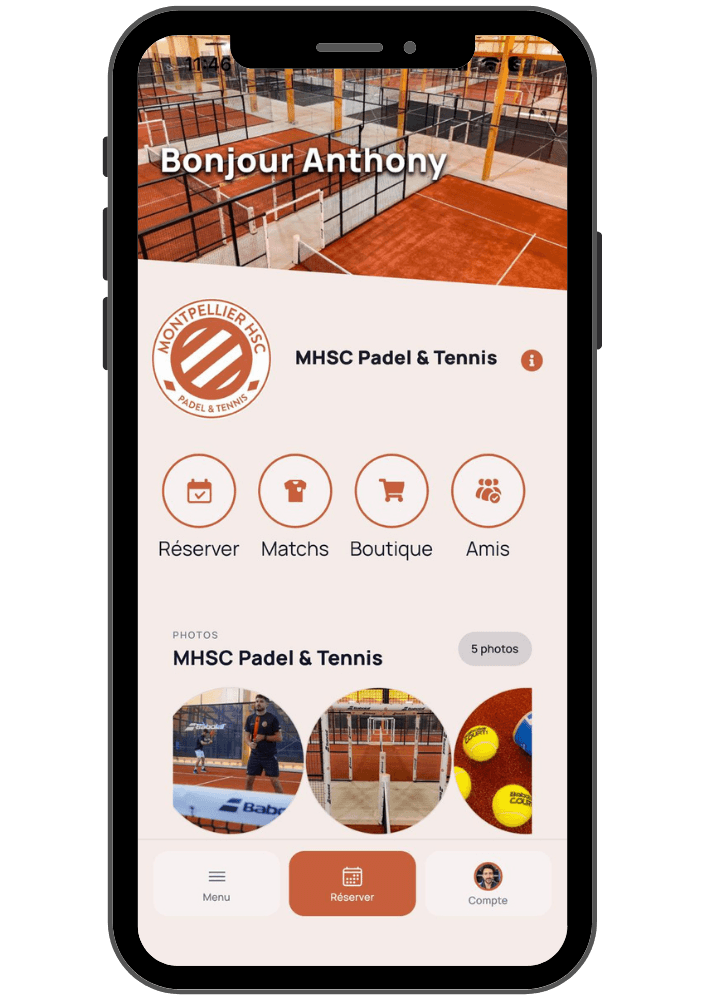
A prime example is a custom-branded mobile app for your sports facility. Once cost-prohibitive, turnkey white-label solutions now deliver premium UI/UX, integrated bookings, and seamless access control at a fraction of the cost!
Clients using Doinsport—the leading all-in-one management software for sports clubs—show clear performance gains: facilities equipped with their own dedicated mobile app report a 32% higher membership renewal rate compared to those relying on generic third-party aggregator marketplaces.
You must demonstrate to investors that you master digital marketing mechanics. You need to confidently forecast your active member acquisition run rate across each chosen digital and direct-to-consumer channel.
Above all: stay conservative and avoid overestimating your conversion rates.
Mistake #4: Underestimating your club's operating expenses and CapEx
The most frequent mistake made by founders seeking financing is building financial forecasts based on unrealistically low costs.
Let's be completely transparent:
! YOU WILL NOT BE FULLY PROFITABLE IN YEAR ONE !
You must maintain rigorous, comprehensive oversight of all fixed and variable costs required to operate your sports complex.
Do not artificially inflate them either: lenders do not evaluate your project on the total loan amount, but rather on your debt service coverage ratio and repayment capacity.
By aligning with market realities while positioning key software and infrastructure expenses as ROI-driven investments, you will win over credit committees and financial partners.
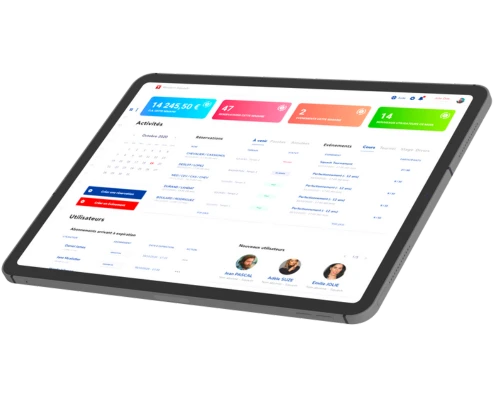
For example, investing several thousand dollars in sports club management software and a dedicated member app might look like an overhead expense at first glance.
However, when you demonstrate that this platform drives a 30% increase in membership renewals and unlocks an extra 5% to 10% in top-line revenue through integrated pro-shop e-commerce, court bookings, and automated cross-selling, that CapEx turns into pure value creation. And that is precisely what bank managers and investors want to see 🙂
On the other hand, purchasing high-end fitness equipment or turf at double the standard market rate creates unjustifiable overhead. These capital outlays quickly become value-destroying assets.
Distinguishing between high-yield investments and deadweight expenses is fundamental when building your projected P&L statement.
Mistake #5: Overlooking ancillary revenues and upselling
This brings us to our final pitfall: neglecting secondary spend and ancillary sales.
Beyond working out or playing matches, your members are looking for a vibrant community hub. This lifestyle experience is your primary differentiator against impersonal low-cost franchises.
Corporate chains scale by slashing prices and cutting out community engagement and human connection.
The “third place” concept—coined by sociologist Ray Oldenburg—built the success of global lifestyle giants like Starbucks: why not apply it to your sports facility?
In short, a third place is a social anchor outside of your home and your corporate workspace.
It is highly sought after as a welcoming, neutral environment built for socializing and unwinding. It also attracts remote workers and digital nomads looking for a dynamic space to work, connect, and consume.
Picture busy professionals adopting a healthier routine: booking a padel match or gym session over lunch, followed by healthy dining or a protein shake right on-site.
A well-managed clubhouse bar/restaurant, pro shop, and gear rental service can generate up to 30% of your sports club's total turnover. Overlooking secondary spend means leaving a massive, high-margin revenue engine on the table.
Whether you are passionate about fitness or looking to capitalize on a high-growth business opportunity, you are planning to open your own fitness club or sports facility. You have now reached the critical business model stage. A well-crafted Business Plan serves several key objectives:
Define the commercial and financial strategies for your sports facility.
Demonstrate project feasibility
Build credibility for your venture
Convince banks and investors to secure your financing
“A rock-solid business plan is critical to your success”
Here are the top pitfalls to avoid when building the business plan for your sports club:
Failing to present the team and the project's background
Rushing through market research
Underestimating the power of digital marketing
Underestimating capital expenditures and operational costs
Overlooking ancillary revenue streams and upselling
Mistake #1: Failing to present the team and the project's background
Before it is about the numbers, running a facility is a human adventure. You will not secure funding without providing compelling context for your vision.
Lenders and investors want to understand what drives your entrepreneurial journey. They also want to know who is at the helm and evaluate the core team supporting you.
At this stage, spotlighting the skills, track record, and personality of your key stakeholders is essential. Keep in mind that investors (banks, funds, or private angels) back the business model, but above all, they invest in the people running it.
Mistake #2: Rushing through your market research
Market research is the heartbeat of your business plan. Its primary goal is to validate the commercial viability of your sports facility.
This process entails a thorough analysis of the local sports and fitness industry. Gather data and dive deep into current market dynamics and sports participation trends.
Key questions to ask yourself:
Is the macro-environment favorable for this business?
Map out the pros and cons. The goal is to build an objective understanding of the market you are entering.
For example (PESTEL analysis):
Political: Government initiatives promoting sports and wellness (+)
Economic: Inflation and purchasing power constraints post-COVID
Social: Booming health and wellness lifestyle trends (+)
Technological: Rise of connected fitness apps and home workouts
Environmental: Growing demand for eco-friendly, energy-efficient sports venues
Legal: Safety, accessibility, and public facility compliance regulations
What are the Key Success Factors (KSFs) in this sector?
Here, you need to dissect member expectations and benchmark your competitors' market behavior.
Deploy targeted market surveys to understand your prospective members inside and out. Collect as much high-value data as possible during this phase.
Basic demographic data like age, gender, and income brackets are essential, but they are not enough. Dig deeper to understand their daily environment, pain points, core drivers, and booking habits.
Simultaneously, thoroughly analyzing your competition is vital. Reviewing their pricing, court or gym management software, and overall positioning will provide the blueprints to shape your own facility.
This research will help you define:
Geographic location (defining your primary catchment area)
Strategic positioning (Pricing vs. Service Quality)
Business model and commercial offerings (Court bookings, memberships, coaching packages...)
Keep in mind that the sports and fitness market is intensely competitive, and shelf space is tight. By the end of this study, you must clearly identify your competitive edge. This is an absolute prerequisite before launching your club.
For instance, imagine you want to open a fitness and sports facility operating 7 days a week from 6 AM to 11 PM in Nice. After benchmarking your competitors, you realize this exact model is dominated by major low-cost gym chains with pricing you cannot match. Their ultra-low prices are partly enabled by a complete lack of on-site coaching or court supervision.
Your member surveys reveal that a significant share of prospects actively seeks on-site guidance and community. You therefore decide to integrate personalized coaching into every membership tier at your club. Being the only facility delivering this service in your catchment area gives you a distinct competitive advantage—capitalize on it!
Mistake #3: Underestimating the power of digital marketing for your sports club
You now have a clear roadmap, and the market viability of your sports club is validated. Next, you must structure your member acquisition engine.
This phase is pivotal, as it will directly shape your revenue projections.
Here, you need to map out the acquisition channels that will help you:
Build brand awareness for your facility
Generate interest in your courts, classes, and services
Drive buying intent
Convert prospects into paying members
Retain members and turn them into brand advocates
A specific volume of leads is tied to each stage of this acquisition funnel. Remember that drop-off naturally occurs at every stage—this is why it is structured as a conversion funnel.
Your mission is to estimate the expected volume of leads at each touchpoint to ultimately forecast your total sales volume.
Multiply this by your projected Average Order Value (AOV) or monthly subscription fee, and you will have a clear, data-driven estimate of the ARR/revenue your sports club can achieve.
For example, say you launch a local radio campaign. You select your station and estimate your target reach at 10,000 listeners.
Based on benchmarks, you estimate that only 50% will show interest upon hearing it, representing 5,000 qualified prospects.
Out of those 5,000, 10% reach out for information, generating 500 inbound inquiries.
Finally, applying a 15% conversion rate yields 75 signed members.
(This example illustrates the funnel methodology. These figures are illustrative; you will need to establish your own realistic benchmarks.)
Where does digital marketing fit into your strategy?
Traditional offline channels—such as print ads, local radio, and billboards—have experienced declining performance for years.
This shift is primarily driven by high-converting digital touchpoints: modern club websites, social media advertising, and white-label mobile booking apps.
You must weave these digital acquisition channels directly into your growth strategy—they are game-changers!
We have assembled a dedicated guide focused on the latest digital marketing trends for sports complexes and club managers.
For instance, a solid SEO strategy (organic search) for your club's booking platform can be exceptionally powerful, though it requires significant time to mature.
Conversely, paid ads across Meta platforms (Facebook, Instagram) will deliver rapid brand visibility, but require ad spend with carefully monitored ROI and Customer Acquisition Cost (CAC).
Furthermore, acquiring members is only half the battle; retaining them drives your bottom line. The average membership renewal rate across fitness clubs sits around just 20%. Fortunately, modern club management tech can dramatically improve retention and LTV (Lifetime Value).
A prime example is a custom-branded mobile app for your sports facility. Once cost-prohibitive, turnkey white-label solutions now deliver premium UI/UX, integrated bookings, and seamless access control at a fraction of the cost!
Clients using Doinsport—the leading all-in-one management software for sports clubs—show clear performance gains: facilities equipped with their own dedicated mobile app report a 32% higher membership renewal rate compared to those relying on generic third-party aggregator marketplaces.
You must demonstrate to investors that you master digital marketing mechanics. You need to confidently forecast your active member acquisition run rate across each chosen digital and direct-to-consumer channel.
Above all: stay conservative and avoid overestimating your conversion rates.
Mistake #4: Underestimating your club's operating expenses and CapEx
The most frequent mistake made by founders seeking financing is building financial forecasts based on unrealistically low costs.
Let's be completely transparent:
! YOU WILL NOT BE FULLY PROFITABLE IN YEAR ONE !
You must maintain rigorous, comprehensive oversight of all fixed and variable costs required to operate your sports complex.
Do not artificially inflate them either: lenders do not evaluate your project on the total loan amount, but rather on your debt service coverage ratio and repayment capacity.
By aligning with market realities while positioning key software and infrastructure expenses as ROI-driven investments, you will win over credit committees and financial partners.
For example, investing several thousand dollars in sports club management software and a dedicated member app might look like an overhead expense at first glance.
However, when you demonstrate that this platform drives a 30% increase in membership renewals and unlocks an extra 5% to 10% in top-line revenue through integrated pro-shop e-commerce, court bookings, and automated cross-selling, that CapEx turns into pure value creation. And that is precisely what bank managers and investors want to see 🙂
On the other hand, purchasing high-end fitness equipment or turf at double the standard market rate creates unjustifiable overhead. These capital outlays quickly become value-destroying assets.
Distinguishing between high-yield investments and deadweight expenses is fundamental when building your projected P&L statement.
Mistake #5: Overlooking ancillary revenues and upselling
This brings us to our final pitfall: neglecting secondary spend and ancillary sales.
Beyond working out or playing matches, your members are looking for a vibrant community hub. This lifestyle experience is your primary differentiator against impersonal low-cost franchises.
Corporate chains scale by slashing prices and cutting out community engagement and human connection.
The “third place” concept—coined by sociologist Ray Oldenburg—built the success of global lifestyle giants like Starbucks: why not apply it to your sports facility?
In short, a third place is a social anchor outside of your home and your corporate workspace.
It is highly sought after as a welcoming, neutral environment built for socializing and unwinding. It also attracts remote workers and digital nomads looking for a dynamic space to work, connect, and consume.
Picture busy professionals adopting a healthier routine: booking a padel match or gym session over lunch, followed by healthy dining or a protein shake right on-site.
A well-managed clubhouse bar/restaurant, pro shop, and gear rental service can generate up to 30% of your sports club's total turnover. Overlooking secondary spend means leaving a massive, high-margin revenue engine on the table.
Similar articles
Oct 28, 2026
Unlimited off-peak, discount memberships, packs and wallets: the membership plans padel clubs offer in 2026, their prices and how to set yours.

Oct 22, 2026
How much should you charge per hour for padel? 2026 market rates, peak vs. off-peak pricing, and memberships: the complete guide to setting your club's rates.

Oct 14, 2026
How Does Access Control Work for Padel Clubs? QR Codes, RFID, Smart Locks, Court Lighting, and Bookings Explained.

See Doinsport in action
Ready to grow your padel or tennis club?
Join over 1,000 clubs that run on Doinsport. Book a free demo and see what it can do for your club.
We're here to help.


See Doinsport in action
Ready to grow your padel or tennis club?
Join over 1,000 clubs that run on Doinsport. Book a free demo and see what it can do for your club.
See Doinsport in action
Ready to grow your padel or tennis club?
Join over 1,000 clubs that run on Doinsport. Book a free demo and see what it can do for your club.
We're here to help.